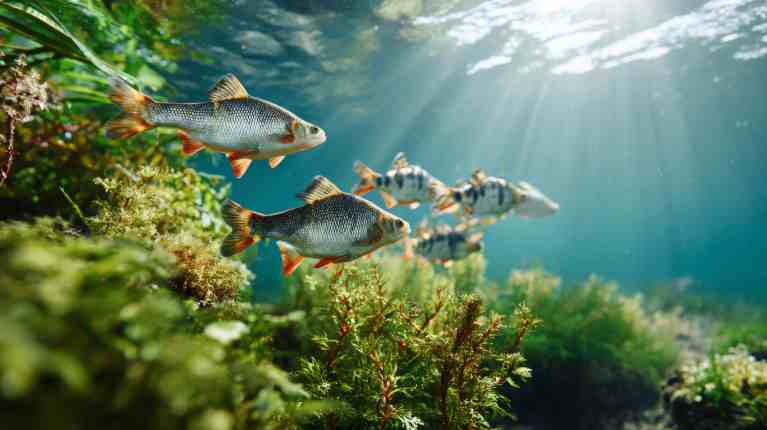
Cisco / Lake Herring / Tullibee: Open Water Is Habitat
Cisco, lake herring, and inland tullibee are the same cold-water species, but the important story is vertical: summer heat above and oxygen loss below can squeeze the school into a narrow band, while fall spawning brings the fish shallow again. That movement also reorganizes every predator following them.
By HunterUpdated September 19, 2026Read 6 min
A fresh fish displayed for seafood cuisine, highlighting quality and freshness.
A cisco out over the deep basin isn’t between spots. It’s at a depth, and temperature and oxygen set that depth, neither of which you can see from the boat. Further down is the grimmer part: a lake can lose its cold layer without losing a drop of water.
At a glance · The cold-water forage fish whose habitat can disappear vertically before the lake looks different
Scientific name
Coregonus artedi
Names
Cisco, lake herring, herring, and inland tullibee are common names for the same species in Minnesota usage.
Field mark
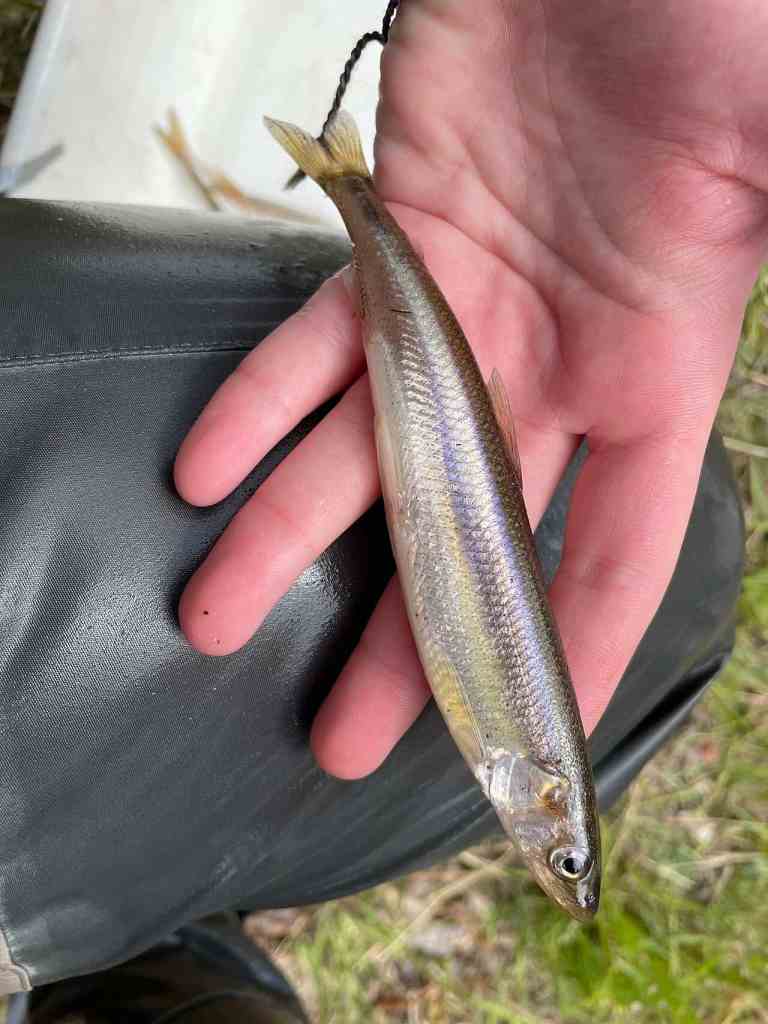
Adipose fin and lower jaw reaching to or beyond the snout tip; lake whitefish instead have an overhanging snout above a recessed lower jaw.
Food
Primarily pelagic zooplankton—copepods, cladocerans, and Chaoborus when available—with diet changing as fish grow.
Summer problem
Cold surface refuge can disappear while deep water loses oxygen, squeezing the school into a narrow habitable band.
Ecological job
High-energy prey for lake trout, walleye, pike, and other predators; also a human food fish in some northern systems.
Cisco and lake whitefish are not interchangeable silver fish
Identification
Jaw position
Minnesota DNR gives the simplest field split. Cisco have a lower jaw that reaches to or extends beyond the tip of the snout. Lake whitefish have a snout that projects beyond the lower jaw. Both carry an adipose fin and can look very similar when silver and freshly caught.
Minnesota uses cisco, lake herring, herring, and inland tullibee for Coregonus artedi. That naming overlap is useful to know because fishing reports and regulations may use a regional common name rather than “cisco.”
The summer map is a temperature-and-oxygen intersection
Cold-Water Habitat
Thermal refuge
Cisco are cold-water stenotherms. Minnesota’s 2026 monitoring summary describes a growing “squeeze”: surface water becomes too warm while deeper water can lose oxygen during summer stratification, compressing habitable water into a narrower band between the two.
A 100-foot lake is not automatically good summer cisco habitat. The useful depth has to be both cold enough and oxygenated enough. Eutrophication can strip oxygen from the hypolimnion; climate warming can push the upper thermal boundary down. The remaining usable layer can become small even while the lake still looks clear from shore.
Minnesota Sentinel Lakes work found cisco remaining deeper in spring, fall, and winter in Ten Mile Lake while many fish made partial reverse diel vertical migrations during summer, apparently responding to prey. The important lesson is not one universal nighttime depth; it is that light and food can move part of the school vertically within the thermal envelope.
I’d want two things before I trusted a fixed nighttime depth on a lake I hadn’t fished: a temperature profile from that same week, and proof the reverse migration Ten Mile Lake showed is even the local pattern here.
What is the school eating?
Diet & Food-Web Position
Pelagic zooplankton
Cisco feed primarily on copepods, cladocerans, and Chaoborus where available. A 2025 invasive-species report contrasts pelagic zooplankton-feeding cisco with bottom-oriented lake whitefish.
Recent Wisconsin research identifies ontogenetic changes in cisco trophic ecology. The exact diet varies by lake and fish size, so “plankton only” is too narrow, even though open-water zooplankton remains the central inland-lake feeding pattern.
The cisco’s fat and nutrient value matters to gamefish including lake trout, walleye, and northern pike. A predator fishery can therefore move because the cisco layer moved, even when the predator’s preferred shoreline structure did not change.
A trout bite going quiet on a reef that looks exactly the same as last week is the tell — the structure didn’t change, the cisco under it did.
Fall brings an offshore fish back within reach
Spawning
Fall shallows
Designated cisco and whitefish sport-netting seasons open around expected fall water temperatures because both species move shallow to spawn as lakes cool. That is a seasonal reversal from the deep summer pattern.
Where hook-and-line harvest is legal, small spoons, flies, jigs, and other plankton- or insect-scale presentations can reach suspended schools. Ice fishing can be especially effective because the fish may suspend under the ice rather than sit on bottom. The sonar target is a moving layer, not a fixed contour.
Targeting predators that eat cisco
Find the cisco layer first, then identify nearby structure that predators can use without leaving suitable temperature and oxygen. A perfect lake-trout reef above an overheated layer can be empty; a seemingly featureless basin beside dense cisco can be alive.
Ice and open water
Under ice, vertical presentations make depth control easy. In summer, sonar and temperature data are more important because the school can suspend over water far deeper than the fish themselves are using.
Conservation
Cold Water Can Be Lost Without Losing the Lake
Declines
Minnesota research reports cisco declines associated with eutrophication and climate change and predicts major future loss of suitable inland-lake populations in parts of the region. The management target is often not the fish alone; it is maintaining cold, oxygenated habitat.
Cisco function as an indicator of cold-water lake condition. A disappearing population can signal a thermal/oxygen habitat change before anglers notice the same shift in larger predators.
None of the rod-and-sonar notes above come from me chasing cisco on purpose; they’re the Minnesota and Wisconsin work turned into questions for the boat. The part I’d bet on anyway: a hundred feet of water with no cold, oxygenated layer in it is just a deep hole. Find where that band sits in your lake this week, and the cisco, plus whatever eats them, start making sense.
FEEDING · FOLLOWS PLANKTON UP AND DOWN
Cisco hang in the cold oxygenated layer eating plankton and ride it up and down through the day. Bottom structure is not the thing to read here.
What it eats
Pelagic zooplankton—especially copepods, cladocerans, and Chaoborus where available—forms the central inland-lake diet, although diet composition changes with fish size and lake.
How and where it hunts
Cisco are pelagic open-water feeders that suspend inside the cold, oxygenated layer and track prey vertically rather than orienting to bottom structure.
When it feeds
Minnesota Sentinel Lakes work documents partial reverse diel vertical migration by many fish in summer, apparently following prey. Seasonal depth also changes, and cooling water can bring cisco shallower in fall.
What changes as it grows
Research identifies ontogenetic changes in cisco trophic ecology. Open-water zooplankton remains central, but the exact prey mix changes with size and lake, so “plankton only” is too narrow.
Only documented feeding biology is summarized here; unsupported bite windows are left out.
The article is the long version. These are the pieces worth carrying into the next trip.
The 30-second version
Cisco, lake herring, and inland tullibee are the same cold-water species, but the important story is vertical: summer heat above and oxygen loss below can squeeze the school into a narrow band, while fall spawning brings the fish shallow again. That movement also reorganizes every predator following them.
What to watch
Identification
Cold-Water Habitat
Diet & Food-Web Position
Spawning
Field card
Minnesota DNR — Cisco, Herring, Lake Herring and Tullibee
Minnesota DNR — Cisco vs Lake Whitefish
Minnesota DNR — The Cisco Squeeze
Minnesota DNR — Sentinel Lakes Cisco Research
RIGHT TOOL, NEXT
Species & Presentation
Carry the species behavior and presentation question into a narrower water-to-fish-to-presentation handoff.
We use necessary cookies to operate the site. With your choice, we may also use analytics and advertising cookies. Choose Accept All, Reject, or Preferences.
Contains information related to marketing campaigns of the user. These are shared with Google AdWords / Google Ads when the Google Ads and Google Analytics accounts are linked together.
90 days
__utma
ID used to identify users and sessions
2 years after last activity
__utmt
Used to monitor number of Google Analytics server requests
10 minutes
__utmb
Used to distinguish new sessions and visits. This cookie is set when the GA.js javascript library is loaded and there is no existing __utmb cookie. The cookie is updated every time data is sent to the Google Analytics server.
30 minutes after last activity
__utmc
Used only with old Urchin versions of Google Analytics and not with GA.js. Was used to distinguish between new sessions and visits at the end of a session.
End of session (browser)
__utmz
Contains information about the traffic source or campaign that directed user to the website. The cookie is set when the GA.js javascript is loaded and updated when data is sent to the Google Anaytics server
6 months after last activity
__utmv
Contains custom information set by the web developer via the _setCustomVar method in Google Analytics. This cookie is updated every time new data is sent to the Google Analytics server.
2 years after last activity
__utmx
Used to determine whether a user is included in an A / B or Multivariate test.
18 months
_ga
ID used to identify users
2 years
_gali
Used by Google Analytics to determine which links on a page are being clicked
30 seconds
_ga_
ID used to identify users
2 years
_gid
ID used to identify users for 24 hours after last activity
24 hours
_gat
Used to monitor number of Google Analytics server requests when using Google Tag Manager
1 minute
Jetpack's built-in visitor analytics. It records page views, referring sites, search terms, and outbound link clicks, and also carries the shared visitor-tracking library used by Jetpack Instant Search and WooCommerce Analytics.