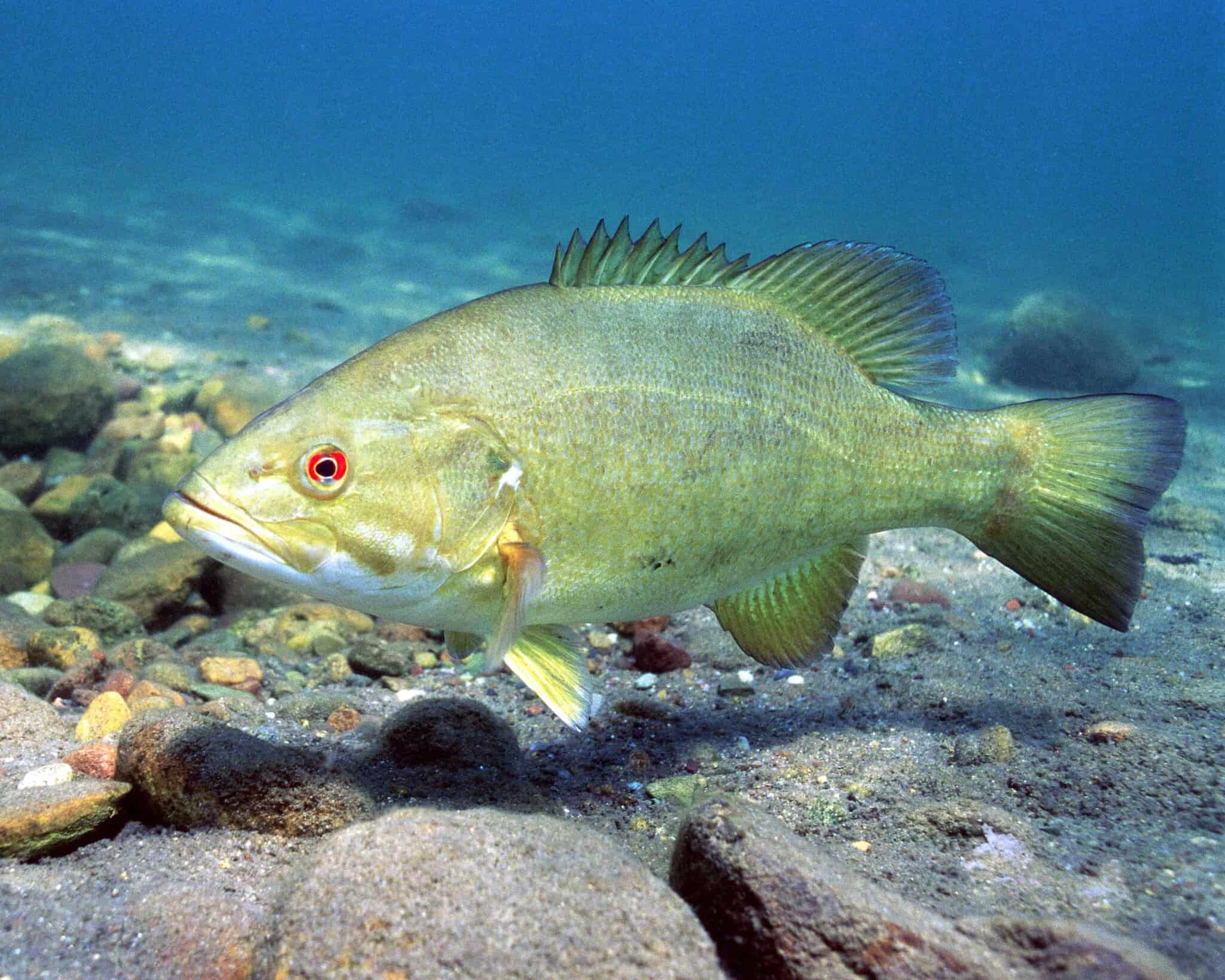
Walk up on a big boulder in a smallmouth river and the first cast basically throws itself — straight into the calm pocket behind it. One drift, maybe two, nothing, and it’s tempting to keep walking. That rock just built five or six different places a smallmouth could be sitting, and you fished one.
FIELD PLATE · HOLDING WATER
Look for the place that pays the fish back.
It’s easy to assume smallmouth want the strongest current or the biggest rock. What they actually want is a spot where food shows up without costing more to collect than it’s worth — a current edge next to slower water, a break in the bottom, bait pushed into a corner. Once you start reading how those pieces sit together instead of staring at the one rock, the water starts making sense.
The energy bill
Holding in fast water is work. A smallmouth cuts the bill by dropping in behind a boulder, sliding onto the soft side of a seam or hugging the bottom — anywhere the current dies while food keeps coming past. That soft spot can be surprisingly small, sometimes a few inches from water moving way faster than you’d think a bass would put up with.
So the fastest, whitest water in the run tends to be the part working hardest to look fishy. The fish are more often along the line where the food delivery meets the rest stop.
Seams
Where fast water meets slow, the drift gets funneled and a fish can sit on the easy side and let dinner come to it. Some seams announce themselves with a foam line or a change in surface texture. Others never show on top at all, and you have to guess at them from the shape of the bottom.
Cast so the lure arrives in that lane and stays there under control. A presentation that sweeps straight across a seam spends almost no time in the one strip of water that mattered.
Seams can look like plain moving water for a long time before they don’t. A good fix costs you one cast’s worth of patience: stand still, watch a stretch you aren’t planning to fish, and find where the foam slows down. That teaches more than reading about seams ever will.
One rock, several addresses
A big boulder makes a cushion of slower water upstream of it, a seam down each side, the pocket behind, a scoured-out hole where the flow dug in, and a second patch of confused water farther back than most people bother with. Which one holds a fish shifts with flow, light and whether they’re feeding, so the same rock can answer from a different side on a different evening.
One cast at the obvious pocket doesn’t make the rock empty. Fish the water the rock built.
Where the bottom changes character
Sand turning to gravel, or scattered stone giving way to a real boulder field — those changes create edges, hold forage and give a smallmouth options. Following how the bottom changes usually beats hunting for the single biggest object in the run, especially when you pay attention to where that change lines up with depth and current.
How much depth counts depends on the size of the water. A foot or two can be a real drop in a small river, while a big reservoir needs a lot more. Either way, smallmouth use a shallow flat or a shelf with a lot more confidence when there’s a quick way off it into deeper water.
Wind, light, and whether anything lives there
Wind shoves surface water and bait around a lake and can switch a point or shoal on for an afternoon. It also makes boat control miserable. The windy side isn’t automatically the good side, though, and it’s easy to burn a whole afternoon on a windblown bank because the theory sounded right. Check for minnows, bugs, birds or actual fish activity before you commit to it.
In clear water smallmouth use light boundaries as cover — the edge of a cliff’s shadow, a dock, a steep bank. Those edges slide as the sun moves, which means time of day is part of the habitat too.
None of it counts without food. Rock, relief and depth are only worth something if a fish can eat there, whether that’s minnows, crayfish or bugs dropping off the bank. You don’t need to identify anything to species. Size, where it is, how it moves and how much of it there is will get you to a presentation.
They don’t all live on the bottom
Smallmouth get filed under rock and bottom structure, and then they go suspend on you — over deep water next to structure, under surface activity, wherever the bait went. When bottom presentations keep failing and the bait is clearly up in the water column, test the middle instead of insisting the fish have to be on rock. A countdown will find that level, even without electronics, if you’re disciplined about the count.
How you come at it
In current, a lure racing across a holding lane asks a fish to chase hard for its dinner. One that drifts or swings through at a manageable speed is a cheaper meal. It works the same in still water, where a lure running along a break stays available a lot longer than one crossing it. Pick the angle that keeps the lure near where the fish probably is, not the one that lets you cast the farthest.
Speed follows position. A fish out in a feeding lane will come get something moving. A fish jammed into slow water after a cold front, or one that’s seen a lure every day for a month, wants it slow and close. Smallmouth have a reputation for being aggressive, and that reputation gets pinned on plenty of fish who never got the memo. Follows, short strikes and missed hooksets will tell you more than the reputation does.
What one fish tells you
A smallmouth off the side of one rock tells you where one smallmouth was. The useful part is why — the current break, the depth, the bait, how far it was to deeper water. Then go find another spot built the same way.
From what I’ve seen fishing both, river and lake smallmouth are running the same math with different weights on it. River fish deal with current all day, so finding slow water right next to fast water tends to matter most. Lake and reservoir fish lean harder on wind, depth, rock changes and bait that moves around. Either way they need to eat without getting eaten.
So find the change in the bottom or current first, then the nearest easy water beside it, then some sign of food, and put a cast where those overlap. When nothing happens, change depth or speed before you write off the whole stretch.
The arrangement is what’s worth remembering, not the waypoint. A GPS mark is only worth one rock. What you’re really after is walking up on a boulder you’ve never seen before and already having a guess about which side to fish first.