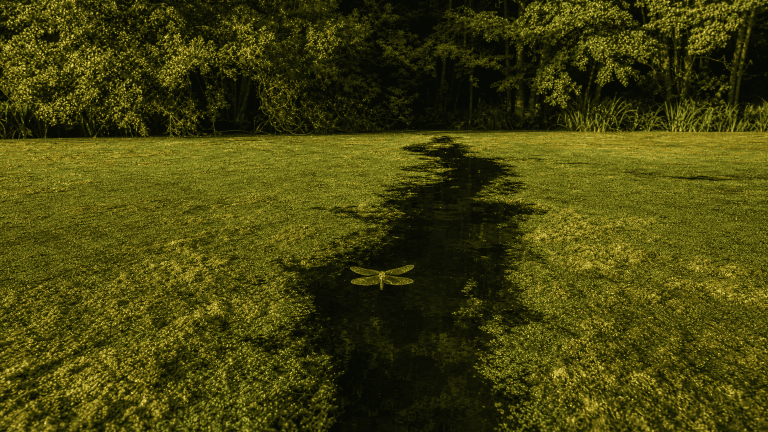
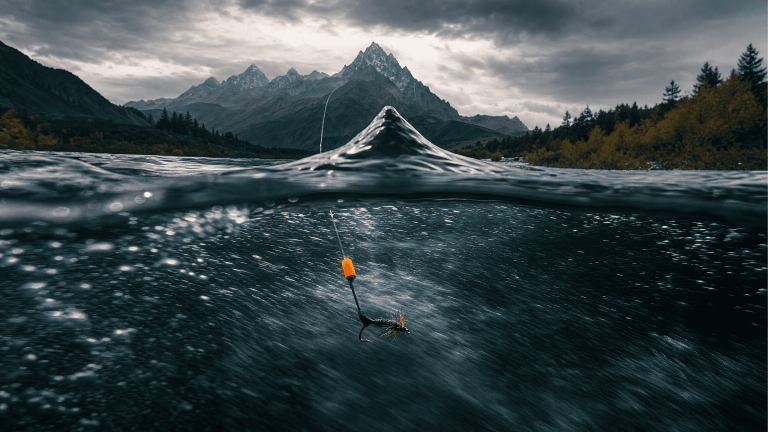
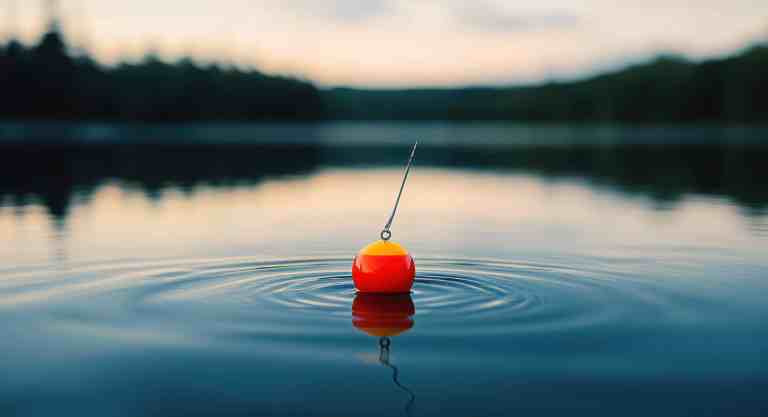
An indicator running faster than the foam beside it is easy to miss, and it’s the whole problem in one picture. The line has found faster water, a belly has grown in it, and now the current’s towing the rig downstream instead of carrying it. From where you’re standing the drift can look totally fine, right up until you compare it to a bubble.
FIELD PLATE · DRIFT
Your drift lane is the strip between the arrows and the soft edge.
A good drift follows a lane you picked, at a depth you set for the presentation and a speed you meant, with just enough line control to see what’s happening without yanking the rig out of place. You want the water carrying the presentation. Leave the line alone for long and it ends up doing the driving.
Pick the lane before you pick the cast
Seams, current breaks, pocket water, riffle edges, the heads and tails of pools, sunken structure — anywhere food drifts past slower water a fish can sit in. Decide what path you want the presentation to follow first, then pick the cast angle that puts it there.
A drift that wanders through three different currents on the way down is almost impossible to learn anything from afterward.
Depth is half of it
Fish feed in the surface film, suspended, or right on the bottom, and the whole rig has to agree with wherever they are. Weight, line diameter, leader length, sink time, current speed and cast angle all decide where it actually rides.
A drift can look completely natural and still be running four feet over everything you came for.
Speed the water sets
Some presentations should move right along with the current. Others swing, crawl, or move differently on purpose. Know which one you’re trying to do before you start correcting.
Compare the lure, float, indicator or line to things drifting on their own, like bubbles, foam lines or a leaf. Just remember the surface isn’t the whole river. Water near the bottom runs slower than the water on top because the streambed drags on it, so a rig drifting naturally down deep will usually keep its indicator a touch slower than the surface foam, not faster.
Angle changes the entire drift
An upstream cast buys sink time and hands you slack to manage. Cast straight across and you cover a wide lane, but the line starts bellying almost right away. Downstream puts tension on the rig, which is exactly what a swing wants and exactly what a dead drift doesn’t, unless you feed slack to keep it drifting.
Pick whichever one gets the rig into the lane you named, at the depth you set.
Manage the line before it manages the lure
Current pulling on the line can move the presentation faster than the water around it, drag it sideways out of the lane, or lift it toward the surface, and wind stacks another bow on top of that. Rod position, shorter casts, mends and moving your feet all cut down that drag. A mend just puts the belly back where it belongs: if faster water between you and the rig is bowing the line downstream, mend upstream, and if slower water in between is holding the line back, mend the other way.
Some slack is useful, because a perfectly tight line pulls a drifting rig unnaturally. Too much slack slows down bite detection and finds things to tangle on. You want enough freedom to keep the drift honest and enough connection to know what’s going on in it, and where that balance sits changes from run to run.
The indicator is a speedometer
It does more than tell you about bites. How fast it moves, where it hesitates, the angle it leans at and how it compares to the surface current next to it all tell you whether the rig is dragging, hanging up, ticking bottom, or drifting into different flow.
So learn its normal motion before you react to every twitch. That takes a fair amount of patient time watching a float do nothing much, and there’s no shortcut through it. It’s boring. It’s also where most of the reading actually gets learned.
Bottom, weight, and the urge to add more
Some drifts want an occasional tick on the bottom. Snagging constantly usually means the rig’s too deep or too heavy, angled wrong, or passing through structure it has no business in. Use the contact as information, and adjust once the rig spends more time stuck than fishing.
Weight should solve a control problem and nothing else. It gets you down and holds against fast current, but it also makes the rig drop unnaturally, snags more, and makes a soft take harder to see. Use the lightest setup that gets into the useful zone and stays there.
Short drifts, repeated
A long drift crosses several speeds, depths and lanes, which makes it hard to know which part of it mattered. Short controlled drifts are easier to repeat and easier to read. If the fish are stacked in one small seam or pocket, there’s not much point fishing forty feet past them.
When the rig suddenly speeds up, stops, swings out, rises, sinks too deep or keeps picking up weeds, the line or the current has taken it off the path. Fix the biggest failure before you touch the lure.
When a fish does eat, try to repeat the whole thing before getting creative: the same entry point, depth, speed and line control. One fish doesn’t prove a pattern, but running that exact drift again is the quickest way to find out whether the spot is real. Note where in the drift it happened.
The water changes on you
Dam releases, tides, rain, snowmelt, irrigation and ordinary ups and downs all change drift speed and where fish can hold. A rig that reached the lane early in the day may not reach it by midday.
When the flow changes, look the run over again and rebuild the drift instead of stapling on more weight.
Wind can wreck a technically correct drift the same way, pulling on the line and the indicator until the rig’s off current speed. Lower the rod, shorten the cast, change the angle or move. If the wind makes the drift impossible to control or your spot unsafe, go somewhere else or call it.
Where the fish ends up
A drift should finish somewhere you can actually handle a hooked fish. The water below your target might speed up into rapids, sweep around wood, or run toward footing you can’t hold.
Only move where access is legal and the footing’s safe. Don’t wade farther out just because the current’s hard to manage from shore — that trades a drift problem for a much worse one.
Figure out where you’d land a fish before you send the rig into water you can’t follow it through.
FIELD OBJECT
This one should leave the page.
The article is the long version. These are the pieces worth carrying into the next trip.
The 30-second version
An indicator outrunning the foam next to it usually means the line is towing the rig instead of the current carrying it. Pick the lane and depth first, then manage the line so you catch it early.
What to watch
- Pick the lane before you pick the cast
- Depth is half of it
- Speed the water sets
- Angle changes the entire drift
Field card
- Pick the lane before you pick the cast
- Depth is half of it
- Speed the water sets
- Angle changes the entire drift
- Manage the line before it manages the lure
RIGHT TOOL, NEXT
Tackle Link Analyst
Follow the load path and find the part of the setup that actually limits the rest.