SINGLE-STRAND WIRE · TERMINAL
Try to tie single-strand wire like nylon and it kinks, and a kinked wire is already weaker than it was a second ago. So the Haywire Twist doesn’t fight the material. It builds two separate things: true haywire twists, where both legs of wire spiral around each other and carry the load, then tight barrel wraps that just lock the tag down. The pliers in your hand will tempt you at the very end. Clipping the tag looks faster, and it leaves a burr sharp enough to find your thumb before it finds a fish. You bend it and rock it until the metal gives up instead.
Six stages, and the finish matters as much as the twist
Single-strand wire leader.
Hook, lure, swivel, or other wire-compatible terminal eye.
Toothy or abrasive fish where nylon and fluoro get cut through, not everyday leader work. Two wrap types do two different jobs here — haywire twists first, barrel wraps second — and they aren’t interchangeable no matter how similar they look once they’re wound.
Break the tag off by rocking it. Never leave a cut wire spike on a finished leader. It’ll open a thumb, a fish’s mouth, or whoever grabs that leader next.
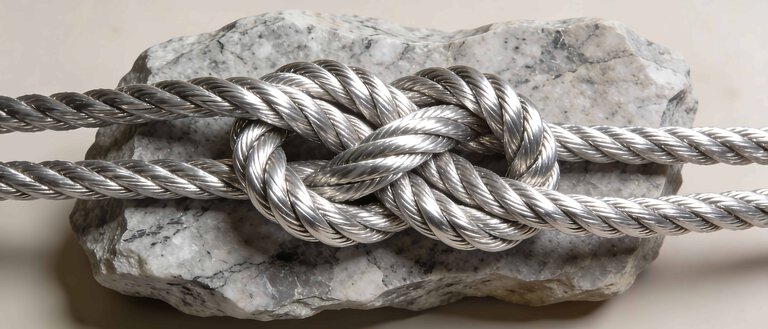
True haywire turns twist both wire legs together; barrel wraps only wind the tag around one leg
That distinction is the connection. In a true haywire turn both strands revolve around each other, so the load spreads across both legs of wire rather than pinching down on one. The barrel wraps that follow don’t carry load at all. They’re there to lock the tag, and that’s their whole job. A wrap that’s all barrels can look perfectly neat and still be missing the section that holds — it’ll look like a finished leader right up until it isn’t one.
Twisting the wire, then breaking the tag
- Pass single-strand wire through terminal eye and bend tag back alongside standing wire.
- Rotate both wire legs together to make several true haywire twists; each leg should spiral around the other.
- Transition cleanly into barrel wraps by holding standing wire straight and wrapping only the tag around it.
- Make several tight barrel wraps without overlap.
- Bend the tag at roughly a right angle and rock it back and forth at the final barrel wrap.
- Let metal fatigue break the tag off flush. Inspect the break for a burr before the leader goes near your hands or a fish.
Failure clue
Four things go wrong. The wrap is all barrels with no true haywire section under it. The haywire turns collapse partway through, so one leg ends up winding around a straight other leg, which is a barrel wrap wearing a different name. The tag gets cut instead of rocked off and leaves a spike — the easiest of the four to commit, because you’re holding pliers and you want to get back to fishing. Or the wire has taken a hard kink and goes back in the water anyway, which is asking a weakened point to hold under exactly the kind of fish that made wire necessary in the first place.
Single-strand wire only
Use: single-strand wire leaders. Skip: multi-strand cable or nylon/fluoro. Compare: manufacturer crimp systems for multi-strand wire. Loop knots aren’t substitutes for wire-specific construction.
How I check one before it goes anywhere near my hands
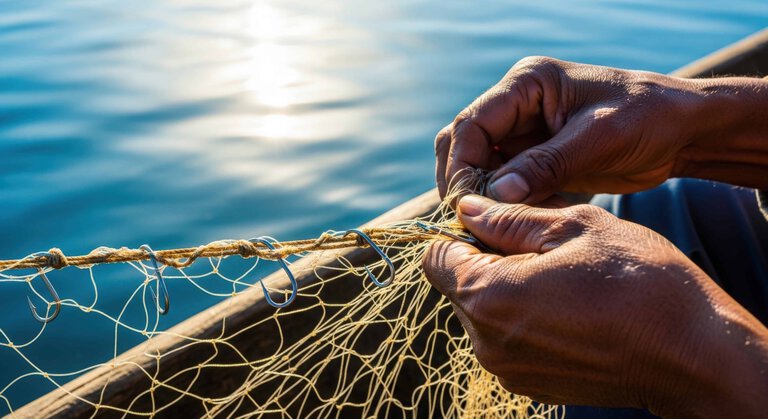
Every finished twist gets a slow fingertip pass over the broken tag end before it touches a leader bag or my hand for real, because that’s the one spot where a mistake bites back immediately instead of showing up later on the water. If I feel anything sharp, I redo the break instead of just filing it down. Watching hands is genuinely useful here since the haywire-to-barrel transition is hard to picture from a still image — NetKnots’ Haywire Twist animation is a solid starting point, and Salt Strong’s video with Capt. Mark Johnson, their written breakdown, and Tom Rowland’s demonstration all show the same sequence from slightly different angles. None of that replaces running your own finger over the break before you trust it, though.
THE SIX-MOVE CHECK
Job → Material → Route → Dress → Seat → Test
- Job. Name what the connection has to do before choosing the knot.
- Material. Confirm the line, leader, rope, wire, and hardware actually suit this structure.
- Route. Trace every pass before tightening anything.
- Dress. Put strands, wraps, and loops in their intended order with no accidental crossings.
- Seat. Tighten in the order this knot needs. More force does not repair bad geometry.
- Test. Inspect the finished shape, load it by hand when appropriate, and retie if anything moves or fails the article-specific checks.
Practice / pass test. Tie this knot three clean times without rushing. A tie passes only when it matches this article’s What to check before you trust it geometry, shows none of the listed failure clues, and survives the stated load/inspection test. If you cannot tell why one attempt is better than another, keep practicing—the lesson is recognition, not memorization.
KNOT SPEC
Haywire Twist — the short answers
- ALSO CALLED
- The Haywire Twist, often shortened to the haywire. No meaningful alternative name. Standard among anglers rigging single-strand wire for toothy fish — king mackerel and wahoo crews, shark and barracuda rigs.
- KNOT TYPE
- Single-strand wire termination, not a knot in line — paired haywire turns that carry load, finished with barrel wraps
- WHAT IT CONNECTS
- Attaches single-strand wire to a hook, lure, swivel or other terminal eye, or forms a wire loop. It is not for monofilament, fluorocarbon or braid, and not for multi-strand cable, which is sleeved and crimped instead.
- LINE TYPES
- Wire only, and only single strand — the stainless and coffee-colored leader wires in light to medium gauges. Heavy gauges get hard to twist cleanly by hand. Multi-strand cable will not form true haywire turns at all.
- STRENGTH BAND
- High for the material when true haywire turns are present. The band belongs to the wire rather than to a knot: it holds close to its rating unless kinked. A wrap made only of barrels does not qualify at all.
- DIFFICULTY
- Intermediate. The whole skill is one motion — rotating both legs around each other instead of winding one around the other — and it is easy to fake badly. Supervise children; wire ends cut skin.
- STEPS AND WRAPS
- Six moves. Several true haywire turns first, both legs spiralling around each other, then several tight barrel wraps with no overlap. Counts follow gauge: heavier wire takes fewer, larger turns and is harder to keep paired.
- TIE TIME
- A boat knot. Twenty to forty seconds once the motion is learned, quicker than crimping and with no sleeves to drop over the side.
- POOR CONDITIONS
- Reasonable. Wire holds its own shape, so wind and chop bother it far less than they bother nylon. Cold hands and gloves make the rocking break harder to judge, and that is exactly where the injury risk lives.
- THROUGH THE GUIDES
- Bulky and stiff, and it belongs at the terminal end. Wire leaders are not generally wound through guides. If one does reach the tip, expect it to hang up rather than pass.
- LUBRICATION
- Not applicable — wire needs no lubrication and wetting it changes nothing. What matters instead is that the wire is straight and unkinked before you start. A kink is permanent damage no careful twisting undoes.
- TAG END
- Do not cut it. Bend the tag to roughly a right angle and rock it back and forth at the last barrel wrap until metal fatigue breaks it off flush. A cut tag leaves a razor burr that opens thumbs and fish mouths.
- TOOLS
- Pliers to grip heavier gauges and to help rock the tag, and that is genuinely the kit. Do not reach for cutters at the finish. Gloves are sensible on heavy wire.
- BEST SUITED TO
- Toothy and abrasive fish — king mackerel, wahoo, barracuda, sharks, bluefish — where nylon and fluorocarbon get cut clean through. Not for everyday leader work, where wire costs you bites.
The strength bands are rough on purpose. Published knot tests don’t agree with each other — the same braid-to-leader knot has tested near ninety percent of line strength on one machine and under half on another, because the line brand, its diameter, how fast it got cinched, whether it was wet and whose hands tied it all move the number more than the knot does. Use the band to compare this knot with the others, not as a number to quote.
FIELD INTELLIGENCE
Where it earns its place, and where it costs you
Advantages
- Needs no hardware at all: no sleeves, no crimps, nothing extra to carry, lose or fit wrongly.
- True haywire turns spread the load across both legs of wire instead of pinching one leg against a straight one.
- Fast, repeatable and fully field-repairable with pliers and nothing else.
- Survives teeth and gill plates that would part any nylon or fluorocarbon leader.
Disadvantages
- A wrap made entirely of barrels looks tidy and holds far less. The mistake is invisible unless you know the two structures apart.
- Wire kinks, and a kinked wire is already weakened. There is no repair, only replacement.
- A cut tag end is a genuine injury hazard — a spike that cuts hands, clothing and the fish.
- Stiff and visible in the water, so it costs you bites from anything that inspects a bait before taking it.
- Heavy gauges are hard to twist cleanly by hand, and past a point crimped cable is simply the better answer.
Use a different knot when
- Crimped sleeves on multi-strand cable — when the leader is cable rather than single strand, or the gauge is too heavy to twist by hand
- Heavy fluorocarbon leader — when the fish has abrasive jaws rather than cutting teeth and you want more bites
- Albright Knot — when the job is joining wire or heavy leader to line rather than terminating it at hardware
WHAT TO CHECK BEFORE YOU TRUST IT
The Haywire Twist earns its place the moment teeth are the limiting factor and you need a terminal connection you can rebuild on a rolling deck with nothing but pliers. The useful check is the transition: a distinct paired section where both legs spiral around each other, then neat barrels behind it. A wrap that is all barrels is the common fake, and it looks finished right up until it is not. The other thing they check every single time is the tag — broken off flush by rocking, never cut. The tradeoff is bites. Wire is stiff and visible, so it goes on only when the alternative is losing the fish and the lure.
What actually makes it fail
- A wrap made entirely of barrel wraps, with no true haywire section underneath carrying the load.
- Haywire turns collapsing partway through, so one leg winds around a straight one — a barrel wrap by another name.
- A kink in the wire, most often where it turns through the hardware eye, which is permanent damage.
- A cut tag left as a spike, which cuts hands and can catch and start unwinding the wraps.
- Re-using wire that has already been bent, straightened or fought a fish. Wire work-hardens and does not forgive.
How to test it, and how it ages
Look for the two structures before you trust it. The paired haywire section should be visibly different from the barrels behind it — both legs spiralling evenly around each other, then tight barrels with no overlap and no gaps. Check the wire where it turns through the eye for any kink or flat spot. Then run a fingertip lightly over the broken tag end, and if you feel anything sharp, redo the break rather than filing it smooth. Load it with a firm steady pull against the hook, watching for the turns to slip or the wire to straighten. Wire gives none of the warning nylon does, so the inspection counts for more than the pull.
Over a session: It holds well for as long as the wire stays straight, and then not at all. Wire work-hardens, so check the leader after every fish and every snag, and replace a twist that has been kinked, bent back or straightened rather than fishing it again.
Troubleshooting
Why did my twist pull apart when the wraps looked neat?
They were almost certainly all barrel wraps. Barrels lock the tag and carry no load. You need several true haywire turns first, with both legs spiralling around each other.
How do I stop one leg just winding around the other?
Rotate both legs together as a pair instead of holding one still. If you feel one going stiff and straight while the other wraps around it, stop and start again.
Should I cut the tag off with pliers?
No. Bend it to a right angle and rock it until it fatigues and breaks off flush. A cut tag leaves a razor burr that will open your thumb or a fish’s mouth.
Can I use this on cable or very heavy wire?
No on cable — multi-strand will not form true haywire turns and needs a sleeve and crimp. Very heavy single strand is also better crimped than twisted by hand.
The wire kinked while I was rigging. Can I straighten it out?
No. A kink is permanent damage, and straightening it hides that damage rather than repairing it. Cut it off and start again with fresh wire.