LEADER · DOUBLED MAIN LINE
A Bristol whose return only caught one leg of the double looks every bit as finished as a good one. You find out the difference under load, which is the worst possible time. That’s what makes this knot dangerous rather than just difficult. The Bristol wraps a leader around a doubled main line, which is why you almost always see it following a Bimini Twist. It’ll connect braid to a mono or fluoro leader. But the doubled main line is load-bearing here, not decoration you can skip when you’re in a hurry.
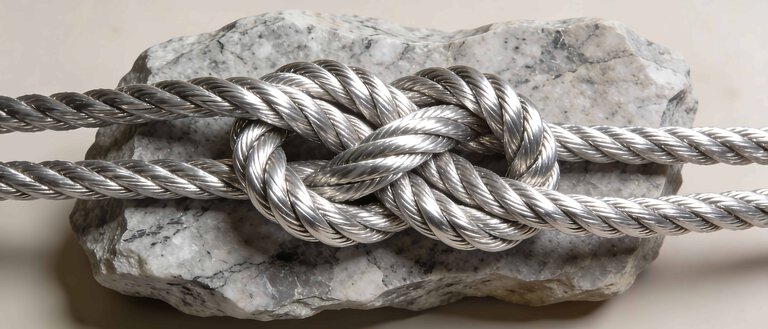
Through, around both legs, back through
What it actually does
Joins a shock or tippet leader to a doubled main line; supports braid-to-mono/fluoro systems.
What it needs first
A secure doubled main-line section. Without it, there’s nothing to grip.
Guide behavior
Relatively streamlined, as long as it’s dressed properly and trimmed close.
What it’s best suited for
A leader noticeably heavier than the main line, where the doubled surface underneath is what lets the thin line survive being gripped by something much heavier.
The leader grips a doubled line so the thin main line isn’t cutting into one strand
The leader tag goes through the doubled main line, wraps around both legs, then comes back out through the doubled opening. Then you load it. The leader barrel compresses onto a broad two-strand surface rather than pinching down on one skinny strand, and that spread is the reason a thin main line survives being gripped by something much heavier. The part that’s easy to miss is that “through the doubled opening” means both legs, every time, not whichever leg happens to be closest.
The double comes first, always
- Create the doubled main line first.
- Pass leader tag through the doubled section and leave a long tag.
- Wrap leader around both main-line legs several times, keeping turns adjacent.
- Return leader tag through the doubled opening in the same controlled direction.
- Moisten appropriate leader material and close gradually.
- Test the double line itself as well as the Bristol before trimming for guide passage.
Failure clue
A return that only picks up one leg is the dangerous one, because the knot looks finished and comes apart under load anyway. The other causes are easier to spot: a prerequisite double that was never strong to begin with, leader wraps that crossed instead of lying adjacent, or a trim that left a spike waiting to catch a guide. This is heavy-tackle territory, and a leader connection that fails at the boat puts a lot of stored energy somewhere you don’t want it. Test the double and the Bristol separately before you fish it.
Where it sits in the heavy-leader lineup
Use it: heavy leader to doubled main line, including braid-to-mono/fluoro systems. Skip it: when you’re tying straight off a single line, since there’s nothing here for it to grip. Compare: Yucatan and the Aussie Quickie for other doubled-line systems, FG for single braid, Slim Beauty for a heavy leader mismatch.
Trace the return against the light
Hold every Bristol up to the light and trace the return with your eyes, both legs, before you pull-test anything. NetKnots has a solid reference for the Bristol Knot if you want to see that return path clearly before you’re checking your own hands under worse light than you have right now.
Open the deeper knot workflowJob, material, route, dressing, seating, pull-test checks and the standardized comparison record.
THE SIX-MOVE CHECK
Job → Material → Route → Dress → Seat → Test
- Job. Name what the connection has to do before choosing the knot.
- Material. Confirm the line, leader, rope, wire, and hardware actually suit this structure.
- Route. Trace every pass before tightening anything.
- Dress. Put strands, wraps, and loops in their intended order with no accidental crossings.
- Seat. Tighten in the order this knot needs. More force does not repair bad geometry.
- Test. Inspect the finished shape, load it by hand when appropriate, and retie if anything moves or fails the article-specific checks.
Practice / pass test. Tie this knot three clean times without rushing. A tie passes only when it matches this article’s What to check before you trust it geometry, shows none of the listed failure clues, and survives the stated load/inspection test. If you cannot tell why one attempt is better than another, keep practicing—the lesson is recognition, not memorization.
KNOT SPEC
Bristol Knot — the short answers
- ALSO CALLED
- Bristol Knot, also called the Bristol Warp. No meaningful regional alias. Associated with offshore and big-game anglers who run a Bimini double ahead of a heavy leader.
- KNOT TYPE
- Line-to-line knot — leader wrapped around a doubled main line and returned through the double
- WHAT IT CONNECTS
- A shock or heavy leader onto a doubled main line, usually behind a Bimini Twist. Not a terminal knot, and not for single-strand main line.
- LINE TYPES
- Braid or mono main line that has been doubled, joined to a heavier mono or fluorocarbon leader. It relies on the leader being clearly heavier. On a single strand it crushes the main line rather than gripping it.
- STRENGTH BAND
- High. The doubled main line spreads the leader’s grip across two strands, which is what lets thin line survive a much heavier leader. Its band is inherited from the double beneath it, and published rankings in this group disagree widely.
- DIFFICULTY
- Advanced overall. The wraps are straightforward; the Bimini in front of them is not, and the return through the double is easy to get wrong in a way that still looks finished. Not a beginner or child knot.
- STEPS AND WRAPS
- Six moves after the double exists. Five to seven leader turns around both legs of the double, then the tag returns back through the doubled opening. Heavier leader takes fewer turns, lighter leader a couple more.
- TIE TIME
- A home knot. The wrap sequence takes about a minute; the double ahead of it takes longer. Build these before you leave, and carry spare rigged leaders rather than tying one in a bite window.
- POOR CONDITIONS
- Poor to fair in bad conditions, mostly because of the prerequisite. In low light the return through the double is exactly the detail you cannot verify, and that is the detail that fails. Tie it where you can see it.
- THROUGH THE GUIDES
- Reasonably streamlined for a doubled-line connection once it is dressed and trimmed close. It will run through larger guides on the cast, but on small guides the leader barrel and the shoulder of the double both make themselves felt.
- LUBRICATION
- Yes. Wet the leader and close the wraps gradually. Heavy fluorocarbon drawn down dry across doubled braid burns itself, and a heavy leader gives you the strength to do that damage without noticing.
- TAG END
- Trim the leader tag close, without leaving a spike; run a thumbnail over it to check. Leave the main-line tags from the double trimmed short and neat so they do not stand off and catch.
- TOOLS
- None strictly required. Nippers to trim, pliers to hold heavy leader while you close the wraps, and whatever you use to build the Bimini — a knee, a foot, or a Bimini tool.
- BEST SUITED TO
- Offshore and big-game work — tuna, marlin, wahoo, big kingfish — and any heavy-leader system where the main line is already doubled. Also used for heavy shock leaders in surf and jetty fishing.
The strength bands are rough on purpose. Published knot tests don’t agree with each other — the same braid-to-leader knot has tested near ninety percent of line strength on one machine and under half on another, because the line brand, its diameter, how fast it got cinched, whether it was wet and whose hands tied it all move the number more than the knot does. Use the band to compare this knot with the others, not as a number to quote.
FIELD INTELLIGENCE
Where it earns its place, and where it costs you
Advantages
- The leader grips two strands, so a thin main line is not crushed by a much heavier leader.
- Handles very large size mismatches that would defeat an in-line barrel knot.
- Streamlined enough to pass larger guides when dressed and trimmed properly.
- The doubled main line provides redundancy behind the connection.
- Simple wrap sequence once the double is built, and quick to repeat.
Disadvantages
- It fails in a hidden way: a return catching only one leg looks completely finished and comes apart under load.
- Depends on a Bimini or equivalent double, so it is not available to you unprepared.
- Everything it does is limited by the quality of that double, which is hard to assess afterward.
- Poor knot to tie in low light or rough water, because the one detail that matters is a visual check.
- Heavy tackle failure at the boat sends a lot of stored energy somewhere unpleasant.
Use a different knot when
- FG Knot — when the main line is single-strand braid and you want a slim leader connection
- Yucatan Knot — when you want a simpler wrap onto a doubled line with fewer places to go wrong
- Aussie Quickie — when the leader is fluorocarbon and you want a longer wrap package on the double
- Slim Beauty — when there is a large size mismatch but no doubled main line to work with
WHAT TO CHECK BEFORE YOU TRUST IT
The Bristol belongs on heavy-leader offshore rigs where a Bimini double is already part of the system. Its real value is that the heavy leader compresses onto two strands instead of pinching one thin one. Hold the finished knot up to the light and trace the final return with your eyes, confirming both legs pass through it, before you load anything. That single check is the difference between a knot and a disappointment. The tradeoff is that it is a prepared knot, not a field knot, and its failure mode gives you no warning at all.
What actually makes it fail
- The final return picking up only one leg of the double, which looks correct and lets go under load.
- A weak or uneven Bimini beneath it, which the Bristol cannot compensate for.
- Leader wraps crossing rather than lying adjacent, concentrating load on a single turn.
- The wraps closed dry, burning heavy fluorocarbon against the doubled line.
- A trimmed leader tag left as a spike, which catches guides and can lift the barrel.
How to test it, and how it ages
Hold it up to the light before you pull on anything and trace the return: both legs of the double must pass through it. Then check the leader barrel sits straight along the double rather than skewed, with adjacent turns and no crossings, and that the two legs of the main line stayed parallel through the package. Wet it, close it gradually, and load the double and the Bristol separately with a steady pull. Anything that moves gets cut. On heavy tackle, test it away from your face.
Over a session: Stable over a session and over repeated hard fights once seated correctly. The part that ages is the double, so inspect the Bimini as often as the connection and rebuild the whole assembly rather than the leader alone.
Troubleshooting
Why did it come apart when it looked perfect?
The return almost certainly caught only one leg of the double. Trace it against the light every time before loading it.
Can I tie it straight onto single braid?
No. Without the double the heavy leader pinches one thin strand and cuts it. Use an FG or a Slim Beauty there.
How many wraps should the leader take?
Five to seven. Heavier leader wants fewer, lighter leader a couple more. Even adjacent turns matter more than the exact count.
Why does the leader barrel sit crooked?
It was closed too fast, or the wraps were not dressed while they were still loose. Draw it down in stages and straighten it as you go.
Should I test the Bimini separately?
Yes. Load the double on its own first. If the Bristol fails you want to know which of the two knots let go, and on heavy tackle you want to find out at the bench.