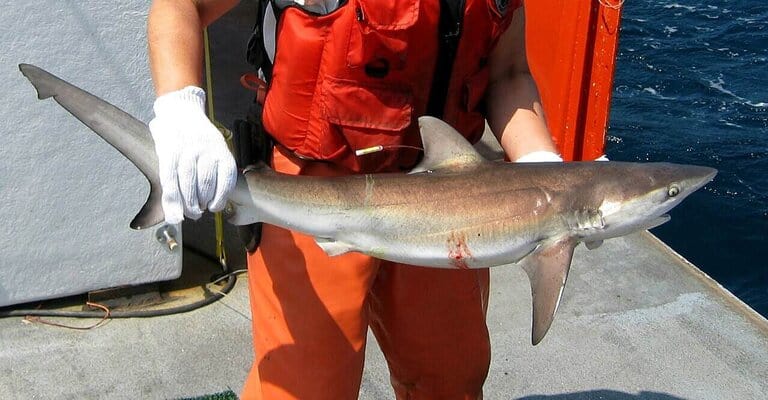
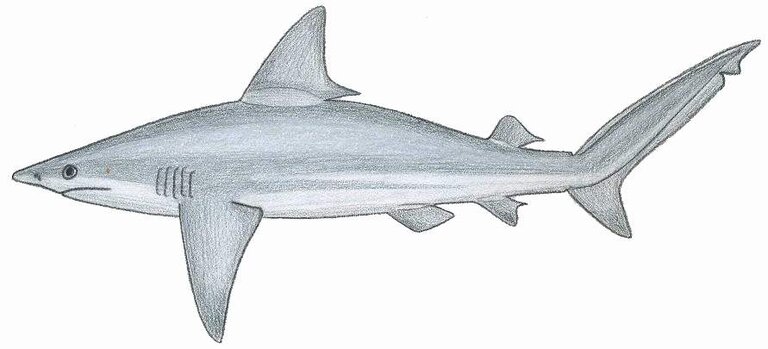
Spot are the little drum with one dark shoulder mark, moving into estuaries in spring and offshore to spawn in fall. Bigger fish eat them, but a heavy spot run only proves the bait showed up, not the predators.
By HunterUpdated September 14, 2026Read 7 min
Image: schooling over estuary sand
Spot are small enough to get dismissed as bait and important enough that doing so misses the whole fish. They connect tidal-creek nurseries to larger predators, and their short lives make one strong year class feel like a permanent rule—until the next season proves it was not.
At a glance · The useful version
Scientific name
Leiostomus xanthurus.
Field marks
One dark shoulder spot behind the gill, forked tail, small mouth, and oblique bars on a silvery-brassy body.
Habitat
Shallow estuaries in warm months; offshore spawning migration as water cools.
Food
Worms, small crustaceans, mollusks and organic material on or in soft bottom.
Ecological role
Major forage for Striped Bass, Weakfish, Summer Flounder, Bluefish and sharks.
Management
Abundance and fishing mortality remain unknown; state limits differ.
01 · Identification
The shoulder spot is the start, not the whole answer
Namesake mark
The dark spot sits just behind the gill cover near the shoulder. Use it with the small, slightly inferior mouth, forked tail and body shape; marks can be obscured by glare or handling.
Croaker comparison
Atlantic Croaker show small chin barbels and wavy upper-body bars and do not depend on one shoulder spot for identification. In a mixed catch, look under the chin before sorting by size.
Not every spotted fish
Pinfish, juvenile drums and other silvery estuary fish can confuse a fast bait bucket. Stop and check fin shape, mouth position, shoulder mark and chin rather than trusting one nickname.
02 · Life cycle
A short-lived fish makes uneven seasons
Seasonal map
Spot enter bays and estuaries in spring, remain through summer, and move offshore in fall as water cools. Northern fish also shift south. Spawning occurs offshore from fall into early spring.
Spot are short-lived, and a season’s catch can lean heavily on one year class. A dock report saying “they are everywhere” describes that moment, not a stable population promise.
Good soft bottom usually combines food with tolerable oxygen and current. Foul black mud, heavy debris or repeated empty drifts should not be defended because the chart says “mud.”
Edges
Creek mouths, channel lips, sand–mud seams and gentle shoal drops compress travel and feeding. The first short drift should cross one of those changes, not wander across an entire basin.
Salinity as movement context
Growing juveniles generally move toward saltier portions of estuaries as the season advances. Rainfall and freshwater flow can shift that pathway, so salinity trend is more useful than one copied waypoint.
04 · Tide
Let current deliver the bait without stealing control
Flooding water
A rising tide can open shallow feeding ground and creek edges. Begin on the access route, then follow fish shallower only if bites or bait confirm the move.
Ebbing water
Falling water can pull food and fish toward drains and channels. Set up where the flow exits habitat instead of casting randomly into the middle.
Slack adjustment
At weak current, reduce weight and let the bait move naturally. If the school scatters, searching a nearby break may beat waiting for the exact spot to restart.
Current overload
When the rig will not hold or report bottom, change sinker, line angle or location. A spinning bait dragged far above the substrate is no longer testing Spot water.
05 · Light bottom rig
Small fish expose sloppy terminal tackle
Hook scale
Choose a small hook with enough exposed gap for the bait. Oversized chunks fold around the point and turn real bites into stolen bait.
Leader
A short leader keeps the bait near bottom and resists tangles in current. Add length only when the rig fishes cleanly and a freer presentation produces evidence.
Weight
Use just enough to reach bottom and maintain intermittent contact. Too much weight deadens taps and plows; too little creates a drifting kite.
One versus two hooks
A second hook can reveal bait preference or depth, but it also doubles tangles and slows releases. Start simple when teaching the spot or when mixed small fish are dense.
06 · Bait size
The bite should reach the hook, not just the bait
Compact offering
A short worm piece, narrow squid strip or other legal local bait should leave the point and gap clear. The smallest bait that stays on and earns clean hookups is usually the better test.
Thread straight
Crooked strips spin. Thread enough bait to survive the cast, then pinch off excess instead of wrapping it into a ball.
Freshness versus placement
Fresh bait helps, but bottom position wins first. If clean baits return untouched, move across a habitat or tide edge before cycling through the cooler.
Bait conservation
Prepare only what the session needs. Discarded bait and packaging do not belong in the same nursery water the fish use.
07 · School reading
A Spot bite is a moving target
First fish
Mark depth, bottom, tide direction and where the rig was in the drift. Repeat that line immediately; do not use the first fish as permission to fan-cast everywhere.
Rapid taps
If baits vanish with no weight, downsize, expose the point and hold steadier. If the same result continues, the school may be too small or a different bait thief may be present.
Sudden stop
The school may have shifted with current, moved along the bottom edge, or compressed under predator pressure. Search one short step up-current, down-current or deeper before abandoning the area.
Size bands
A run of similar-size fish may represent the same year class. Handle that concentration conservatively; high catch rate is not proof the broader stock is strong.
08 · From forage to predator signal
Spot tell a second story
Documented predators
ASMFC lists Striped Bass, Weakfish, Summer Flounder, Bluefish and sharks among Spot predators.
A school that bunches, showers, rises off bottom or disappears abruptly may be reacting to predators. Scan above and around it, but do not claim a predator until you mark or catch one.
Two-level plan
Keep one light rig proving the Spot are still present while a second legal presentation tests the edge for a predator. That preserves the forage signal instead of replacing it with guesswork.
09 · Using Spot as bait
Legal, lively, and only as many as needed
Check first
Bait possession, transport, hook placement, seasons and live-lining rules can differ from ordinary harvest rules. Confirm the rule for both where the Spot is caught and where it will be used.
Handling
Wet hands, minimize air exposure and move fish into clean, aerated water quickly. Crowding, hot water and repeated netting convert live bait into weak bait.
Selectivity
Take only the bait size and number the plan can use. A mixed school is part of the estuary food web, not free inventory.
Release extras early
Return unnecessary fish before they are exhausted. “Saving them just in case” is poor handling when the livewell cannot support the load.
10 · Food fish and release
Small does not mean disposable
Harvest decision
Spot are eaten as well as used for bait. Decide in advance whether the catch is for food, bait or release, and stop when the real need is met.
Rapid sorting
Keep the measuring tool and rule reference ready. Separate Spot from Croaker and juvenile drum while fish are wet and ventilating.
Deep hook
Use a dehooker or cut close when removal would cause major injury and release is lawful. A tiny hook is not worth a long dry surgery.
Temperature
Warm shallow water holds less oxygen. In heat, shorten handling and reduce livewell crowding before chasing one more bait.
11 · Stock status and management
High local abundance is not a coastwide assessment
Current label
ASMFC lists Spot population abundance and fishing mortality as unknown. The 2017 assessment was not recommended for management advice because of conflicting trends and uncertainty.
Using data through 2024, harvest indicators crossed thresholds while abundance indicators did not. In August 2025, the Board kept existing measures and noted continued low harvest and a future benchmark assessment.
The interstate plan produced management responses, but anglers still fish under state-specific rules. Use the current state regulation page for size, bag, season and bait use; do not copy another state’s number.
Profile rebuilt 2026-09-14. Regulations, closures, possession rules, bait rules and protected areas can change during a season. Check the agency for the exact water and date before fishing.
The best Spot anglers are doing two jobs at once: catching a small bottom feeder and reading what the whole estuary is doing around it. That is why clean rigs, short repeatable drifts and careful handling matter more than filling a bait bucket fast.
Saltwater & CoastalSurf, shoreline, nearshore, offshore, and deep-sea fishing — technique, gear, and safety content spanning the full range from the beach to blue water.103 articles
Species & BehaviorFish behavior, habitat, depth, forage relationships, and species-specific field decisions. Start with the Freshwater Fish Species field guide.159 articles
Cookie Consent
We use cookies to improve your experience on our site. By using our site, you consent to cookies.
Contains information related to marketing campaigns of the user. These are shared with Google AdWords / Google Ads when the Google Ads and Google Analytics accounts are linked together.
90 days
__utma
ID used to identify users and sessions
2 years after last activity
__utmt
Used to monitor number of Google Analytics server requests
10 minutes
__utmb
Used to distinguish new sessions and visits. This cookie is set when the GA.js javascript library is loaded and there is no existing __utmb cookie. The cookie is updated every time data is sent to the Google Analytics server.
30 minutes after last activity
__utmc
Used only with old Urchin versions of Google Analytics and not with GA.js. Was used to distinguish between new sessions and visits at the end of a session.
End of session (browser)
__utmz
Contains information about the traffic source or campaign that directed user to the website. The cookie is set when the GA.js javascript is loaded and updated when data is sent to the Google Anaytics server
6 months after last activity
__utmv
Contains custom information set by the web developer via the _setCustomVar method in Google Analytics. This cookie is updated every time new data is sent to the Google Analytics server.
2 years after last activity
__utmx
Used to determine whether a user is included in an A / B or Multivariate test.
18 months
_ga
ID used to identify users
2 years
_gali
Used by Google Analytics to determine which links on a page are being clicked
30 seconds
_ga_
ID used to identify users
2 years
_gid
ID used to identify users for 24 hours after last activity
24 hours
_gat
Used to monitor number of Google Analytics server requests when using Google Tag Manager
1 minute
Jetpack's built-in visitor analytics. It records page views, referring sites, search terms, and outbound link clicks, and also carries the shared visitor-tracking library used by Jetpack Instant Search and WooCommerce Analytics.