Croaker feel for worms and small crustaceans in soft bottom with their chin barbels, grow up in estuaries, and head offshore to spawn in fall and winter. That map tells you more than the croak does.
By HunterUpdated September 19, 2026Read 8 min
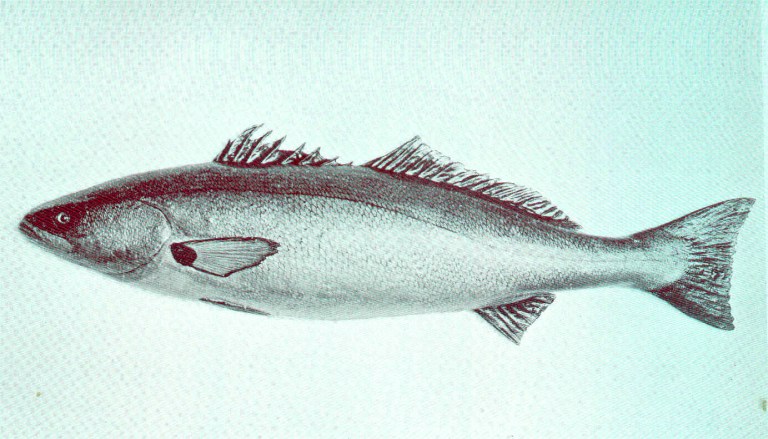
Atlantic Croaker (Micropogonias undulatus) from a Gulf of Mexico survey, shot flat against a plain field so the downturned mouth and the chin barbels it feeds the bottom with are both in view. Photo: SEFSC Pascagoula Laboratory / NOAA Fisheries, public domain.
Atlantic Croaker reward anglers who stop treating “the bottom” like one flat place. Mud, sand, shell, channel edges and moving water each change where food collects and how a bait travels. The croak is memorable. The real lesson is reading the next twenty feet of bottom.
At a glance · The useful version
Scientific name
Micropogonias undulatus.
Family
Sciaenidae—the drum and croaker family.
Field marks
Small chin barbels and pores, deeply notched dorsal fin, brassy wavy bars, and a double-concave tail.
Habitat
Estuaries and coastal water over mud, sand and shell; juveniles use nursery habitat.
Food
Bottom invertebrates and small prey reached with a compact bait close to bottom.
Management
Coastwide stock status remains unknown; local limits vary.
01 · Identification
A hardhead is not just any small silver drum
Chin and pores
Maryland DNR lists three to five pairs of small chin barbels plus five pores. Those are better separators than overall silver color.
Look for a deeply notched dorsal, wavy brassy markings along the upper side, and a distinctly double-concave tail. The bars can fade on larger fish, so use several traits together.
Specialized muscles vibrate the swim bladder to make the croaking or drumming sound. That places Croaker beside Black Drum and other sciaenids biologically; it does not mean every vibration felt through the rod is the fish vocalizing.
Along the U.S. Atlantic coast, Croaker are most abundant from Chesapeake Bay to northern Florida, although the broader western Atlantic range is larger.
Adults move into Chesapeake Bay and other estuaries in spring and trend oceanward in fall. Spawning occurs in warm shelf waters in fall and winter; larvae and juveniles settle into estuaries.
Shallow shoals, creeks and estuarine margins are not spare habitat. They are production space. Avoid tearing vegetation or repeatedly anchoring through fragile nursery bottom just to hold on a bite.
03 · Bottom map
Mud, sand and shell do different work
Mud
Soft bottom holds worms, small crustaceans and buried food. Productive mud often feels alive through repeated light taps, bait marks and a clean drift—not just through one accidental fish.
Sand
Sand beside a channel or shoal creates a travel lane and feeding edge. If bites appear only on one part of the drift, mark the entry and exit points instead of calling the whole area good.
Shell
Shell scatters scent and current while threatening leaders. A few shells on the hook or repeated roughness can confirm the substrate even before the fish do.
Transition first
The seam between bottom types often gives the best first test because it combines food and travel. Make a short controlled pass across the seam before parking.
04 · Tide and current
Enough movement to deliver food, not enough to wreck the bait
Slack
Near slack, fish may spread or stop feeding aggressively. Use less sinker, smaller baits and slower movement to keep contact without pinning the rig.
Building current
As flow starts, a bottom rig gains scent trail and coverage. Add only enough weight to maintain periodic contact; a sinker that plows hides the change in bottom.
Too much sweep
If the line bows and the bait races across the bottom, shorten the scope, change angle, increase weight one step or move to a protected edge. More weight is not the only answer.
Repeat the window
A short run of bites at one tide stage is more useful than a vague “morning bite.” Note direction, strength and where the drift crossed the structure.
05 · Rigging
Build a rig that reports the bottom
One-hook test rig
A simple sinker, short leader and small hook reduce tangles and make bite diagnosis clear. Add a second hook only when the first rig fishes cleanly and local rules allow it.
Sinker choice
Use the lightest sinker that reaches and periodically touches bottom. Pyramid or bank shapes hold or roll differently; choose based on whether the job is to anchor a bait or sweep it through a lane.
Leader length
Start short enough to resist tangles. Lengthen only if fish are clearly avoiding the rig or the bait needs more movement. A long leader in heavy current can lift or twist away from the feeding zone.
Hook and bait scale
Croaker often take compact baits. Match hook gap to bait thickness, not to hope. A bait that fills the gap can create taps without hookups.
06 · Bait and presentation
Small, straight, and close to where the food lives
Documented angler baits
Maryland DNR lists bloodworms, squid strips, peeler crab and soft crab. That list is a starting menu, not permission to use a bait where harvest or transport is restricted.
Thread or pin a narrow piece so it survives the cast without spinning. Leave scent and motion, but keep the hook point and gap exposed.
Keep the bottom honest
Lift just enough to feel weight and substrate, then return the rig. Constant sweeping can move the bait out of the school and makes a shell strike look like a fish.
Scent is not a location plan
Fresh bait cannot rescue an empty flat. Find the substrate/current combination first, then judge baits.
07 · Bite recognition
Translate taps into a next move
Fast pecks
Repeated fast pecks with stripped bait suggest bait thieves, undersized fish or a bait too large to inhale cleanly. Downsize the offering before changing the whole spot.
Load and move
When the rod begins to load and travel, reel into steady pressure. A dramatic hook-set can pull a small bait out or tear a soft mouth.
Misses on one side
If bites happen only as the rig crosses one line, shorten the next drift and hit that path again. Location solved more of the problem than lure choice.
No signal
After a clean bait has crossed two different bottom features without life, move. Waiting longer is not the same as testing better.
08 · School logic
Do not turn the first fish into a permanent address
Repeat quickly
Return to the productive line while the tide and school position still match. Change only one variable if the second pass fails.
Size shift
A sudden run of smaller or larger fish can mean the boat moved along the edge of a school or a different year-class entered. Adjust bait size and retention decisions accordingly.
Predator signal
Croaker are forage for larger coastal predators. A school that bunches tightly, rises off bottom or suddenly disappears may be reporting pressure. That is a reason to watch for Weakfish, Red Drum or Striped Bass—not proof they are present.
09 · Bycatch and sorting
The family resemblance matters at the rail
Spot
Spot carry the namesake dark shoulder spot and lack the Croaker’s same chin-barbel pattern. Confirm before using one as bait or counting it against a bag.
Weakfish
Weakfish have a more toothy mouth and spotted upper body and fins. Handle gently; the name reflects a mouth that tears more easily than Croaker’s.
Young drum
Small Red or Black Drum can overlap on bottom rigs. Learn tail spotting, body bars and chin barbels before the mixed-school day begins.
Sort wet and fast
Prepare the measuring surface and regulation reference before fishing. Return unwanted fish promptly instead of building a dry identification lineup.
10 · Harvest and release
A full cooler is not the only definition of success
Food quality
Croaker can be good table fish, but small fish yield little after cleaning. Decide a useful keeper threshold before the bite accelerates and stop at what will actually be used.
Release
Wet hands, avoid squeezing the abdomen, support the fish, and remove the hook quickly. If deeply hooked and legal to release, cut the leader rather than causing major damage for a cheap hook.
Baitfish ethics
A legal fish is still part of a variable year class and the coastal food web. If keeping fish for bait, take only the number the plan requires and keep them in suitable water.
11 · Stock status and regulations
Unknown means unknown
Current assessment label
ASMFC lists Atlantic Croaker population abundance and fishing mortality as unknown. A new benchmark assessment was under peer review in 2026; do not replace that uncertainty with a casual “healthy” or “collapsed” label.
With data through 2024, regional trend metrics crossed thresholds, but the Board maintained existing measures while awaiting the benchmark assessment. This is precautionary management under uncertainty.
ASMFC’s interstate framework does not make one coastwide angler limit. Maryland’s Fish Facts page, for example, displays a state size and creel rule and directs anglers to its live regulation page. Use the current rule for the water you are standing in.
Clean contact, no bites: cross a mud–sand–shell transition.
Pecks, no hookups: reduce bait bulk and expose the hook gap.
One fish: repeat the exact drift before changing bait.
School fades: check tide stage and predator/bait movement, then relocate.
Keep moving · The next decision is nearby
Related species and field guides
Spot — Separate the two common estuary bottom feeders.
Weakfish — Read a delicate-mouthed predator using the same nursery system.
Black Drum — Compare barbels, sound production and shell-bottom feeding.
Red Drum — Follow the predator/forage handoff across estuary edges.
Evidence · Follow the source, not the summary
Primary sources and current-management checks
ASMFC — Atlantic Croaker — life history, management framework, current unknown stock status and 2024-data trend review.
Maryland DNR — Atlantic Croaker — diagnostic traits, Chesapeake habitat, seasonal movement and current-state regulation gateway.
Profile rebuilt 2026-09-14. Regulations, closures, possession rules, bait rules and protected areas can change during a season. Check the agency for the exact water and date before fishing.
Croaker fishing gets much less random when the rig becomes a probe. Feel the bottom, repeat the productive line, and let the misses tell you whether the next change belongs in bait size, sinker, angle or location.
FIELD OBJECT
This one should leave the page.
The article is the long version. These are the pieces worth carrying into the next trip.
The 30-second version
Croaker feel for worms and small crustaceans in soft bottom with their chin barbels, grow up in estuaries, and head offshore to spawn in fall and winter. That map tells you more than the croak does.
What to watch
A hardhead is not just any small silver drum
Estuary in, shelf out
Mud, sand and shell do different work
Enough movement to deliver food, not enough to wreck the bait
Field card
No bottom contact: fix weight, scope or angle.
Clean contact, no bites: cross a mud–sand–shell transition.
Pecks, no hookups: reduce bait bulk and expose the hook gap.
One fish: repeat the exact drift before changing bait.
School fades: check tide stage and predator/bait movement, then relocate.
RIGHT TOOL, NEXT
Tackle Link Analyst
Follow the load path and find the part of the setup that actually limits the rest.
We use necessary cookies to operate the site. With your choice, we may also use analytics and advertising cookies. Choose Accept All, Reject, or Preferences.
Used to determine whether a user is included in an A / B or Multivariate test.
18 months
_ga
ID used to identify users
2 years
_gali
Used by Google Analytics to determine which links on a page are being clicked
30 seconds
_ga_
ID used to identify users
2 years
_gid
ID used to identify users for 24 hours after last activity
24 hours
_gat
Used to monitor number of Google Analytics server requests when using Google Tag Manager
1 minute
_gac_
Contains information related to marketing campaigns of the user. These are shared with Google AdWords / Google Ads when the Google Ads and Google Analytics accounts are linked together.
90 days
__utma
ID used to identify users and sessions
2 years after last activity
__utmt
Used to monitor number of Google Analytics server requests
10 minutes
__utmb
Used to distinguish new sessions and visits. This cookie is set when the GA.js javascript library is loaded and there is no existing __utmb cookie. The cookie is updated every time data is sent to the Google Analytics server.
30 minutes after last activity
__utmc
Used only with old Urchin versions of Google Analytics and not with GA.js. Was used to distinguish between new sessions and visits at the end of a session.
End of session (browser)
__utmz
Contains information about the traffic source or campaign that directed user to the website. The cookie is set when the GA.js javascript is loaded and updated when data is sent to the Google Anaytics server
6 months after last activity
__utmv
Contains custom information set by the web developer via the _setCustomVar method in Google Analytics. This cookie is updated every time new data is sent to the Google Analytics server.
2 years after last activity
Jetpack's built-in visitor analytics. It records page views, referring sites, search terms, and outbound link clicks, and also carries the shared visitor-tracking library used by Jetpack Instant Search and WooCommerce Analytics.