Sailfish are best understood through the current edge, bait-school behavior, live-bait and kite presentation, circle-hook timing, and an immediate in-water release.
By HunterUpdated September 14, 2026Read 10 min
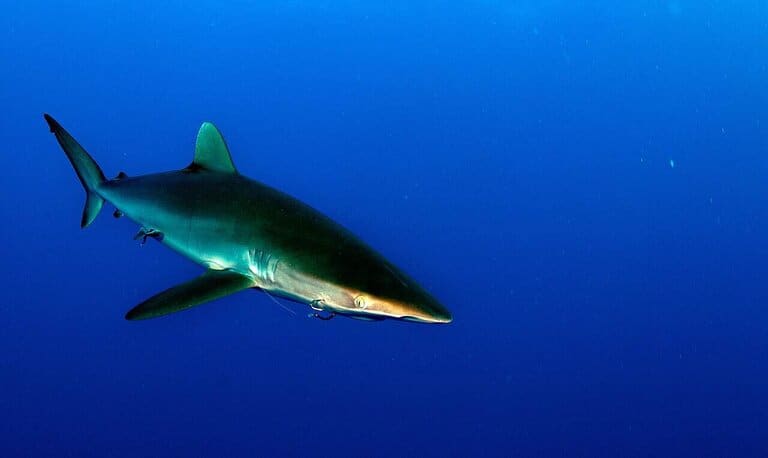
Atlantic Sailfish underwater. Photo by Michael Worden via Unsplash.
A Sailfish raises a dorsal fin taller than the rest of the fish and somehow still gets reduced to a speed claim. The sail is more useful as biology. It helps identify the fish, changes the silhouette you watch around a bait school, and makes surface behavior easier to read before line ever leaves the reel.
At a glance · The useful version
I have not flown a kite bait for Sailfish off Florida. That keeps me out of the tiny rigging preferences a local crew earns over seasons, but it does not prevent a careful sequence: identify the fish, find the current-and-bait intersection, present one healthy bait, then release it in the water.
Scientific name
Istiophorus platypterus; Atlantic management material may use I. albicans.
Field marks
Huge spotted first dorsal sail, very long narrow pelvic fins, bill and blue-brown back fading to a pale belly.
Water
Offshore and near-current-edge habitat, including seasonally productive water close to southeast Florida.
Food
Small pelagic fishes and squid.
First question
Where is the moving water compressing bait close enough to the surface to read?
Western Atlantic stock
ICCAT’s current summary says overfished is more likely than not, while overfishing was unlikely in the terminal assessment year; catch uncertainty is substantial.
01 · Identification
The sail is obvious; the rest still matters
First dorsal
The enlarged first dorsal begins square in front, reaches its greatest height near the middle and carries dark spots. White Marlin and juvenile Blue Marlin do not carry that enormous sail-shaped fin.
Sailfish have extremely long, narrow pelvic fins. NOAA’s identification sheet puts those fins beside the sail, bill and body proportions so the name does not rest on one dramatic feature.
The sides can show bright vertical bars when the fish is excited. Bars describe a moment of behavior more reliably than they identify the species by themselves.
Name caution
Taxonomy has shifted between one worldwide species and Atlantic/Pacific names. This profile uses Istiophorus platypterus for the species while preserving I. albicans where the ICCAT source uses it.
02 · Growth and feeding
A fast-growing fish can still need careful handling
Early growth
FWC reports Sailfish reaching four to five feet in their first year. That growth helps explain a body designed for rapid feeding and movement, but it does not make an exhausted fish disposable.
Small fishes and squid form the core diet. Off southeast Florida, blue runners, pinfish, mullet, scads, ballyhoo and squid are among the baits FWC lists as attracting Sailfish.
Sailfish can slash through schooling prey, then turn on stunned or separated fish. A bait shower is therefore both a location clue and a warning that the first visible swipe may not be a bite.
Surface behavior
The dorsal may rise during feeding, turning and other excited behavior. Watch direction and repeated passes; a raised sail does not automatically mean the fish has chosen your bait.
03 · Current and season
The coast can be close while the habitat keeps moving
Southeast Florida
Sailfish can move close to shore along southeast Florida, especially where the Florida Current presses suitable water and forage against the coast. Distance from land is not the habitat variable; moving water and prey are.
Wind effect
Wind can move surface water, weed and bait across or along the current edge. A hard color line visible yesterday may spread, fold or slide, so a dock report needs today’s sea and current attached to it.
Temperature
Warm water makes the area plausible. A sharp temperature break becomes useful when bait, birds or repeated marks confirm that it changed feeding conditions.
Spawning note
FWC describes summer near-surface spawning off southeast Florida. That observation is regional and seasonal; it should not be used to explain every group of fish seen at the surface.
Watch what leaves the water and what stays below it
Bait shape
Tight, flashing bait with predators cutting beneath it is different from a loose school traveling normally. Note which side compresses, whether the school moves up-current, and whether attacks repeat.
Bird height
Low birds dipping repeatedly can locate prey near the surface. High birds traveling in one direction may be commuting. Neither identifies the predator without a fish, bill or sail.
Free-jumpers
A jumping Sailfish proves a fish was present at that time. It may mark a productive zone, but the jump is not a stationary target. Approach the surrounding water pattern instead of running straight at the splash.
Sounder evidence
If the surface goes quiet while bait remains marked below, the problem may be presentation depth. Silence is not automatically a reason to leave if the food chain is still visible on the screen.
05 · Live-bait drift
A healthy bait tells you when the setup is wrong
Field inference. The sequence here is built around bait condition, current and circle-hook mechanics. Local crews will tune leader length, hook size and bait choice to their fishery.
Rig before the zone
Select and rig baits before entering the best water. A hook placement that restricts breathing or makes the bait spin has already failed before a Sailfish sees it.
Spread by depth and side
Separate flat lines, weighted baits and any down-current positions enough to read each one. More baits are not better when they tangle or hide each other.
Let the bait report
A bait that races, showers, dives or turns across the drift may be reacting to pressure. Watch several baits together: one tired bait behaves badly; several changing at once may be telling you a predator arrived.
Drift the structure
Set the drift to cross or track the bait-carrying edge. Repeatedly missing the line by a hundred yards is a navigation problem, not a bait-color problem.
06 · Kite presentation
The kite changes where the line enters the water
What it solves
A kite can keep terminal line out of the water and hold a live bait at or just below the surface away from the boat. That gives the crew a visible presentation and reduces line in the bait’s immediate lane.
What it adds
Kite angle, wind, clips, multiple baits and sea state create extra failure points. The rig needs to be tested before fishing so a release clip, not a Sailfish, is the first thing that proves it was assembled wrong.
Bait position
Keep the bait lively at the intended surface depth without lifting it clear or drowning it. Short changes in boat position or kite tension can move every bait, so adjust one variable and watch the whole system.
Internal guide
The site’s kite-fishing guide covers line angle, clip behavior, safety and when the method has actually earned its complexity.
07 · Trolling and dredges
Raise a fish into a lane the crew can manage
Readable pattern
A teaser or dredge should attract attention without making the hooked offering impossible to find. Keep positions separated and give the pitch path clean water.
Speed by action
Choose speed from bait and teaser behavior in the existing sea. If a ballyhoo washes out or a lure tumbles, the throttle number is wrong for that presentation even if it matched yesterday’s log.
Call the behavior
Say which side, which teaser, distance and direction. A fish tracking steadily can be led; one slashing across the pattern may require an immediate clean replacement.
Withdraw, then feed
Pull the teaser from the lane as the bait replaces it. Leaving both together can hold the fish on the object with no hook or turn the handoff into a tangle.
08 · Circle-hook bite
Line speed replaces the sweeping hook-set
Tournament law
During a registered Atlantic HMS tournament, natural bait or a natural/artificial bait combination requires a non-offset circle hook. Artificial-only presentations follow the current federal hook options.
When a fish takes the bait and moves away, feed only enough line to avoid immediate resistance while keeping track of direction. Then bring pressure up smoothly so the circle hook can rotate toward the jaw.
No universal count
Bait size, fish direction, hook placement, drift speed and line angle all change the useful drop-back. A memorized count can be too short on one bite and far too long on the next.
Miss diagnosis
A scaled bait, cut bait, empty hook and brief loaded line are different failures. Inspect what returned before changing hook size or timing.
09 · Fight and jumps
Slack is the common thread in spectacular losses
First acceleration
Keep the rod and drag inside the planned system. A sudden extra strike when the fish jumps can enlarge a hook hole or break a leader already crossed by the bill.
Follow direction
The helm protects line angle and closes distance while the angler gains line under steady pressure. If the fish crosses the bow or runs down-sea, boat position may matter more than another turn on the reel.
Jumping fish
Maintain pressure without trying to pull against every airborne change. When the fish lands and reverses, recover slack quickly; the dramatic part is also where line control is easiest to lose.
At color
Short line makes each turn faster and leaves less stretch in the system. Clear the cockpit, assign the leader and release jobs, and keep hands out of wraps.
10 · Release
Keep the fish wet and the plan short
Federal rule
An Atlantic HMS not retained must be released immediately without removing it from the water. A trophy-style lift is not part of a compliant release.
Have gloves, cutters and a dehooker ready. If the hook cannot be removed quickly without dangerous leverage, cut the leader close and stop spending recovery time.
Recovery
Keep the fish upright and move water forward across the gills. FWC notes that Sailfish can tire after long fights; balance, ventilation and a strong departure matter more than a timer.
Use a recognized program, prepare the tag before leadering, and collect the requested data without extending handling. A tag is useful only if the fish and information both leave in good condition.
11 · Federal rules
Sixty-three inches is not the first release decision
Permit
A private vessel fishing recreationally for Atlantic billfish in federal waters needs an HMS Angling permit; qualifying for-hire vessels need the HMS Charter/Headboat permit. Federal terms may follow a permitted vessel into state waters.
A retained Sailfish may be gutted but must land with head, fins and bill intact. All recreational billfish landings must be reported to NOAA within 24 hours.
Billfish cannot be retained if a hammerhead shark is already aboard or has been offloaded from the vessel. State rules can be more restrictive, so confirm the landing state too.
This summary was checked September 15, 2026. NOAA’s guide warns that regulations change frequently; the current permit system and federal rules outrank this page.
12 · Stock condition
Western and eastern Atlantic results are different
Western stock
ICCAT’s current executive summary, based on a 2023 assessment with data through 2021, lists the western Atlantic stock as overfished with a 59 percent probability and not experiencing overfishing with a 2 percent probability of overfishing.
The same assessment listed the eastern Atlantic stock as not overfished and not experiencing overfishing. A single Atlantic-wide label would erase that difference.
ICCAT says reported catches, including dead discards, are significantly incomplete and abundance indices conflict. It advises extreme caution when interpreting the western stock projections.
The uncertainty does not weaken the release sequence. Appropriate tackle, in-water handling, quick hook decisions and accurate reporting remain useful under every plausible stock estimate.
Keep moving · Compare the billfish
Related profiles and field guides
Blue Marlin — Compare size, pointed fins, heavy-tackle search and stock status.
White Marlin — Separate rounded fins and dorsal spots from size assumptions.
Striped Marlin — Carry the search logic into the Pacific without carrying Atlantic rules.
Kite fishing — Work through clips, line angle and surface bait control.
The useful correction is small: a raised sail says what the fish is, not what it will do next. I would keep watching direction, bait position and repeated passes before turning one spectacular shape into a feeding rule.
Profile created 2026-09-15. Verify NOAA, state and tournament rules for the exact date and water before fishing.
A Sailfish is easy to recognize when the dorsal is open and much harder to understand when the surface settles again. Keep the problem narrow: find where current holds food, make the bait readable, and let the fish’s direction—not the noise aboard—set the next move.
Saltwater & CoastalSurf, shoreline, nearshore, offshore, and deep-sea fishing — technique, gear, and safety content spanning the full range from the beach to blue water.103 articles
Species & BehaviorFish behavior, habitat, depth, forage relationships, and species-specific field decisions. Start with the Freshwater Fish Species field guide.159 articles
Cookie Consent
We use cookies to improve your experience on our site. By using our site, you consent to cookies.
Contains information related to marketing campaigns of the user. These are shared with Google AdWords / Google Ads when the Google Ads and Google Analytics accounts are linked together.
90 days
__utma
ID used to identify users and sessions
2 years after last activity
__utmt
Used to monitor number of Google Analytics server requests
10 minutes
__utmb
Used to distinguish new sessions and visits. This cookie is set when the GA.js javascript library is loaded and there is no existing __utmb cookie. The cookie is updated every time data is sent to the Google Analytics server.
30 minutes after last activity
__utmc
Used only with old Urchin versions of Google Analytics and not with GA.js. Was used to distinguish between new sessions and visits at the end of a session.
End of session (browser)
__utmz
Contains information about the traffic source or campaign that directed user to the website. The cookie is set when the GA.js javascript is loaded and updated when data is sent to the Google Anaytics server
6 months after last activity
__utmv
Contains custom information set by the web developer via the _setCustomVar method in Google Analytics. This cookie is updated every time new data is sent to the Google Analytics server.
2 years after last activity
__utmx
Used to determine whether a user is included in an A / B or Multivariate test.
18 months
_ga
ID used to identify users
2 years
_gali
Used by Google Analytics to determine which links on a page are being clicked
30 seconds
_ga_
ID used to identify users
2 years
_gid
ID used to identify users for 24 hours after last activity
24 hours
_gat
Used to monitor number of Google Analytics server requests when using Google Tag Manager
1 minute
Jetpack's built-in visitor analytics. It records page views, referring sites, search terms, and outbound link clicks, and also carries the shared visitor-tracking library used by Jetpack Instant Search and WooCommerce Analytics.