Striped Marlin Are Fast, and That’s the Least Useful Thing About Them
Striped Marlin follow bait, squid and warm water across the Pacific, and that tells you far more about where to look than any top-speed claim. Most recreational fish get tagged and released.
By HunterUpdated September 14, 2026Read 8 min
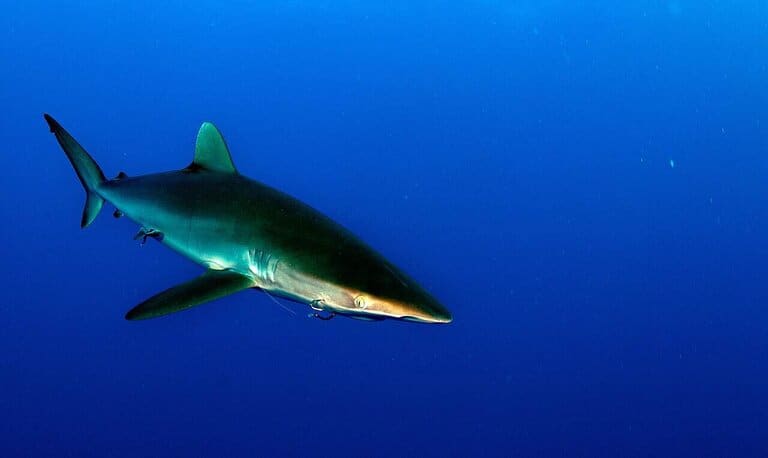
Striped Marlin (Kajikia audax) off Baja California, Mexico. Photo: stevestevens / iNaturalist via Wikimedia Commons, CC0.
A Striped Marlin can cover water faster than an angler can make sense of it. That is why the famous speed claim is almost useless on a fishing day. The decisions happen earlier: whether the water is alive, whether the spread is showing cleanly, and whether a fish behind a teaser is following, slashing, or actually eating.
At a glance · The useful version
Scientific name
Kajikia audax; older California material may use Tetrapturus audax.
Field marks
Tall first dorsal, long rounded bill, dark blue-black back, pale belly, and blue vertical flank bars.
Water
Highly migratory, open-ocean fish associated with warm surface habitat and concentrated forage.
Food
Mackerel, sardine, anchovy, other fishes and squid.
Best first question
Where are current, temperature, color and forage compressing the search area?
Conservation
Stock condition differs by Pacific region; a release plan belongs in the setup, not at the rail.
01 · Recognition
Identify the fish before the boat gets loud
The combination
The bill, tall sail-like first dorsal and repeated blue flank bars make the whole pattern. A single flash of dorsal or bill is not enough when other billfish share the water.
The vertical bars can brighten on an excited fish. That helps track it beside a teaser, but bright stripes do not prove the fish will commit. Behavior—distance, direction, speed and repeated turns—is the better feeding signal.
Do not size-identify
NOAA’s page contains different maximum-length summaries in different sections. That disagreement is a warning against using a remembered length as an identification shortcut. Use structure and markings first.
NOAA summarizes electronic-tag work in which tracked fish spent most of their time above the thermocline, and it describes Southern California fish feeding near the surface. That makes the upper water column the first place to read, not the only place a fish can exist.
The species prefers roughly 20–25°C water, but a temperature number without bait, current structure or life is just warm empty water. Use temperature to define the neighborhood, then ask what concentrates food there.
A color break, current seam or temperature edge matters when it also carries bait, birds, mammals, floating structure or repeated marks. One instrument trace earns investigation; several agreeing signals earn time.
03 · Movement
A season is a moving water mass, not a date
Range
Striped Marlin cross tropical and subtropical Pacific and Indian waters. Southern California opportunity rises when suitable water and forage reach the region; Baja is a major concentration area, especially around the peninsula’s tip.
Yesterday’s bite can reveal the right water type. It cannot hold a current edge in place. Carry forward the pattern—temperature, chlorophyll/color, current and prey—not just the coordinates.
Route before lure
Before deploying gear, connect the few highest-confidence signs into a search line. A spread dragged through hours of featureless water is still an untested assumption.
04 · Forage
Match the school before matching the lure cabinet
Prey base
Mackerel, sardine, anchovy, other fishes and squid are documented foods. Note the prey’s size, depth and escape direction; those details should control lure profile and presentation more than a favorite color.
Low, focused birds and repeated short dives usually deserve a closer look than high travelers. Birds show where prey reaches the surface; they do not identify the predator below.
One clean sample
If bait is visible or metered, make one controlled change toward its size and position. Changing every lure at once erases the lesson.
05 · Search spread
Build a pattern that can be read
Field inference. The sequence below is practical search logic built from the species’ surface orientation and prey—not a NOAA-mandated rig.
Start with separation
Run fewer offerings if necessary to keep each one in clean water. A lure that tumbles, crosses or hides in prop wash is not adding coverage; it is adding noise.
Give each position a job
Use closer positions for visibility and quick response, longer positions for fish that avoid the boat, and one subsurface or weighted option only when marks or prey justify it. The pattern should test hypotheses, not display inventory.
Change one variable
Before replacing a color, ask whether the lure is swimming correctly, its distance fits the sea state, and the boat is crossing useful water. Fix presentation before decoration.
Log the contact
Record lure position, angle to structure, sea direction, bait sign and what the fish did. A strike is data only if the setup can be reconstructed.
06 · Teaser handoff
A raised fish creates a short decision window
Name the behavior
A fish pacing steadily behind a teaser is different from one slashing across it or fading away. Call direction and distance clearly so the angler and helm solve the same problem.
Keep the replacement obvious
When a fish is committed to a teaser, the pitch bait or lure has to enter the same visual lane without tangling the pattern. The useful motion is controlled and easy to track, not frantic.
Do not yank on first contact
A bill swipe can feel violent without the bait being in the mouth. Keep watching the fish and the line. The hook decision should follow actual weight or a clearly eaten bait, not surprise.
Reset fast
After a miss, restore one clean offering immediately and keep the boat’s path predictable. Some fish circle back; the opportunity ends sooner when the cockpit turns into a knot.
07 · Live bait and drop-back
Give the fish time without giving away control
Rig before the sighting
Have a healthy bait, appropriate circle-hook setup where required or chosen, and an uncluttered deployment path ready before a fish appears. Rigging during the encounter burns the best seconds.
Watch line speed
A bait that stops, surges sideways or accelerates can be reporting pressure. Feed line only while maintaining awareness of what the fish is doing; an unlimited drop-back creates slack and uncertainty.
Circle-hook logic
With a circle hook, steady pressure is the goal after the fish moves off; a hard sweeping hook-set works against the hook’s design. Local and tournament rules may specify hook type, so verify them before leaving.
No blind formula
There is no universal drop-back count. Bait size, fish behavior, boat speed and hook configuration change the timing. Use the fish and line as the clock.
08 · Strike diagnosis
The miss tells you what to change
Slash without weight
If the fish cuts across and never loads the line, keep the offering present and visible. Do not automatically slow the entire boat or dump every line.
Repeated short strikes
Check lure action, hook exposure, speed and position before blaming color. A lure skipping or rolling at that sea angle can create repeated contacts without a clean bite.
Follower that fades
Change angle, speed or profile one step at a time. If the fish will not reappear, mark the water and rebuild the search rather than circling the exact wake forever.
One bite, no pattern
Treat a lone bite as a clue. The repeatable pattern begins only when it aligns with water, forage or structure.
09 · Fight geometry
Pressure should shorten the fight, not test the tackle
Clear selectively
Remove lines that threaten the fight path, but keep the boat controllable. A total cockpit teardown can cost time when the fish is still near the spread.
Helm and angler
The helm manages angle and line in the water; the angler maintains steady pressure and gains line when the geometry allows it. Chasing line with the rod high wastes leverage.
Drag changes
Set drag against the line, leader, hook and tackle before the bite. Large mid-fight increases can break a system already weakened by heat, abrasion or angle.
Endgame
Near the boat, short line and direction changes raise the consequence of every mistake. One person calls the leader, one controls the boat, and nobody wraps leader around a hand.
10 · Boatside release
A release plan starts before the leader appears
Prepare the tools
Have gloves, cutters, dehooker and camera plan ready. If the hook cannot be removed quickly and safely, cutting close may be better than extending a dangerous boatside struggle.
Keep support in the water
Control the fish alongside without lifting it by bill, gill area or tail alone. Avoid extended air exposure and do not hold the boat stationary if forward water flow is needed for recovery.
Judge the departure
A fish that stays upright, ventilates and kicks away under its own power is giving better evidence than a release photo. If it is exhausted, spend the time on controlled recovery, not posing.
Tagging
Use a recognized program and trained crew. A tag is useful only when placement, data and handling are correct.
11 · Stock and rules
Pacific stock labels cannot be collapsed
Eastern Tropical Pacific
NOAA currently lists this stock as not overfished and not subject to overfishing, based on the assessment cited on its species page.
Federal West Coast HMS guidance prohibits selling Striped Marlin caught under the recreational framework. Size, reporting, protected-area and gear rules depend on jurisdiction and trip location; carry the current guide and state rules.
NOAA’s national stock-status page was last updated July 20, 2026, with status current through June 30, 2026. Use it to check whether a stock label has changed since this profile was built.
Profile rebuilt 2026-09-14. Regulations, closures, possession rules, bait rules and protected areas can change during a season. Check the agency for the exact water and date before fishing.
A marlin day becomes manageable when every step answers one question: is the boat still in productive water, is the presentation readable, and did the fish actually eat? Speed is impressive. Sequence catches—and releases—the fish.
Saltwater & CoastalSurf, shoreline, nearshore, offshore, and deep-sea fishing — technique, gear, and safety content spanning the full range from the beach to blue water.103 articles
Species & BehaviorFish behavior, habitat, depth, forage relationships, and species-specific field decisions. Start with the Freshwater Fish Species field guide.159 articles
Cookie Consent
We use cookies to improve your experience on our site. By using our site, you consent to cookies.
Contains information related to marketing campaigns of the user. These are shared with Google AdWords / Google Ads when the Google Ads and Google Analytics accounts are linked together.
90 days
__utma
ID used to identify users and sessions
2 years after last activity
__utmt
Used to monitor number of Google Analytics server requests
10 minutes
__utmb
Used to distinguish new sessions and visits. This cookie is set when the GA.js javascript library is loaded and there is no existing __utmb cookie. The cookie is updated every time data is sent to the Google Analytics server.
30 minutes after last activity
__utmc
Used only with old Urchin versions of Google Analytics and not with GA.js. Was used to distinguish between new sessions and visits at the end of a session.
End of session (browser)
__utmz
Contains information about the traffic source or campaign that directed user to the website. The cookie is set when the GA.js javascript is loaded and updated when data is sent to the Google Anaytics server
6 months after last activity
__utmv
Contains custom information set by the web developer via the _setCustomVar method in Google Analytics. This cookie is updated every time new data is sent to the Google Analytics server.
2 years after last activity
__utmx
Used to determine whether a user is included in an A / B or Multivariate test.
18 months
_ga
ID used to identify users
2 years
_gali
Used by Google Analytics to determine which links on a page are being clicked
30 seconds
_ga_
ID used to identify users
2 years
_gid
ID used to identify users for 24 hours after last activity
24 hours
_gat
Used to monitor number of Google Analytics server requests when using Google Tag Manager
1 minute
Jetpack's built-in visitor analytics. It records page views, referring sites, search terms, and outbound link clicks, and also carries the shared visitor-tracking library used by Jetpack Instant Search and WooCommerce Analytics.