Rainbow Runners Circle Wider and Deeper Than the FAD
Rainbow runners hang around FADs, floating objects and reef edges, but the school is often off to the side or below the bait everybody can see. Find its level first, then run something slim through it.
By HunterUpdated September 14, 2026Read 7 min
Image: hunting beside floating structure
Everybody sees the buoy. Rainbow Runners often make the useful part of the school harder: wider than the object, deeper than the visible bait, or stretched into the down-current trail. The profile has to follow that geometry. Find the layer first, then move one slim presentation through it without turning a school bite into crossed line and loose hooks.
At a glance · The useful version
Scientific name
Elagatis bipinnulata.
Family
Carangidae; a jack relative, not a tuna, mackerel or salmon.
Field marks
Long blue-green body, blue-and-yellow horizontal bands, yellowish fins, deeply forked tail and small finlets.
Habitat
Outer shelf, offshore islands and banks, open water and floating structures such as FADs.
Food
Pelagic fishes and invertebrates; narrow schooling prey are central to the search.
Current rule note
Puerto Rico’s 2026 pelagic reclassification remains a proposed rule, not a completed change.
01 · Identification
Use the stripes, finlets and body together
Color pattern
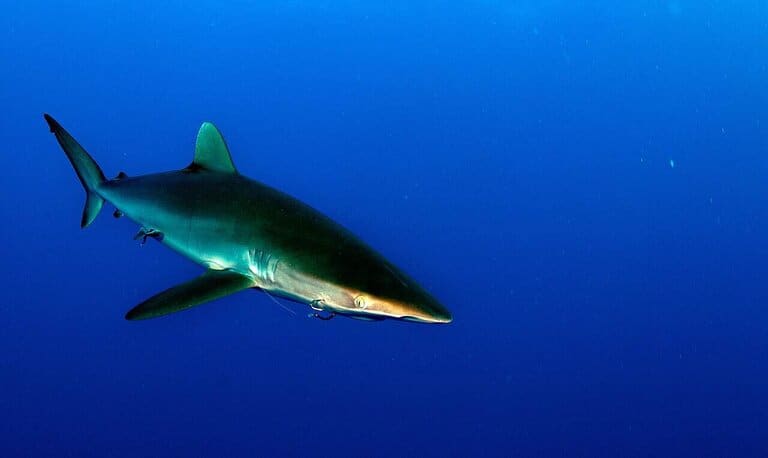
Rainbow Runners carry narrow blue and yellow stripes along a long blue-green body with yellowish fins and a deeply forked tail.
Finlets
Small separate finlets behind the dorsal and anal fins help confirm the fish, but the body is slimmer and less tuna-like than an actual tuna.
Jack comparison
Most trevallies and amberjacks are deeper-bodied. Rainbow Runner’s pointed head, small mouth and long profile fit open-water pursuit.
Photograph well
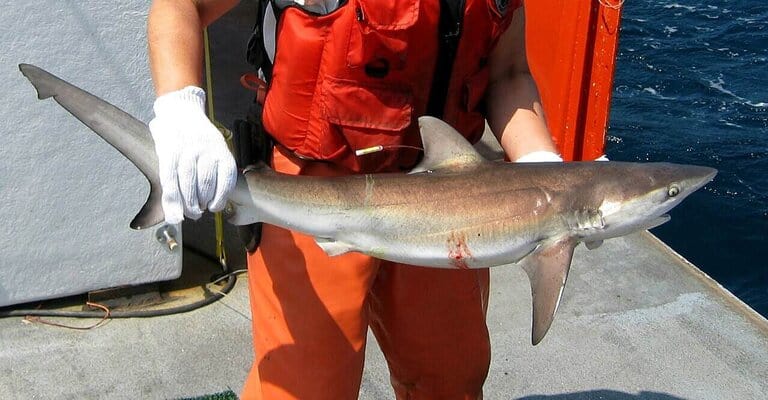
In a mixed pelagic catch, show the full side, tail and finlets. Color alone can shift with light and stress.
02 · Habitat classification
This is a pelagic fish that visits structure
Where adults and young occur
NOAA’s 2026 Puerto Rico amendment describes Rainbow Runners on the outer shelf, around offshore islands and banks, and offshore.
The same document notes frequent sightings around FADs, drifting vessels and other floating artificial structure. The object gathers the food web; it does not pin every fish directly beneath it.
The Puerto Rico analysis says the species is usually absent shallower than 121 feet in the literature it summarizes. That regional summary should not be turned into a universal minimum depth for every ocean.
03 · Object geometry
Search four zones, not one buoy
Up-current face
Bait may gather where flow first meets the object or mooring. Approach without crossing the line or cutting off another boat.
Down-current plume
Food, chum and small organisms trail with current. Work progressively farther back instead of circling only the float.
Shadow and depth
Fish may hold below surface glare or under the visible bait. Use sonar and counted presentations to test layers.
Wide orbit
Schooling runners can circle beyond casting distance from the object. One troll pass or a broad sonar loop can find the orbit without crowding the FAD.
Mooring hazard
Never tie to, snag or damage a FAD. Know where the line enters the water and keep propellers and sinking gear clear.
04 · Mixed-school evidence
Birds and tuna are clues, not identification
Bird height
Low, focused dipping birds suggest prey at the surface. High traveling birds may have no connection to the water beneath the boat.
Companion predators
NOAA describes Rainbow Runner as bycatch around Puerto Rico while fishing for wahoo, tuna and mackerel. A mixed strike should widen the leader and landing plan.
When birds stop, check the meter before leaving. The prey layer may have dropped rather than dispersed.
School direction
Approach ahead and across the movement. Driving through the center produces a short look at fish and a long wait for them to regroup.
05 · Prey scale
The narrow profile is doing real work
Documented prey context
NOAA’s Puerto Rico analysis describes pelagic fish and invertebrate feeding and records fisher observations of ballyhoo, small flying fish, sardines, goggle-eye and other water-column prey.
Estimate prey length before choosing lure color. A slender offering in the correct size band often changes the silhouette more meaningfully than paint.
Escape direction
Match whether prey are fleeing horizontally, showering at the surface or dropping under pressure. Depth and direction form the presentation.
One-variable rule
If fish follow, change speed, sink count or profile one step at a time. Rebuilding every rod erases the cause.
06 · Casting plan
Metal finds the level quickly
Surface start
For visible runners, start a slender jig or spoon immediately and retrieve across the school’s edge. It must swim rather than spin.
Count down
For deeper marks, repeat a known sink count and retrieve through the band. Increase in measured steps until fish respond or the lure approaches hazard.
Direction change
A sweep, pause or brief fall can trigger a follower. Stay connected because the bite may arrive as the lure changes direction.
Ready second rod
When companions follow a hooked fish, one rigged casting rod is useful. Four people grabbing loose lures is a deck accident.
07 · Trolling locator
A bite should produce a map, not just a turn
Simple spread
Use a few known positions that run cleanly: small feathers, spoons, diving plugs or compact skirted lures. Maximum lure count is not maximum information.
Record the position
When one lure is hit, note side, distance, depth, speed and relation to current. “Blue lure” is rarely the full pattern.
After strike
Maintain controlled forward motion long enough to clear gear and see whether the school follows. Then decide whether to cast, bait or repeat the pass.
Return line
Cross the same water from a deliberate angle. A tight panic circle drags every lure through the same turn and invites tangles.
08 · Natural bait and chum
Build one line the hooked bait can join
Live bait
Present a small, healthy legal bait at the school’s level with minimal hardware. An exhausted bait adds no signal.
Chum rhythm
Where legal and appropriate, use small regular pieces to establish a visible drift. Feeding too much can satisfy or scatter the school.
Hooked-bait placement
Put the hooked bait in the same current seam as the chum instead of throwing it across the line.
Wildlife check
Stop chumming when seabirds, sharks or protected wildlife make it unsafe or irresponsible. Attraction changes the whole scene, not just the target fish.
09 · Fight traffic
The school bite creates a coordination problem
Call direction
Say “under,” “over,” “bow” or “stern” early. Move anglers instead of forcing lines across each other.
Rod angle
Use steady pressure and a moderate angle. Sudden high-stick moves beside the hull pull hooks and break rods.
Mixed bycatch
If the fish behaves heavier or runs much longer, assume a larger pelagic intercepted the lure until identified. Do not palm a spool or grab leader to force the old plan.
Landing
Keep net or gaff out of the water until one fish is controlled. Loose tools and free hooks become worse when several fish arrive together.
10 · Handling and food
Warm air shortens the quality window
Release
Use wet hands or a dehooker, support the body and minimize air exposure. A runner that fought in warm water needs a prompt release.
Retention
Dispatch, bleed when appropriate and chill immediately. Do not let a fast school outpace the ice or crew.
Count
A school bite can create counting errors. Assign one person to the tally and stop before uncertainty reaches the limit.
Use
Keep only what will be used well. An incidental species is not automatically disposable or unlimited.
11 · Puerto Rico rule status
Proposed is not the same as effective
Current status
As of September 15, 2026, NOAA’s action page labels Amendment 4 a proposed rule. It would reclassify Rainbow Runner from the Reef Fish group to the Pelagic Fish group in Puerto Rico federal waters.
The proposal would remove Rainbow Runner from certain reef-fish constraints, establish pelagic annual catch targets and change accountability measures. Those outcomes should not be written as current law until NOAA posts a final rule.
The supporting analysis says the Puerto Rico stock has not been assessed; overfishing was not occurring under its cited March 2024 status check, while overfished status was unknown. Keep those two findings separate.
Profile rebuilt 2026-09-15. Regulations, protected areas, licenses, harvest rules and local closures change. Check the managing agency for the exact water and date.
The buoy is the easiest thing to see and the least complete explanation. The useful plan follows current, prey depth and school orbit—then keeps enough order on deck to learn from the first fish.
Saltwater & CoastalSurf, shoreline, nearshore, offshore, and deep-sea fishing — technique, gear, and safety content spanning the full range from the beach to blue water.103 articles
Species & BehaviorFish behavior, habitat, depth, forage relationships, and species-specific field decisions. Start with the Freshwater Fish Species field guide.159 articles
Cookie Consent
We use cookies to improve your experience on our site. By using our site, you consent to cookies.
Contains information related to marketing campaigns of the user. These are shared with Google AdWords / Google Ads when the Google Ads and Google Analytics accounts are linked together.
90 days
__utma
ID used to identify users and sessions
2 years after last activity
__utmt
Used to monitor number of Google Analytics server requests
10 minutes
__utmb
Used to distinguish new sessions and visits. This cookie is set when the GA.js javascript library is loaded and there is no existing __utmb cookie. The cookie is updated every time data is sent to the Google Analytics server.
30 minutes after last activity
__utmc
Used only with old Urchin versions of Google Analytics and not with GA.js. Was used to distinguish between new sessions and visits at the end of a session.
End of session (browser)
__utmz
Contains information about the traffic source or campaign that directed user to the website. The cookie is set when the GA.js javascript is loaded and updated when data is sent to the Google Anaytics server
6 months after last activity
__utmv
Contains custom information set by the web developer via the _setCustomVar method in Google Analytics. This cookie is updated every time new data is sent to the Google Analytics server.
2 years after last activity
__utmx
Used to determine whether a user is included in an A / B or Multivariate test.
18 months
_ga
ID used to identify users
2 years
_gali
Used by Google Analytics to determine which links on a page are being clicked
30 seconds
_ga_
ID used to identify users
2 years
_gid
ID used to identify users for 24 hours after last activity
24 hours
_gat
Used to monitor number of Google Analytics server requests when using Google Tag Manager
1 minute
Jetpack's built-in visitor analytics. It records page views, referring sites, search terms, and outbound link clicks, and also carries the shared visitor-tracking library used by Jetpack Instant Search and WooCommerce Analytics.