CUTTHROAT TROUT · SPECIES PROFILE
The throat slash gets the name right more often than it gets the whole fish right.
Cutthroat aren’t one tidy trout spread evenly across the West. A six-inch westslope in a headwater creek, a Yellowstone Lake fish, a Lahontan cruising Pyramid Lake and a sea-run coastal cutthroat all share a species name, and they’d have almost nothing useful to tell each other about getting caught. Figure out the water and the form before the fly box comes open.
Profile basis: U.S. Fish & Wildlife Service · Idaho Fish and Game · Washington Department of Fish and Wildlife
IDENTIFICATION
The slash is the beginning of the identification, not the end.
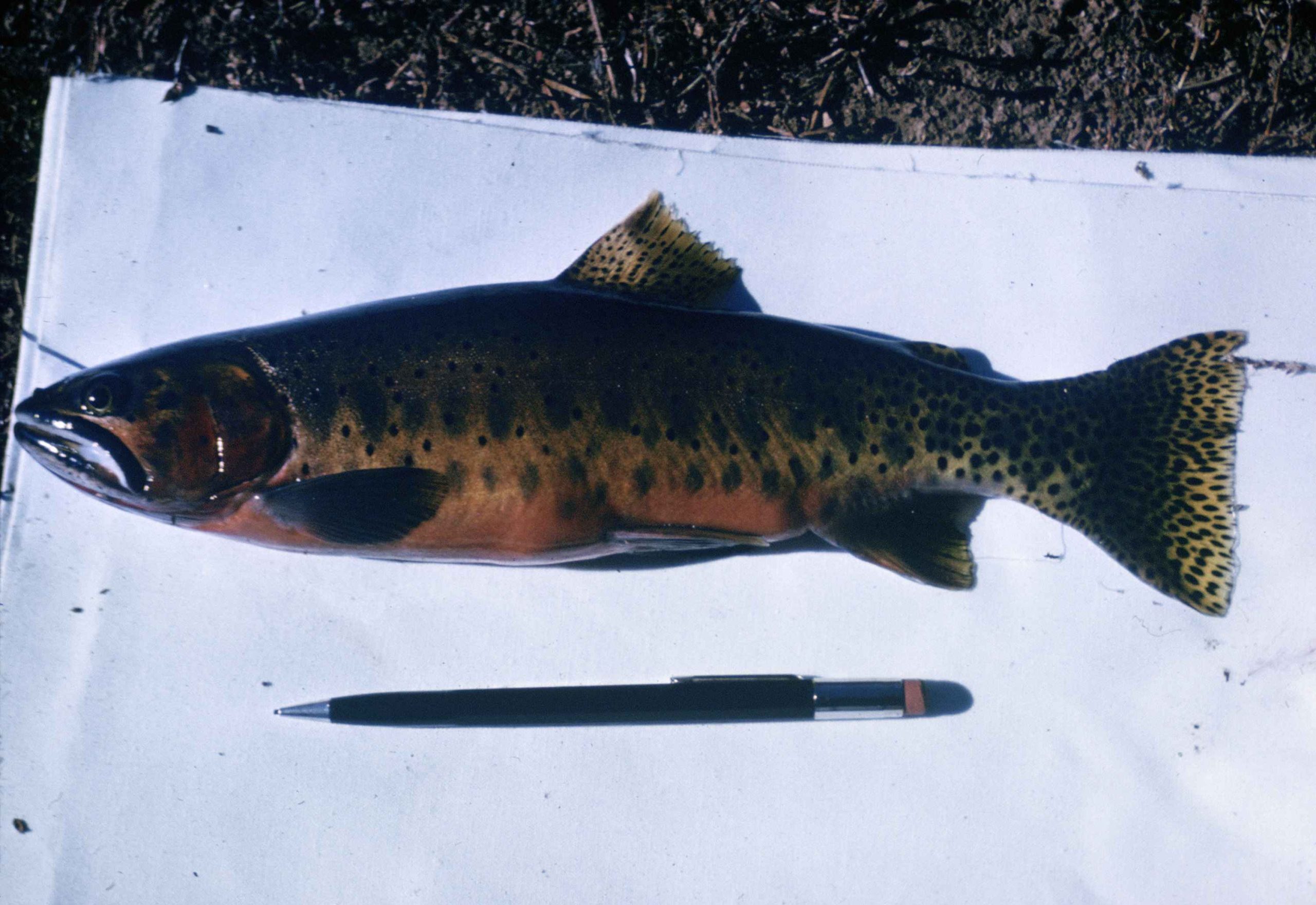
The orange-to-red mark tucked into the skin fold beneath the lower jaw is why the fish is called cutthroat. On a strong-marked fish it’s hard to miss. On some coastal fish, juveniles, pale lake fish and hybrids, it can be faint enough that treating “no obvious slash” as proof of “not cutthroat” gets risky.
Rainbow trout complicate the picture because cutthroat and rainbow hybridize readily where their ranges overlap. A cutbow can carry the throat slash, rainbow-style white fin tips, heavier spotting, a pink lateral band, or some mixture that refuses to cooperate with one-photo identification.
Idaho genotype-checked work found field identification much more reliable for pure cutthroat than for hybrids. That’s worth remembering anywhere harvest, protected status or removal rules depend on the fish being pure cutthroat versus rainbow or hybrid.
Inside the cutthroat complex, drainage often tells you more than color. Yellowstone, westslope, coastal, Lahontan, Bonneville, Colorado River, greenback, Rio Grande, Paiute and other named forms differ in spotting, scale counts, life history and native range. Some of those taxonomic boundaries have changed as genetic work improved.
So the useful field question is: what native cutthroat form belongs in this drainage? Once you know that, identification gets a lot less like guessing off a color chart.
Sources: Idaho Fish and Game — phenotype versus genotype · U.S. Fish & Wildlife Service
STREAM RESIDENTS
Cold water, cover and a drift that actually belongs in the lane.
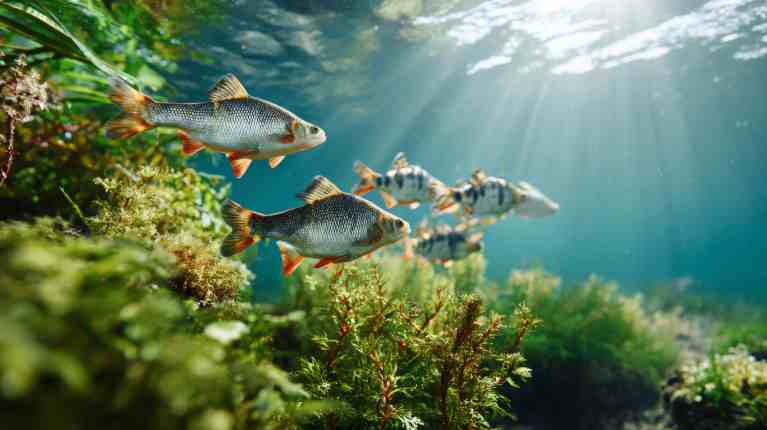
Headwater and river-resident cutthroat use the same basic physical economy as other stream trout: cold, oxygenated water; current that delivers food; and somewhere to get out of that current when holding or resting.
Look at pool heads and tails, boulder pockets, undercut banks, root wads, woody cover, riffle edges, spring or tributary inputs and the slower seam beside faster water. A fish doesn’t need the deepest pool if a medium-depth lane gives it shade, food and less current to fight.
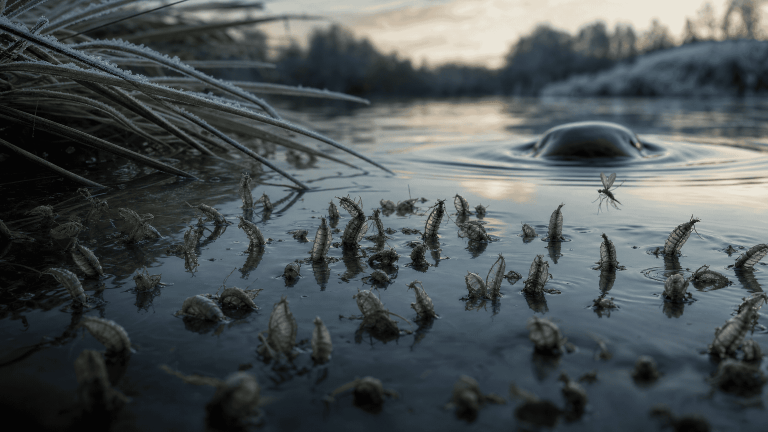
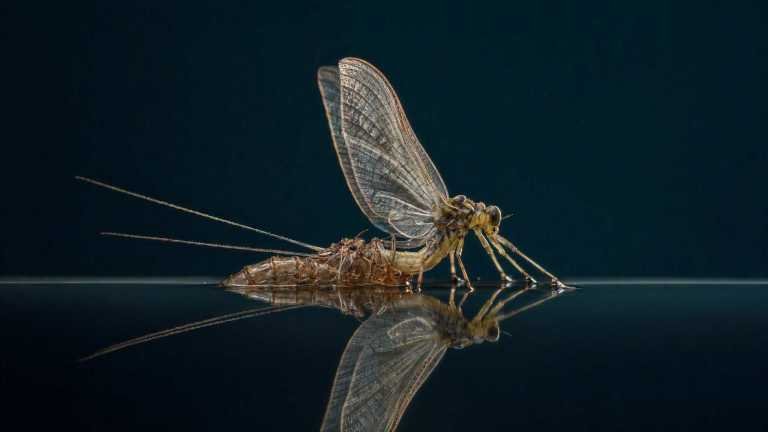
Westslope and Yellowstone cutthroat are famous for taking dry flies, but “cutthroat look up” can turn into its own piece of lazy folklore. Aquatic insects, terrestrial insects, crustaceans and small fish all matter, and the useful presentation changes with what’s actually active.
A short natural drift with a dry or nymph makes sense when insects are moving. A small streamer or spinner makes more sense when the fish is eating baitfish. Either way the job is control: the presentation has to travel through the lane at a speed and depth the fish can intercept.
On small clear water, approach can decide the cast. Stay low, use the bank or current direction to your advantage and spend the clean first presentation before making the pool watch ten more attempts.
LAKE CUTTHROAT
Put a cutthroat in a big enough lake and the creek playbook quits working.
Cutthroat living in lakes can behave nothing like a six-inch creek fish. Shoreline insects, shallow shoals and tributary mouths can matter in cool seasons, while summer can move fish toward deeper temperature bands or open-water prey.
Large lake forms can become heavily piscivorous. Lahontan cutthroat in particular can grow to a scale that makes “small trout fly” a fairly incomplete picture of the species. Yellowstone Lake cutthroat also use pelagic and shoreline food sources and make spawning migrations into tributaries.
That’s why a lake plan should start with depth rather than a species-wide lure list. Pick a depth you can defend from temperature, visible activity, electronics, shoreline structure or forage, then use a suspended bait, fly, spoon, spinner, trolling presentation or other legal method that stays in that band.
If you don’t know whether the fish is five feet down or thirty, swapping patterns is mostly redecorating.
Lake-specific regulations can be unusually strict because native cutthroat may share water with invasive or introduced trout managers are trying to remove. Yellowstone Lake is the clearest example: native cutthroat must be released, while lake trout must be killed. No species page can stand in for that water-specific rule.
SEA-RUN COASTAL CUTTHROAT
Estuary fish belong in a different paragraph from mountain-creek fish.
Coastal cutthroat can remain resident in freshwater or migrate into estuaries and nearshore marine water. Sea-run fish don’t spend years roaming the open Pacific like steelhead; they generally stay much closer to their natal river systems and coastal shoreline.
That changes the food. In estuaries and lower rivers, small fish, salmon fry, sand lance, herring, sculpins, shrimp and other marine or estuarine prey become more plausible than the purely insect-centered picture people sometimes attach to “trout.”
Current edges, tidewater structure, creek mouths and shoreline travel water matter because they concentrate both prey and moving fish. A streamer, baitfish imitation, spinner or other small-fish presentation can fit that situation for a biological reason.
When those fish return to freshwater, everything shifts again. Spawning and overwintering habitat may be small tributaries and side channels that look completely disconnected from the coastal fishery until you follow the life cycle.
None of that needs three separate species pages. It just means one “cutthroat presentation” can’t cover all three lives.
FOOD
The diet tells you which version of the trout you’re actually fishing.
Small resident fish commonly eat aquatic insects, terrestrial insects, small crustaceans and other invertebrates. Summer terrestrials can become important where overhanging banks and meadow insects feed the stream.
As cutthroat grow, fish prey can matter much more. Large lake fish and sea-run coastal cutthroat can become strongly oriented toward minnows, fry and other small fish. That shift is one reason the same species supports dry-fly fishing in a tiny mountain creek and baitfish-style streamer fishing near an estuary.
So “match the hatch” is sometimes exactly right and sometimes the wrong scale. First figure out whether the fish in front of you is eating bugs, crustaceans or other fish.
WARM WATER
Cutthroat can lose usable habitat before the stream looks obviously broken.
Cutthroat are cold-water salmonids, and warming can squeeze them toward springs, shaded tributaries, higher elevation, deeper lake water and other thermal refuge. The exact stress threshold varies by subspecies, acclimation, oxygen and the speed of warming.
For fishing, management thresholds are more useful than an acute laboratory maximum. Yellowstone National Park’s 2026 warm-water restrictions are a good real-time example. During July, low flows and water temperatures exceeding 68°F / 20°C triggered afternoon or full fishing closures on parts of the park. Most restrictions were later lifted as conditions cooled, while the Firehole, Madison and lower Gibbon went through a separate staged reopening.
Warm-water trout rules follow conditions and can change more than once in the same summer, so no species card, however good, replaces the current agency notice.
If the water is hot and low and the fish is taking a long time to recover, the ethical adjustment isn’t necessarily a smaller fly. It might be a colder tributary, an earlier morning, a lake species that handles the water better, or going home.
Current Yellowstone example checked 2026-09-02: National Park Service — 2026 fishing restriction updates
SPAWNING & REDDS
The cleaned gravel stays occupied after the adult leaves.
Most cutthroat populations spawn in spring or early summer as water temperatures rise, although timing varies sharply by subspecies, elevation and life history. Lake fish may make substantial migrations into tributaries; stream residents may move only a short distance to suitable gravel.
Females dig redds in clean gravel where water can move through the substrate and carry oxygen to the eggs. The adults do not guard the redd after spawning. That means the obvious fish disappears while the vulnerable part stays under your boots.
If you can see a freshly cleaned oval of gravel in spawning water, go around it. That is true whether fishing is legally open or not.
Migration barriers matter here for the same reason. A culvert, dam or warm disconnected reach can isolate spawning and rearing habitat even when the water above it still looks excellent in photographs.
HYBRIDIZATION
The biggest genetic threat to many cutthroat populations looks like another trout anglers enjoy catching.
Rainbow trout hybridize readily with cutthroat, producing fertile cutbows. Where non-native rainbow have been stocked into native cutthroat drainages, that gene flow can spread through a population and eventually erase the genetically distinct native form without eliminating trout from the stream.
This is why some western fisheries require removal of rainbow trout and identifiable cutthroat × rainbow hybrids while requiring native cutthroat to be released. Yellowstone’s 2026 regulations, for example, require rainbow, brook trout and identifiable cutthroat-rainbow hybrids caught in specified native-trout conservation drainages to be killed rather than released alive.
Introduced brook trout create a different problem through competition and replacement, especially in small cold streams. Brown trout can add competition and predation lower in the system. Habitat fragmentation can then trap native cutthroat in small isolated headwater populations that are safer from invaders but more vulnerable to fire, drought and warming.
The conservation question is therefore not simply “release all trout.” Know the native fish and the management objective for the drainage.
Current Yellowstone example: Yellowstone 2026 Fishing Regulations
THE SUBSPECIES PROBLEM
“Cutthroat trout” is stable enough for fishing and messy enough for genetics.
The cutthroat complex contains numerous named regional forms shaped by isolated western drainages. Yellowstone, westslope, coastal, Lahontan, Bonneville, Rio Grande, greenback, Colorado River, Bear River, Paiute and others carry different native ranges and conservation histories.
Some are federally protected. Lahontan cutthroat remain federally threatened. Greenback cutthroat remain threatened and are the focus of active recovery work in Colorado. Paiute cutthroat remain protected under the Endangered Species Act. Rio Grande cutthroat were the subject of a recent status review; the Service published a 2024 not-warranted finding rather than listing the subspecies.
Those labels do not create one rule for all cutthroat fishing. A protected hatchery-supported recreational population can have different angling opportunities from a tiny recovery population only a drainage away.
Taxonomy can also change underneath old field guides as genetic work re-evaluates historical names and boundaries. The safest editorial posture is to use the current state/federal name for the drainage rather than treating an old subspecies list as a fixed periodic table.
Current federal context checked 2026-09-02: USFWS — Lahontan Cutthroat recovery · USFWS — Paiute Cutthroat
PRESENTATION BY LIFE HISTORY
One species. Three useful starting points.
A rise, follow, refusal or short take tells you whether the lane and depth are close. Drag, poor line control or a spinner sweeping unnaturally can erase the test before pattern choice becomes relevant.
When several comparable pieces of cold, food-delivering water produce no response, change the habitat or life-history assumption before endlessly changing flies.
DEEP REFERENCE · WHERE THE SIMPLE CUTTHROAT STORY BREAKS
The arguments belong here instead of turning the opener into taxonomy class.
The throat slash is not perfectly diagnostic
Intensity varies among forms and individuals, and rainbow-cutthroat hybrids can retain a slash. Drainage, spotting pattern, fin traits and genetic context may all be needed when the distinction matters legally or for conservation.
How many cutthroat subspecies are there?
Published counts differ because some historical forms are extinct, some names have been revised and genetic work continues to change the boundaries among lineages. This profile deliberately avoids freezing one number into the top card.
Stream, lake and sea-run temperature behavior
All are cold-water fish, but preferred and tolerated temperatures differ with life history, population and acclimation. A lake fish using a deep thermal band and a small headwater fish using a spring seep are solving the same thermal problem at different scales.
Native isolation can protect and endanger at the same time
Barriers can keep rainbow and brook trout out of a native cutthroat population, preserving genetic integrity. The same barrier can make the native population smaller and more vulnerable to drought, wildfire, debris flow and warming. Connectivity therefore is not automatically good or automatically bad.
Current federal status is subspecies-specific
Lahontan, greenback and Paiute cutthroat have federal protection, while other forms are managed through state, tribal and interagency conservation programs without ESA listing. Rio Grande cutthroat received a not-warranted listing finding in 2024. A species-wide “protected/not protected” label would be misleading.
What this profile deliberately does not claim
No defensible source in the original research established a universal cutthroat bite response to barometric pressure, cloud cover, wind direction, one “best” hatch or one exact feeding-temperature number across all forms. The life-history split is too large for that kind of rule.
SOURCES
FEEDING · DEPENDS ON THE FORM
A creek fish lives on insects and a big lake fish eats other fish, so one feeding rule covering all of them would just be a lie.
The summary stays form-specific rather than pretending every cutthroat population has one diet or one temperature band.
The source shelf.
- U.S. Fish & Wildlife Service — Cutthroat Trout
- Idaho Fish and Game — Cutthroat Trout
- Washington DFW — Cutthroat Trout
- Idaho Fish and Game — phenotype/genotype identification
- National Park Service — Yellowstone Cutthroat Trout
- Yellowstone National Park — 2026 Fishing Regulations
- Yellowstone — 2026 warm-water restriction updates
- U.S. Fish & Wildlife Service — Lahontan Cutthroat recovery
- U.S. Fish & Wildlife Service — Paiute Cutthroat Trout
- U.S. Fish & Wildlife Service — Greenback cutthroat recovery, 2026
- U.S. Fish & Wildlife Service — Rio Grande Cutthroat 2024 finding
Profile reviewed 2026-09-02. Cutthroat regulations can distinguish subspecies, native versus hybrid fish, conservation areas and individual waters. Warm-water restrictions can change during the season. Check the current managing agency for the exact drainage before fishing or keeping a fish.
FIELD OBJECT
This one should leave the page.
The article is the long version. These are the pieces worth carrying into the next trip.
The 30-second version
A headwater westslope, a Yellowstone Lake fish and a sea-run coastal cutthroat share a name and not much else. Learn which form belongs in the drainage, then fish the life it’s actually living.
What to watch
- The throat slash gets the name right more often than it gets the whole fish right.
- The slash is the beginning of the identification, not the end.
- Cold water, cover and a drift that actually belongs in the lane.
- Put a cutthroat in a big enough lake and the creek playbook quits working.
Field card
- U.S. Fish & Wildlife Service — Cutthroat Trout
- Idaho Fish and Game — Cutthroat Trout
- Washington DFW — Cutthroat Trout
- Idaho Fish and Game — phenotype/genotype identification
- National Park Service — Yellowstone Cutthroat Trout
RIGHT TOOL, NEXT
Species & Presentation
Carry the species behavior and presentation question into a narrower water-to-fish-to-presentation handoff.