Something let go out there and you took a picture of it. Now you’re home, and the picture is a broken split ring sitting on the workbench, and it can’t tell you whether the ring opened first or the hook straightened and pulled it, or whether you’d been grinding that lure through rock all morning. You photographed an object. The question was about a sequence.
A fishing photo can hold a lot more than proof that a fish existed. Setup, wear, where the hook ended up, what the bank wouldn’t let you do — that stuff survives in an image a lot better than it survives in your memory. The useful photo answers a question later without slowing down fish care, giving away a spot, or quietly staging a version of events that didn’t happen.
What’s the photo for?
Ask before you shoot. A chewed guide? Where the hook sat? How big the lure really is next to the fish it was meant for, or how steep the bank was where you had to land it?
Frame around that. A photo taken without a question tends to come out attractive and completely uninformative, which is a strange kind of failure — it looks like you documented something.
Wide, then close
Where privacy allows it, one broad frame first. Water type, wind, cover, how steep the bank is, how much room you had to work in. It doesn’t have to show where you were. It just has to make the close-ups make sense later.
Then get in on the thing itself: a nick in the leader, an opened split ring, a bent hook, a cracked lure attachment, a fouled jig, a chewed rod guide, an abrasion point, a knot, a worn pack strap. In focus, with enough light on it. A wide glory shot from six feet away won’t document a two-millimeter problem, no matter how many times you zoom in on it afterward.
When size is the question, put something known in the frame — a ruler, a measuring board, a piece of tackle you can identify. Improvised comparisons distort worse than people expect. For fish, follow local regulations and handling guidance and keep it quick. If the exact size doesn’t matter to the question you’re asking, skip the tape-measure ceremony entirely.
And if your close-ups keep coming out soft, that’s usually the phone hunting for focus in flat light, not you. Get more light on it, back off a few inches, tap the screen on the part that matters. It takes a few tries to get the feel of it, and then you have it.
Shoot it before you take it apart
This is the one people skip. When something fails, photograph the whole assembly before you cut a knot, pull hardware, open a housing, or tidy anything up. How the parts were sitting in relation to each other is frequently the actual answer.
Rigging questions need a wide frame for the same reason: a tight shot of one knot can leave out the swivel, the weight, which way the hook was pointing, the whole path the line took. One setup frame plus one detail frame beats four ambiguous close-ups.
If you’re testing durability or fouling or paint wear, take a clean before and a matching after, framed the same way so the difference is visible instead of arguable. Write the use down separately, though. No photo can tell you how many casts and how many fish produced that wear.
Photograph the thing that was in your way
The grass you had to fish through, the wind texture on the surface, how little room there was to swing a rod, how high the bank was where you’d have had to land something.
Those frames explain your decisions — why that weight, why that angle, why you netted it where you did. A future version of you gets more out of the constraints than out of one more picture of the lure that worked.
The fish comes first
Have the camera or phone ready before the fish leaves the water. Keep handling short. Support the fish properly. Don’t set it down on anything hot, dry, abrasive, or dirty. If the camera isn’t ready, let the fish go. There’s no photo worth extending that.
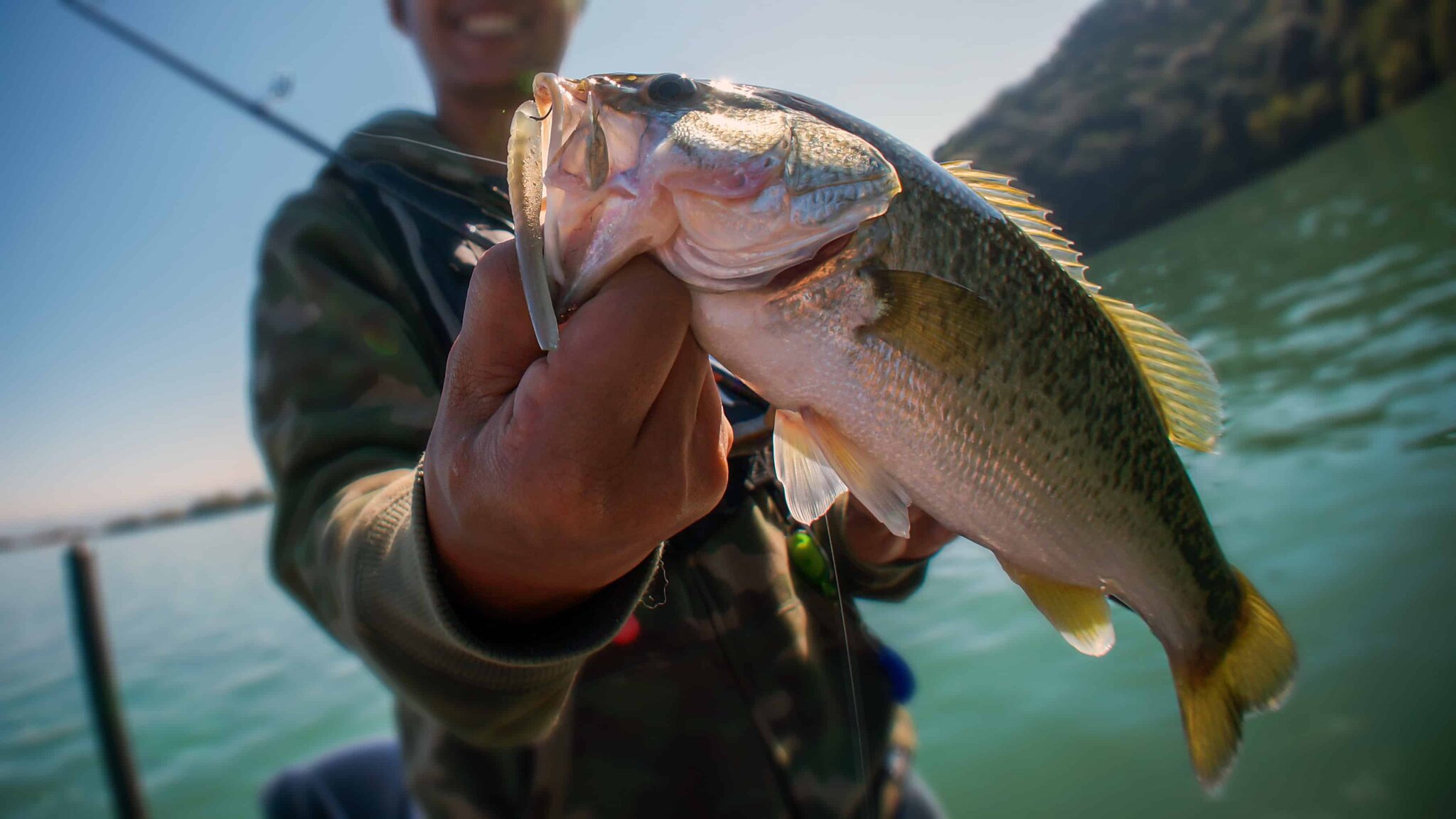
And a fish only needs to be in the frame when it’s carrying information — species, rough size, an unusual condition, where the hook ended up, the result of something you were testing. Most technical notes are better served by a picture of the lure, the water, the rig, or the broken part. A fish is not a background for gear photography.
Everything else in the frame
Backgrounds give away more than people mean them to. Bridge numbers, road signs, a distinctive building, a mountain skyline, a marina name, a map screen or GPS display sitting in the corner of a shot, and the location data written into the file itself. Look at an image properly before it goes anywhere public. Crop or leave out identifying details when there’s a reason to protect the place. Don’t lie about where you were — just don’t publish more precision than the story needs.
People, too. Don’t put identifiable strangers online without permission, and be especially careful with kids. Don’t shoot across private property in a way that exposes residents, addresses, vehicles, or how somebody gets to their own back door.
Signs are worth photographing and worth reading correctly. An access notice, a closure, an invasive-species station, a posted regulation — that image is dated evidence of what was up on the board the day you were there. Rules change. Check the current official source before the next trip; the photo is a memory aid, not the regulation.
Four frames
For most field tests that’s the whole set: one context frame, one of the complete setup, one of the detail that matters, one of the result or the failure. Add more only when there’s another distinct question to answer. Past that, you’re not fishing anymore, you’re producing.
Failures want a slightly longer run — the setup with the failure still in place, the close detail, and whatever you finished the day with after the repair. Add a line about when it went and what load or condition was on it at the time.
That line matters, because a photograph will happily imply a cause it can’t prove. Frayed line right next to a rough guide looks conclusive. It suggests a mechanism; it doesn’t establish that the guide did all of the damage. Write down what’s visible and what you’re inferring separately, so the uncertainty stays where you can see it and the next judgment call starts from what you saw instead of what you assumed.
None of these will be the best-looking pictures from the day. Nobody’s framing a split ring for the living room wall. They’re just the ones you’ll open a year later, when the same thing lets go again.