If you’re waiting for stoneflies to rise through the water like mayflies, you may be watching the wrong part of the river.
Many stonefly nymphs leave the water by crawling.
They spend their immature stage down near the bottom, then move toward shore, climb onto rocks, wood, bridge abutments, or vegetation, and emerge out of the water.
Which means the hatch can leave clues on dry land.
Start with the rocks nobody is casting at
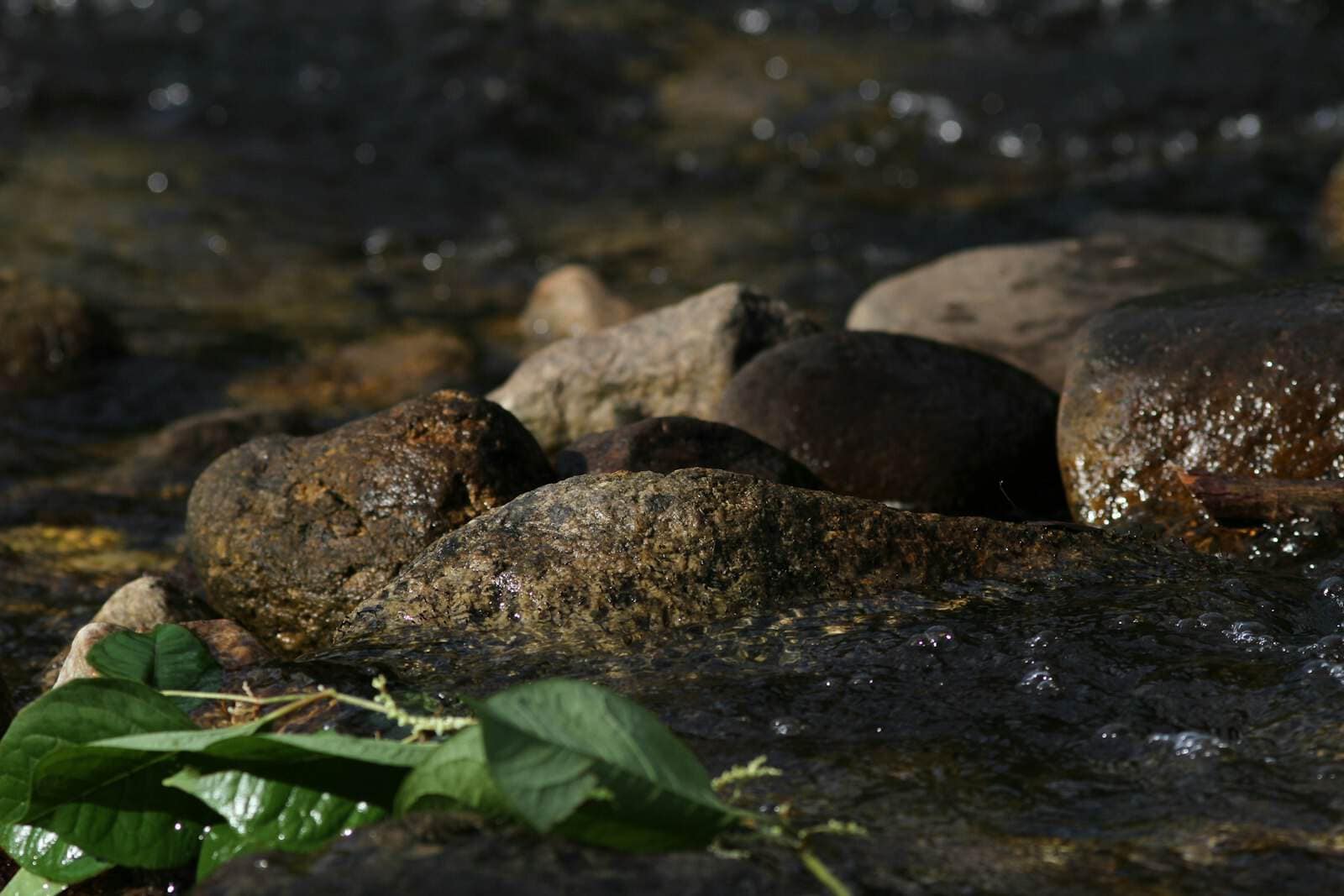
Walk a few feet along the edge and look at rocks just above the waterline. Check the downstream side of boulders. Look at bridge pilings, exposed roots, driftwood, and grass near the bank.
You may find empty stonefly shucks — the old nymph skins left behind after the adult crawled out.
That’s a better clue than one adult flying past your face.
It tells you the bugs actually came out of this water, around here, recently enough that the skins are still sitting there.
Orvis’s stonefly overview notes that many nymphs are poor swimmers and stay close to the bottom, with some species migrating toward shore before emergence. The bank isn’t background scenery in that process. It’s the exit ramp.
The nymph is built for the bottom
Stonefly nymphs usually live in moving water with enough oxygen, often around rock and broken bottom. They crawl a lot better than they swim.
So if you’re imitating the nymph, the fly generally needs to spend time near the bottom, not float through the middle of the water column because that’s where it happened to land.
This doesn’t mean “add weight until you snag every cast.”
It means checking whether the fly gets down to where the real bugs live. In faster water, a weighted nymph, a heavier point fly, or a tuck cast can help. In shallower margins, less weight may be plenty.
Depth is still something to test, not a religion.
The migration can make the edge better than the middle
Before emergence, stonefly nymphs moving toward shore can concentrate food along the margins, behind rocks, and in the shallower lanes that connect deeper holding water to the bank.
That makes for an interesting problem: the biggest-looking current may not be the only place worth drifting.
Try a cast that starts deeper and finishes toward the edge, so the fly swings through the same stretch the bugs would crawl across. The soft water beside a hard seam deserves a few drifts, and so does the pocket behind a boulder that touches the bank.
Don’t wade straight through that water to reach the prettier midriver slot.
The same habit shows up in reading moving water before the first cast: a river is a bunch of speed changes, depth changes, and travel lanes, not one big conveyor belt.
Adults can make the bank look ridiculous
Large stonefly adults aren’t subtle.
When a big hatch is going, they crawl through brush, flutter badly, land on your clothes, and generally act like insects nobody consulted about aerodynamics.
Trout may take adults off the surface, especially along banks where the bugs are returning to the water or getting knocked in from the brush.
A bigger dry fly can make sense then. So can a dry-dropper if fish are willing to look up but nymphs are still available underneath. A buoyant stonefly imitation is exactly the kind of top fly that can carry a modest nymph, which is why the dry-dropper rig fits so well here.
Don’t let the famous hatch erase the local one
Stoneflies include a lot of species and sizes. The giant western salmonfly gets most of the photos, because a huge orange insect makes better advertising than a small brown one.
The river doesn’t care which hatch has the better T-shirt.
Match what’s actually there, not the famous version of the hatch. Size and rough color help, but where the bugs are coming from and what the fish are doing with them matter more.
If you find small dark shucks along the bank, tying on the biggest stonefly pattern in the box because “stoneflies are hatching” may solve the wrong problem.
Starting with size and silhouette keeps this from turning into a species-identification contest.
The shucks can outlast the hatch
One handy thing about stoneflies is that the empty shucks stay behind.
You can show up after the main emergence and still learn something from the bank. A cluster of fresh shucks on a bridge footing tells you more than a hatch chart that says stoneflies are “possible” this week.
It doesn’t prove fish are eating them right now, though. Keep those two things separate.
Fresh shucks mean bugs came out. Rising trout, insects on the water, stomach samples from legally harvested fish, or repeated takes on the same presentation tell you something different. Don’t stretch one clue into the whole story just because it’s convenient.
Look down before you look up
The easiest stonefly clue may be sitting on a rock by your boot.
Find the shucks and notice which bank collected them. Look at the bottom and the current beside that bank. Then decide whether the fish are more likely eating nymphs below, adults above, or neither right now.
The insect walking out of the river changes the map.