Little tan bugs are bouncing over the riffle and a couple have already landed on your hat. There are enough caddis in the air to feel personally betrayed by the lack of fish.
That’s when the obvious move, matching the bug you can see, tends to go nowhere. The question that actually helps is which version of that insect the trout can reach most easily right now, and a lot of the time it isn’t the one flying past your face.
The same caddis spends most of its life not flying
Caddisflies go through a complete life cycle: egg, larva, pupa, adult. The names only matter because those stages behave differently in water.
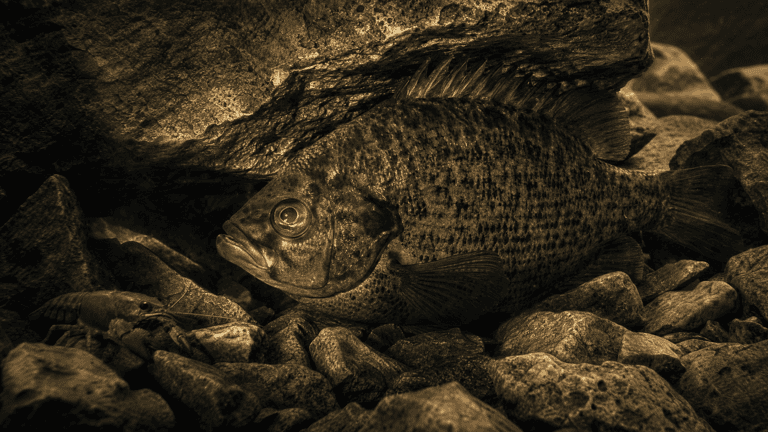
Larvae live underwater. Depending on the species, some build little cases out of sand, sticks, or plant material, and others go without. They spend a long part of the life cycle down there doing very unglamorous caddis things while trout eat them whenever they get the chance.
Then the insect turns into a pupa, the stage that eventually leaves the bottom and heads for the surface to emerge. Now the bug is traveling up through the water column.
That trip is why a river full of adult caddis doesn’t automatically mean a dry fly. Orvis’s current caddis life-cycle discussion goes through the larval, pupal, and adult stages in a lot more detail. The fishing version is shorter: each stage puts food somewhere different.
When nothing is rising, look down first
You’ve got adults in the bushes and over the riffle, and the surface is dead quiet.
That isn’t proof the fish are ignoring caddis. They could be taking larvae near the bottom or pupae on the way up, and a small larva or pupa pattern put where the fish are holding makes more sense than forcing a dry fly onto a surface nobody’s using.
Watch for a minute before you change patterns. Flashes down in the current, or little swirls with no nose showing, both point under the surface. And sometimes the adults you’re looking at hatched earlier and are just hanging around the bank.
A bug in the air tells you there’s a bug in the air. That’s about as far as it goes. It’s the caddis version of one bug not being a hatch report, and caddis make that point better than almost anything, because the adults are so easy to see.
The pupa is where the river gets interesting
A caddis pupa headed for the surface isn’t behaving like a rock. It’s moving, so a perfectly dead drift isn’t the only presentation worth trying.
Dead-drift a nymph or soft-hackle first, then let it lift or swing near the end of the drift. That rise through the water can look a lot more like an emerging insect than a dry fly dragging through every current seam.
Don’t turn the lift into a bass-rod hookset, though. A little movement is plenty. You’re only letting the fly change position the way the real insect sometimes does.
If fish take on the lift and ignore the dead drift, hang onto that. You may have found the part of the bug’s trip they actually care about.
A splashy rise can be a clue
Caddis adults don’t always sit politely on the surface. They skitter and bounce around, and trout chasing them can rise a lot harder than fish sipping nearly motionless mayfly spinners.
Not every splash is a caddis eat. The rise can still tell you what to check next. If there are adults riding the surface and moving, and fish are chasing them through broken water, a dry caddis with a little controlled movement is probably more honest than a fly frozen in place.
Quiet bulges just under the film send you back to the pupa question.
Size beats a perfect species name most days
You don’t need to ID every caddis down to the Latin name before you tie something on.
Start with what the fish can actually see: rough size, color, profile, and where the bug is moving. A fly that’s the right size in the right layer usually gives you a cleaner test than an exact species imitation fished two feet from the food. That’s why practical match-the-hatch starts with size and silhouette.
Latin names are usually the part that makes fly fishing feel like a test nobody warned you about. Set that down for now. Bugs are genuinely interesting and the biology will still be there later. You just don’t have to finish the textbook before your next cast.
Then there’s the evening mess
Caddis can come back to the water to lay eggs, which sometimes sets up another feeding window after the emergence itself.
This is where it starts looking unfair. Adults are everywhere, some are touching the surface, and the trout could be eating adults, emergers, or insects just under the film. Suddenly the fly box has forty things in it that all seem defensible.
Don’t try all forty.
Go with your strongest observation. Fish breaking the surface for adults you can see? Start up top. When the rises are soft and the dry keeps getting ignored, drop just under it, and if nothing’s happening at the surface at all, get lower.
Change the layer before you decide your tan fly is the wrong shade of tan.
The bug you can see is only one frame
Caddis get a lot less mysterious once you quit asking “what fly matches that bug?” and start asking what that bug is doing in the water right now — crawling the bottom, heading up, riding the surface, or coming back to lay eggs.
If you want something to check yourself against on the water, Hatch Match has an observation guide for it.
You don’t need the whole life cycle memorized while you’re standing in the river. You need just enough of it to notice when the fish are eating on a different floor than the one you’re watching.