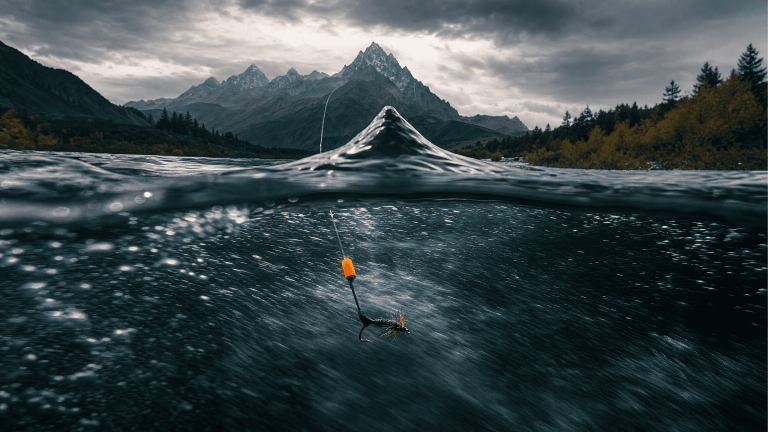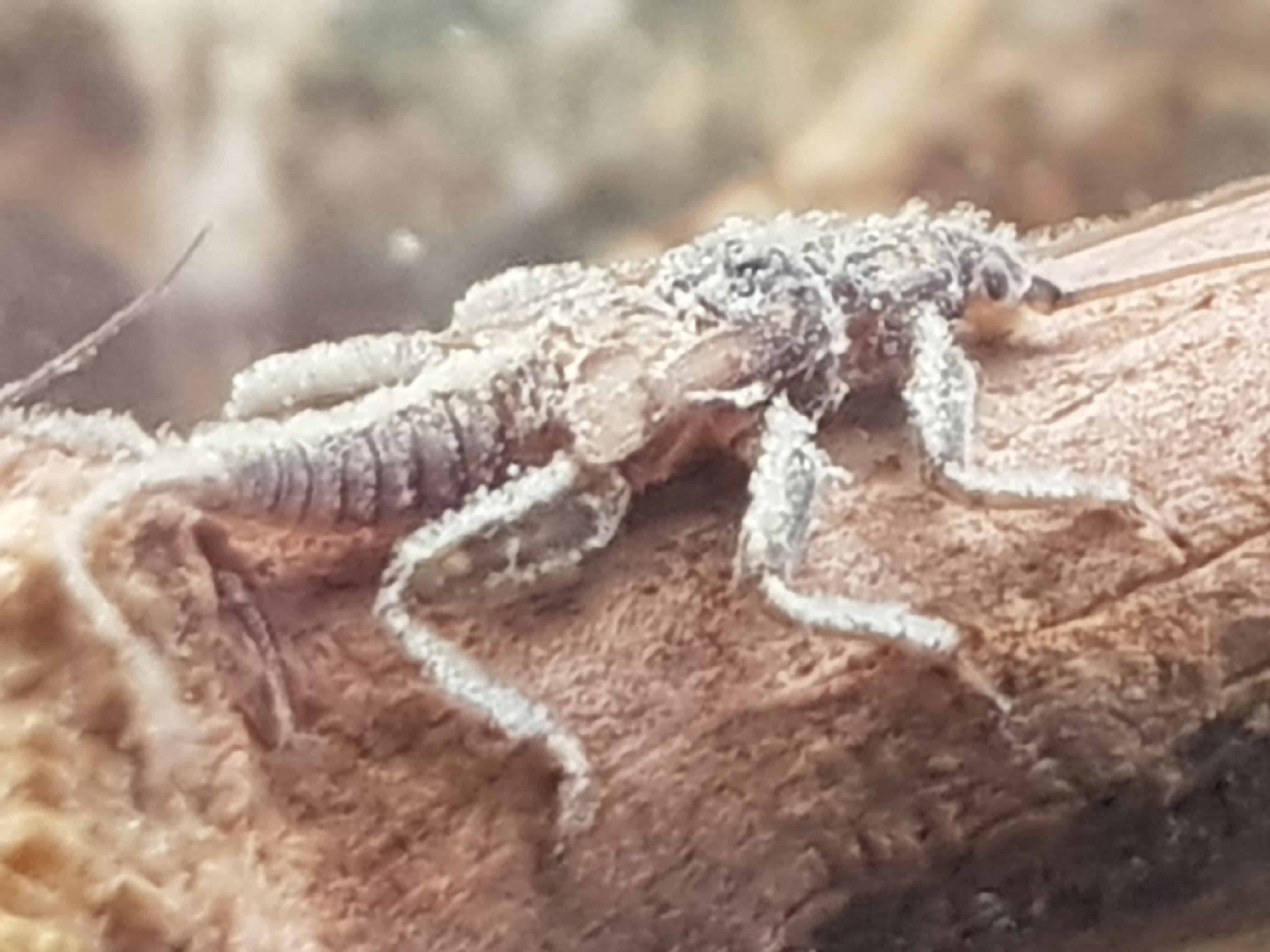
One insect landing on the water tells me that one insect landed on the water.
FIELD PLATE · EVIDENCE
One silhouette is one insect, not a hatch report.
That’s worth knowing. It’s also a long way from a hatch report.
The trouble starts when that one bug gets promoted to the whole story — “they’re on mayflies,” “everything’s eating caddis.” Maybe. The fish could just as easily be taking something an inch under the film, chasing bait through the same lane, or grabbing terrestrials off the bank while ignoring the bugs you can actually see.
A good hatch report doesn’t sound impressive. It just keeps what I saw apart from what I’m guessing.
Watch the event before naming it
I give the water a few minutes to repeat itself. One splash could be a rise, a chase, a refusal, a small fish, a bird, or something I never figure out. Fish working the same narrow lane over and over is a different kind of information — that starts to show whether they’re holding under a seam, cruising a shoreline, or following food somewhere.
If the surface keeps dimpling in one band where bugs are collecting, that beats one dramatic splash off somewhere else. Fishing has plenty of moments where the loudest thing on the water isn’t the most useful thing on it.
Write down the boring sentence first
“Small pale insects drifting in the foam line, fish making quiet rises along that lane.” That’s what I saw.
“The fish were eating pale mayfly duns” is a guess unless I actually got a look at the insect and the stage well enough to back it up. Guessing is fine. I have to tie something on before everything’s proven. The trick is remembering which sentence was the guess, so when the first fly gets refused I can swap the guess instead of deciding the river cheated.
The feeding layer usually matters before the insect name
Fish can be eating on top, in the film, or just under it, and the rise tells you some of that. A clean sip, a head-and-tail roll, a bulge that never quite breaks the surface, a flash down deeper — those can point at different feeding depths. None of them is a species label by itself.
If adults are flying everywhere but the fish keep bulging just under the film, the stage you can see may not be the stage getting eaten. A cloud of insects over the water can be impressive and still mostly be scenery.
It’s usually more than one bug
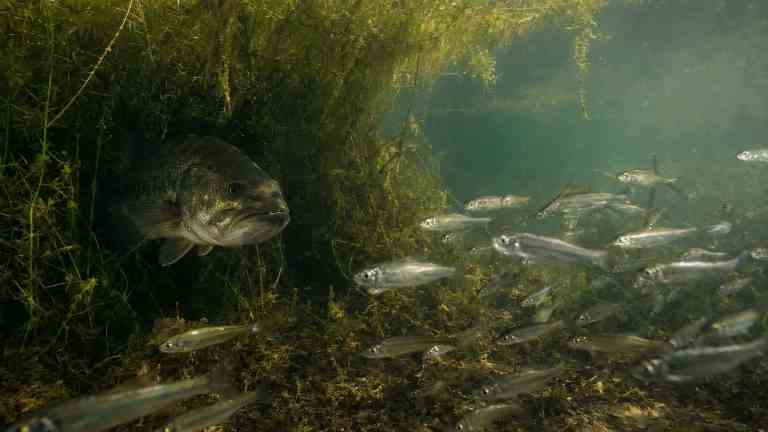
Emerging aquatic insects, spent and egg-laying adults, drifting larvae, terrestrials, and baitfish can all overlap in the same run, and wind and current keep shoving them into different lanes at different times.
So “there were bugs” is where the question starts. Which food was in which lane? Did the rises stay put and repeat, or move fast in one direction? Calm, repeated rises in one spot tend to look like fish eating insects coming down a lane. Fast, directional swirls look more like fish running bait.
I don’t have to jam the whole scene under one hatch name. The water is under no obligation to organize itself for my notebook.
Find the lane that keeps doing it
Foam lines, seams, eddies, slicks, weed edges, shade lines and wind lanes all collect food. When activity keeps repeating along one of them, I pick a reference — a rock, a dock post, where a shadow ends — so I’m comparing the same water cast to cast instead of chasing every new ring.
“Fish rose near the surface” is useless to the next person. “Quiet rises kept coming along the inside edge of the foam line for about twenty minutes” is useful, and it still doesn’t give away the spot.
Put a time on it
A hatch report without a time on it goes bad fast. Activity pulses when light changes, the wind drops, clouds roll over, or bait moves, and inside an hour it can slide to a different lane or layer. I write down when it started, changed and faded if I know, with the date and a rough time window. Nobody’s helped by pretending it lasted all day.
Freshness counts too. This morning’s report and one from three weeks ago aren’t the same kind of evidence, especially once weather, water level, insect timing, access or regulations have had a chance to change.
Fish response is evidence, but not a confession
Follows, refusals, missed eats, a fish sliding to a new feeding spot — all of that sharpens the picture. None of it tells you why the fly got turned down. Size, drift, posture, the layer, the leader, the angle, a clumsy approach, or something you’ll never see could all be the reason.
When several clean presentations get the same reaction, I change one meaningful thing. And if the water itself changes halfway through, I quit pretending I’m still running the same comparison.
Say how sure you are
I don’t need a scoring system for this. Plain words do it. “I could identify the insect” is a different sentence from “small pale insects were around.” “Fish kept rising in the same lane” is stronger than “I saw one rise.” “Probably” is fine when the evidence leans that way. “No idea” is allowed.
Writing “no idea” in a report can feel like admitting you’re bad at this. It isn’t. It’s the line the next person can trust most, because the quickest way to wreck a report is hiding the guessing behind confident wording.
Leave the spot out
A hatch report doesn’t need a GPS pin, a tiny named bank, a recognizable landmark in the background of the photo, or a map screenshot with the seam circled. The broad waterbody, region or general section is plenty, and only when sharing location makes sense at all. Sensitive access, fragile habitat, private routes and the small productive pockets stay out.
The feeding information is the valuable part anyway: a current edge, a shaded bank, the wind-blown shoreline, a slow eddy, a surface slick. If a report only works once the exact spot is exposed, the observing probably wasn’t finished.
A useful report sounds more like a field note than a verdict
Here’s the kind of note I’d actually write:
Late afternoon. Small pale insects collected in a foam line while fish made quiet rises and occasional bulges along the same lane. Adults were visible in the air, but feeding looked mostly in or just under the film. Activity weakened when the wind picked up. Exact insect stage uncertain.
It doesn’t answer everything. It holds the time, the lane and the layer, what the fish did, what changed when the wind came up, and the part I couldn’t pin down. Somebody else can pick a reasonable first fly off that without inheriting a certainty I never had. It’s also exactly the kind of note Hatch Match can help sort, as long as the tool doesn’t get treated as more certain than the water was.
Let the report stay open to being wrong
The point isn’t a permanent label for the water. It’s a note clean enough that the next decision starts from what happened, not from whatever somebody heard at the access.
Some days the whole honest report is one bug and a lot of wind. That still beats a confident hatch name the next person has to unlearn standing in the river.
FIELD OBJECT
This one should leave the page.
The article is the long version. These are the pieces worth carrying into the next trip.
The 30-second version
One bug on the water is one bug on the water. Before naming a hatch, I watch which lane keeps producing rises and what layer the fish are actually eating in.
What to watch
- Watch the event before naming it
- Write down the boring sentence first
- The feeding layer usually matters before the insect name
- It's usually more than one bug
Field card
- Watch the event before naming it
- Write down the boring sentence first
- The feeding layer usually matters before the insect name
- It's usually more than one bug
- Find the lane that keeps doing it
RIGHT TOOL, NEXT
Hatch Match
Turn the observed food, stage, size, silhouette, and behavior into the next presentation decision.