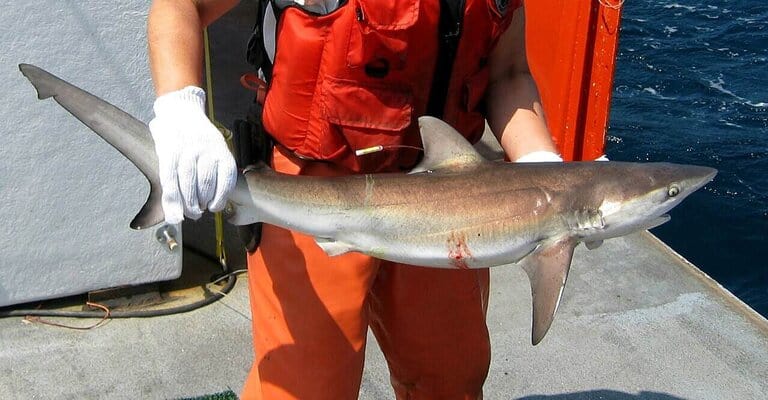
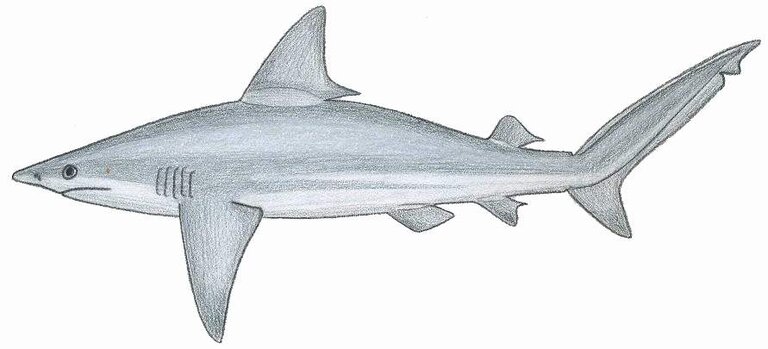
Range: Western Atlantic, including Florida, the Bahamas, Caribbean, and Gulf waters
Best clues: Pointed anal fin, blue line beneath the eye, dark upper-side spot, and a V-shaped tooth patch in the roof of the mouth
Core habitat: Juvenile grass beds and mangroves; adult reefs, rock, wrecks, and sand–hard-bottom transitions
Fishing problem: Showing a natural bait to a fish traveling an edge without dragging the rig, blowing the cast, or misidentifying a similar snapper
Management reality: Size, bag, aggregate, area, gear, and spawning-area closures must all be checked for the exact jurisdiction
Mutton Snapper reward anglers who notice boundaries. The useful spot is often not the tallest reef head. It is the pale sand tongue between coral patches, the grass edge beside a channel, or the down-current lane where one fish can travel without crossing open water for long. “Spooky” is a fair dockside shorthand only when it points to observable behavior: fish sliding away from a boat shadow, refusing a bait that drags unnaturally, or leaving after repeated sinker impacts. It is not a substitute for reading the lane.
01. Identification begins with shape, not mood
Mutton Snapper are olive to reddish above, lighter below, and often pink or red in the fins. A bright blue line runs below the eye. A small dark spot usually sits high on the side below the dorsal fin. The anal fin is distinctly pointed. Inside the mouth, the vomerine teeth form a V-shaped patch without the long rear extension seen in some other snappers.
Color can wash out on deck, the side spot can be faint on a large fish, and underwater light can exaggerate red. Build the identification from several clues: body proportions, the blue cheek line, spot position, anal-fin shape, and tooth patch. Do not force the mouth open on a fish that will be released just to win an argument; photograph the side and fins first, then consult a regional key.
Fin shape is easiest to judge when the fish lies flat and the anal fin is gently extended. Do not confuse a torn ray or folded fin with a naturally rounded edge. Record both sides if the spot looks faint.
02. Lane Snapper is the comparison to learn cold
Lane Snapper also carry a dark side spot and can overlap with Mutton Snapper. The stronger field separator is the anal fin: pointed on Mutton, rounded on Lane. Lane Snapper also tend to show yellow horizontal lines and a yellowish tail, while Mutton Snapper look heavier-bodied and commonly show the blue line under the eye. None of those colors is as durable as fin shape.
Other regional snappers complicate a fast glance. Mangrove or Gray Snapper have a blunter profile and lack the Mutton’s characteristic side pattern. Red Snapper are more uniformly red, with a longer triangular face and no persistent adult shoulder spot. Cubera Snapper are heavier-headed and carry formidable canine teeth. If the fish could fall under a different size or bag rule, slow down before retention. A cooler is the worst place to finish an identification lesson.
03. The nursery and the adult reef are connected
Juvenile Mutton Snapper use grass beds, mangroves, canals, and other sheltered inshore habitat. Larger fish shift toward offshore reefs, rock, wrecks, and adjacent open bottom. That life-stage movement explains why anglers can see small muttons in clear shallows yet target adults around deeper relief. It also makes seagrass and mangrove condition part of the offshore fish story.
Think of habitat as a network rather than a list. Grass offers food and cover to juveniles. Channels create travel lines. Reef edges give adults access to structure and sand-dwelling prey. A fish does not need to sit in the center of a coral head to depend on it. The corridor between cover and feeding bottom may be the most important piece on the map.
04. Summer spawning deserves a wider berth
Mutton Snapper spawn during summer, with July and August especially important in management and species accounts. Fish may aggregate predictably, which makes them efficient to find and unusually vulnerable to concentrated pressure. A pile of marks in a known spawning area is not simply a lucky reef.
Protected spawning special management zones and seasonal rules can close harvest or restrict fishing in specific places. Check the area layer as carefully as the species page. Even when harvest is lawful, repeated catch-and-release on a deep aggregation can create avoidable mortality. The mature fish gathered there are doing more than feeding; restraint protects the process that produces later year classes.
05. Search the seam, not just the object
On a chart, look for where reef, rock, or wreck relief meets sand, rubble, grass, or a channel. On the sounder, note isolated marks slightly off the main pile. In clear water, watch the direction fish use to approach and leave. A mutton holding alone on a sand lane may be easier to present to than ten fish buried in structure—if the boat stays far enough away.
Current turns a boundary into a conveyor. Start up-current and let the bait cross the edge naturally. If wind pushes across the current, use the plotter trail to see the real path. Reset before the bait sweeps behind the boat and drags. Repeated casts that cross the lane at the same angle teach more than random casts toward the reef.
Make the first two passes reconnaissance. On pass one, record the depth at the shallow lip and the direction the rig leaves the boat. On pass two, move the starting point so the bait reaches the lip at the chosen depth. Save the successful track, not only the reef waypoint. If the current strengthens, the same start will no longer produce the same path; add weight or move farther up-current, but change one variable at a time. Around a sand hole, work the entry corner, center lane, and exit corner as separate targets. This turns a vague patch of bottom into three testable presentations and keeps the crew from carpeting the entire area with lead.
06. Translate “wary” into things you can change
No agency species account can measure a fish’s personality. Anglers use “wary” because Mutton Snapper often respond poorly to conspicuous boat position, repeated splash, heavy terminal gear, or a bait moving unlike the rest of the food. Treat the word as a checklist, not a biological claim.
- Increase boat distance before automatically shrinking leader strength.
- Land the sinker outside the lane and let the bait enter it.
- Reduce hull noise and avoid running directly over shallow fish.
- Use the lightest weight that still controls depth and drift.
- Replace a spinning, washed-out, or crab-picked bait immediately.
- If one fish follows and refuses, change the presentation path before cycling through six baits.
A thinner leader cannot fix a bait plowing across sand behind too much lead. Solve geometry first.
07. Natural bait must look free while remaining controlled
Mutton Snapper eat fishes, crustaceans, and snails. Live baitfish, fresh dead bait, shrimp, and other locally legal offerings can work, but the rig must let the bait travel naturally through the lane. A long leader can create separation from the weight; it can also tangle, snag, and hide a bite. Start with a manageable length and change it for a reason.
Hook size should match the bait and expected fish, with the point completely clear. Non-stainless hooks and circle-hook rules apply in many federal reef-fish situations; verify the exact requirement. Bridle or nose-hook a live bait so it swims rather than spirals. With a dead bait, trim ragged pieces that make it helicopter. If the bait returns twisted, the leader is reporting the problem.
08. Jigs and artificials need a travel path too
A vertical jig dropped into the highest relief may catch a snapper, but it also creates the shortest possible race to cover. Cast or drop so the jig crosses the edge. Let it reach the chosen depth, then use measured lifts and pauses. Mutton Snapper can take a lure near bottom or follow it higher; the strike often arrives when the jig changes speed.
In shallower clear water, a bucktail or weighted soft plastic can imitate a small fish or crustacean moving across sand. Keep contact without grinding the lure. If every retrieve carries grass, move the line a few feet rather than simply adding weight. Artificial presentations are valuable search tools because they can repeat a depth and angle quickly, but they do not remove the need for a stealthy boat position.
09. The bite is often a change in load
On a drifting natural bait, the first signal may be extra weight, a line angle that stops advancing, or a short acceleration. With a legal circle-hook setup, point the rod, wind until the line comes tight, and lift into a loaded rod. A violent hook-set can pull the bait away or move the circle hook past the corner of the jaw.
Once connected, the opening run matters. Keep the rod working and gain line without giving the fish a free turn toward relief. After the fish clears the edge, smooth pressure beats panic. At boatside, prepare the net before the leader reaches the tip. High-sticking a strong fish on a short line is a good way to break a rod or tear a hook free.
10. Depth changes the release decision
A shallow mutton may swim away strongly after a quick dehooking. A fish brought from deeper reef can show barotrauma just like other snappers: expanded abdomen, bulging eyes, protruding tissue, or inability to descend. Do not assume a fish floating at the surface has recovered because it remains upright.
Keep a descending device ready and weighted for the current. South Atlantic federal reef-fish rules require specific descending-device readiness and rigging; the live rule page controls the details. Do not puncture protruding stomach tissue. If venting is lawful and chosen, use the correct hollow tool and know the anatomical target. The lower-injury default is often rapid recompression. See the full barotrauma release sequence before fishing deep structure.
11. The regulation check has more than one box
Regulation snapshot checked September 15, 2026: the South Atlantic Council’s live page listed recreational Mutton Snapper harvest as open, with an 18-inch total-length minimum, a five-fish bag inside the ten-snapper aggregate, whole-fish landing requirements, and federal reef-fish gear rules. Florida private recreational landings also carried state reef-fish survey or angler-signup requirements. These details can change, and Florida, Gulf, South Atlantic, territorial, and foreign rules are not interchangeable.
Use the South Atlantic Fishery Management Council Mutton Snapper page as the federal Atlantic gateway and the FWC snapper regulations page for Florida. Then check current bulletins, closed areas, trip origin, landing state, vessel type, and whether natural bait changes the hook rule. NOAA and council maps should settle which federal management region the trip enters. A saved screenshot from last season is not current law.
12. Diagnose the miss instead of blaming the species
- Fish leave when the boat arrives: back off, drift or anchor outside the lane, and stop crossing the shallow edge under power.
- Bait returns twisted: correct the hook placement, reduce speed, or use a less wind-prone shape.
- Only pickers bite: move the bait above the small-fish layer, toughen it, or change the lane rather than soaking longer.
- One heavy bite, instant break: inspect abrasion, shorten the distance to cover, and apply pressure earlier.
- Repeated follows, no take: change the angle, sink rate, or pause location before dropping leader diameter.
- Lane Snapper uncertainty: inspect the anal fin and side pattern before measuring against the wrong rule.
- Release will not descend: pause fishing and deploy the prepared descending device.
13. The useful lutjanid handoffs
Red Snapper share the family but create a different fishing problem: schools around offshore structure, two separately managed U.S. stocks, and a release plan dominated by depth. Onaga or Longtail Red Snapper move the comparison to Hawaiian deep slopes and a dramatically forked-tail silhouette. Neither is a color variant of Mutton Snapper.
For structure work, use the wreck-and-reef bottom-fishing guide. For muttons, adapt it by giving extra attention to the open-bottom approach lane and by verifying the identification before applying a snapper aggregate.
14. Primary references and live rule gates
- South Atlantic Fishery Management Council — Mutton Snapper identification, biology, current status, and regulations
- Florida Fish and Wildlife Conservation Commission — Mutton Snapper species profile
- Florida Fish and Wildlife Conservation Commission — live recreational snapper regulations
- Florida Fish and Wildlife Conservation Commission — live saltwater gear rules
- South Atlantic Fishery Management Council — developing Mutton and Yellowtail Snapper amendment
Taxonomy, identification, seasonal biology, and rule links were reviewed September 15, 2026. Area notices and emergency actions can change access; the live agency source controls.