Freshwater Drum Were Using That Walleye Seam First
Freshwater drum aren’t just the stubborn pull on a walleye rig. They’re bottom-feeding big-river fish that grunt, float their eggs, and serve as hosts for freshwater mussels, some of which depend heavily on them.
By HunterUpdated September 12, 2026Read 8 min
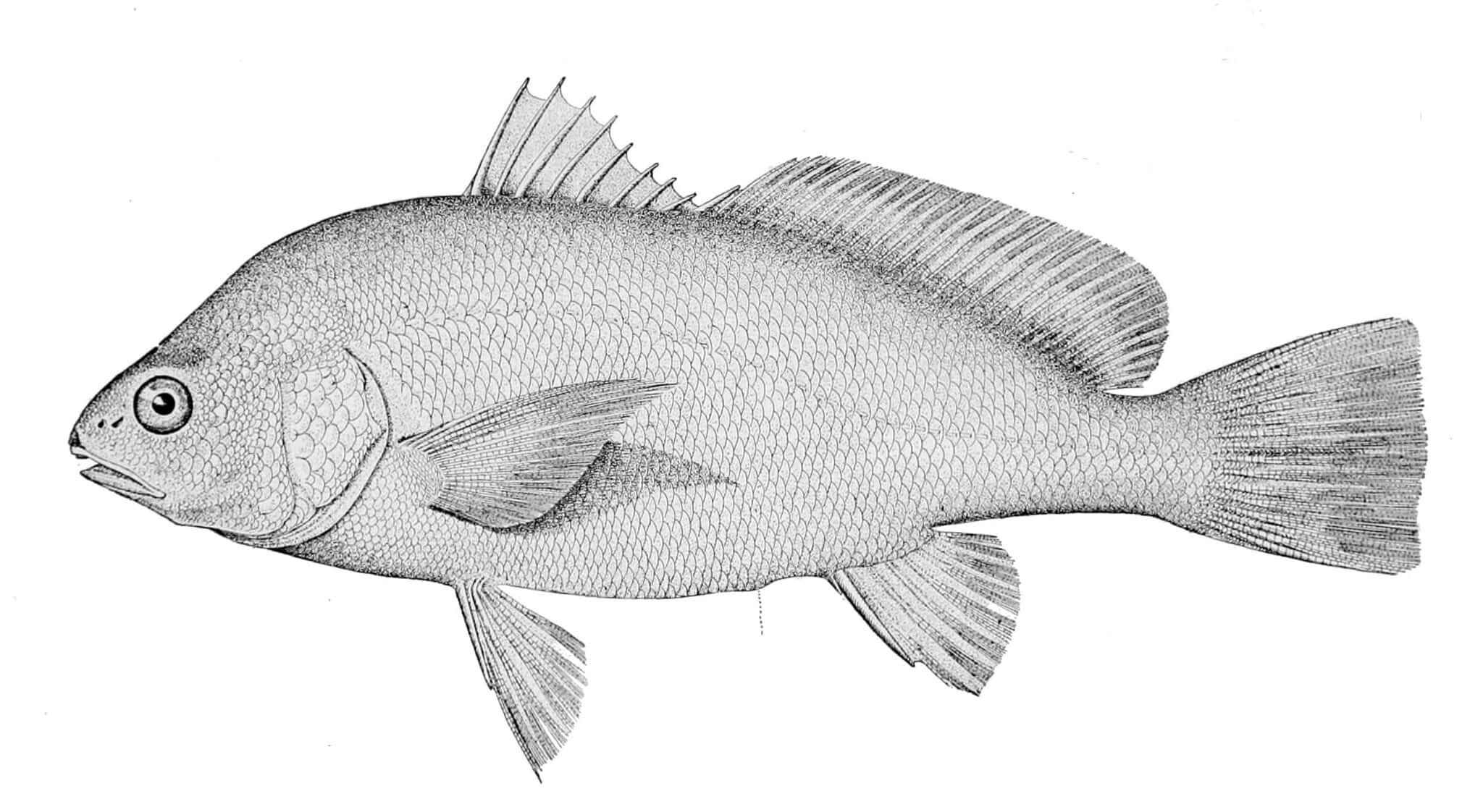
Image: public-domain species reference
If you’ve ever felt a stubborn downward pull while walleye fishing and reeled up something silver and humpbacked, you’ve probably met a freshwater drum without planning to. That overlap isn’t an accident. Aplodinotus grunniens lives on or near the bottom of big water — deep pools, channels, sand and mixed bottoms, riprap, tailwaters, reservoirs — and it uses the same current breaks that stack food for walleye and catfish. Calling it bycatch describes your plan, not the fish.
At a glance · The short version
Scientific name
Aplodinotus grunniens
Family
Sciaenidae, the drum and croaker family; the only member of that marine-dominated family living entirely in freshwater in North America.
Typical adult size
Missouri reports commonly 12–20 in and roughly 12 oz–5 lb, with much larger fish possible.
Spawning
Open-water broadcast spawning, usually May–June across much of the range, commonly around 18–26 C; buoyant eggs rise rather than being guarded in a nest.
Adult diet
Fish, crayfish, aquatic insects, amphipods, and mollusks; predominantly bottom-oriented feeding.
Ecological job
Host fish for multiple freshwater mussels, including endangered or sensitive species; this is not just a fish sharing habitat with the benthos.
What fish is this?
Identification
Body shape
Freshwater drum are deep-bodied and silvery, with the head and back climbing steeply toward the dorsal fin to create the humped profile older fish show especially well.
Missouri describes milky-white lips, pale pelvic fins that can carry an orange tinge, and a long dorsal fin divided into two distinct sections. Iowa gives the second dorsal section 24–32 soft rays.
The name is literal. Specialized muscles associated with the gas bladder produce a grunting or drumming sound, especially in reproductive context. The sound is biology, not a novelty attached after the fish was named.
Large and medium rivers, deep natural lakes, reservoirs, and impoundments all support drum. Missouri emphasizes the Missouri and Mississippi rivers and lower reaches of large tributaries; Iowa likewise finds them in major rivers and larger inland waters.
USGS summarizes common habitat on or near the bottom of medium-to-large rivers and lakes to roughly 40–60 ft, while Missouri notes drum frequently around 30 ft in large pools and reservoirs. Depth is therefore real habitat, not merely where incidental anglers happen to intercept them.
Sand, mixed sand-and-mud, and other relatively clean bottom habitats recur across agency descriptions. The fish is not restricted to rock, which helps explain why it occupies both big turbid rivers and large lakes.
Missouri’s angler guidance points to wing dikes, eddies, deep pools near sandbars, and dam tailwaters. Those are the same places a walleye angler is already dragging a jig through, which is why so many drum show up uninvited: food settles on or near bottom where current loses just enough energy to make a holding lane.
The old shorthand that drum are mainly mollusk crushers is incomplete. Missouri and USGS both list fish, crayfish, immature aquatic insects, and mollusks, with diet changing by habitat and size. Iowa describes adults nosing and moving bottom material to expose prey.
Heavy crushing teeth in the throat let drum exploit hard-shelled prey. That hardware explains why snails and small clams can matter without making mollusks the only adult food.
Young fish
Larvae and young fish begin heavily on zooplankton and microcrustaceans, then shift toward larger insects, crustaceans, fish, and mollusks as gape and crushing capacity increase.
USGS summarizes observations of drum feeding throughout the night. That does not mean daytime fish shut off; it means bottom-oriented feeding can continue well beyond the visual low-light windows anglers use for many predators.
USGS summarizes spawning in May and June at roughly 18–26 C. Other regional sources shift the calendar somewhat, which is expected across a range stretching from the Gulf to Canada.
There is no nest and no guarding male. Drum broadcast eggs and sperm into open water. The eggs are positively buoyant or semi-buoyant and rise toward the surface, an unusual freshwater spawning strategy in North America.
Large females can produce hundreds of thousands of eggs; USGS cites values up to roughly 600,000 in large fish. High egg production makes sense in a system with no nest defense and enormous early-life mortality.
USGS summarizes sexual maturity around four to six years, while regional studies vary. Age is one of the fields that deserves population-specific treatment: some recent references document drum much older than the 13-year maximum repeated in older agency summaries.
USGS cites evidence of stress above about 25.6 C under some study conditions and also notes spawning around 18–26 C. Ontario’s life-history database classifies the species as warmwater and gives a preferred range around 24–28 C. These numbers are measuring different endpoints, so they should not be collapsed into one magic temperature.
Prolonged low dissolved oxygen can stress drum. That matters most in deep warm water where temperature and oxygen can pull in opposite directions: depth may be comfortable structurally while the bottom layer is physiologically poor.
USGS summarizes research linking growth with high-magnitude flow events in some river populations. That is not the same thing as saying adult drum sit in the strongest current; higher flows can change food production, connectivity, and habitat availability while fish still occupy energy-saving positions.
The shift is mostly positional. Drum do not require exotic tackle. They require admitting that bottom contact and depth are the assignment rather than an accidental side effect of fishing for something else.
Natural baitconvention
Missouri recommends worms, crayfish, and minnows fished on or near bottom and notes bait is particularly reliable because of the species’ feeding position. A slip-sinker rig keeps the offering down without making the fish pull the full weight immediately.
Jigs and blade baits worked slowly along bottom can cover wing dams, riprap, and tailrace seams while remaining more selective than a nightcrawler. The price is snag risk. That tradeoff is real and worth choosing deliberately rather than pretending one method is universally better.
Schooling
Missouri notes drum can school, so one fish is evidence. If one comes from a specific seam or depth, keep working that position before moving simply because the catch was not the species originally intended.
Freshwater drum are strong, bottom-oriented fish. A rod with some give can help protect lighter hooks, especially in current where the river adds load to the fish.
The ecosystem connection
Mussel Host, Not Rough-Fish Background
Freshwater mussels
Freshwater drum serve as host fish for the larval stage of multiple freshwater mussels. Missouri names the endangered scaleshell and several others, while USGS lists species for which drum are likely exclusive or important hosts. A fish moving through a river can therefore be part of how a mussel completes its life cycle and disperses.
Warming toward the open-water spawning period; river flows can expand feeding and growth opportunity.
Current seams, sand/rock transitions, and depth near spawning water.
Early summer
Broadcast spawning and then strong bottom feeding as water warms.
Deep pools, wing-dike edges, tailwaters, reservoir channels, and bottom forage.
Late summer
Warmwater fish remain active, but deep bottom habitat can become oxygen-limited in some systems.
Do not chase depth without checking oxygen and forage position.
Fall
Cooling can consolidate fish near channel structure and deeper water.
Keep bottom contact and use one catch to establish the productive depth.
Winter
Feeding and activity are substantially reduced.
Deep stable water and slower presentations; incidental catches may outnumber deliberate ones.
— · Where the sources disagree
Open Questions
How long freshwater drum live
Older state summaries often repeat a maximum near 13 years, while more recent studies and federal outreach document fish surviving for decades. Age structure is clearly population-dependent. We should not use one number nationally without the aging method and population attached.
How important mollusks are
The crushing teeth made drum famous as mollusk eaters, but agency diet summaries repeatedly show fish, crayfish, and insect larvae can dominate. Bottom type and local prey community decide whether clams and snails are central or incidental.
— · Sources
FEEDING ECOLOGY · STANDARDIZED
How this fish gets fed.
Primary prey
Bottom invertebrates are central—mussels, snails, insect larvae, amphipods, and crayfish—along with fishes and fish eggs in larger individuals and some populations.
Feeding mode / location
A bottom-oriented forager of big rivers, lakes, reservoirs, channels, riprap, tailwaters, sand and mixed bottom. Pharyngeal teeth let drum crush hard prey such as mollusks, so bottom composition can be as important as visible cover.
Diel / seasonal pattern
The profile supports bottom feeding across more than just low-light windows; no universal daily feeding clock is established. Seasonal movement follows temperature, river stage, spawning, and prey distribution rather than one fixed depth.
Ontogenetic diet shift
Young drum begin on zooplankton and small aquatic invertebrates. As they grow, benthic insects, mollusks, crustaceans, and fishes become increasingly important.
The documented 18–26°C spawning range remains a reproductive value, not a feeding-temperature band.
Montana Field Guide — diagnostic lateral line, spawning behavior, and regional habitat.
Compiled 2026-09-11. Limits and advisories are set per water and per state and change between seasons — the managing agency for wherever you are fishing has the current answer.
Next time a drum comes up off a walleye seam, don’t just shake it off and move. It just told you there’s food on the bottom in that exact lane, and since drum can school, a slower bait on the same seam is a fair test of whether more are sitting there.
Plenty of fish in River Fish of the United States share water like this, but drum are the ones people are quickest to write off. A fish that grunts on purpose and helps freshwater mussels finish their life cycle has earned at least one cast that was meant for it.
River FishRiver-fish species profiles covering habitat, behavior, seasonal movement, fishing approaches, conservation status, and regional variation across the United States.49 articles
Species & BehaviorFish behavior, habitat, depth, forage relationships, and species-specific field decisions. Start with the Freshwater Fish Species field guide.159 articles
Cookie Consent
We use cookies to improve your experience on our site. By using our site, you consent to cookies.
Contains information related to marketing campaigns of the user. These are shared with Google AdWords / Google Ads when the Google Ads and Google Analytics accounts are linked together.
90 days
__utma
ID used to identify users and sessions
2 years after last activity
__utmt
Used to monitor number of Google Analytics server requests
10 minutes
__utmb
Used to distinguish new sessions and visits. This cookie is set when the GA.js javascript library is loaded and there is no existing __utmb cookie. The cookie is updated every time data is sent to the Google Analytics server.
30 minutes after last activity
__utmc
Used only with old Urchin versions of Google Analytics and not with GA.js. Was used to distinguish between new sessions and visits at the end of a session.
End of session (browser)
__utmz
Contains information about the traffic source or campaign that directed user to the website. The cookie is set when the GA.js javascript is loaded and updated when data is sent to the Google Anaytics server
6 months after last activity
__utmv
Contains custom information set by the web developer via the _setCustomVar method in Google Analytics. This cookie is updated every time new data is sent to the Google Analytics server.
2 years after last activity
__utmx
Used to determine whether a user is included in an A / B or Multivariate test.
18 months
_ga
ID used to identify users
2 years
_gali
Used by Google Analytics to determine which links on a page are being clicked
30 seconds
_ga_
ID used to identify users
2 years
_gid
ID used to identify users for 24 hours after last activity
24 hours
_gat
Used to monitor number of Google Analytics server requests when using Google Tag Manager
1 minute
Jetpack's built-in visitor analytics. It records page views, referring sites, search terms, and outbound link clicks, and also carries the shared visitor-tracking library used by Jetpack Instant Search and WooCommerce Analytics.