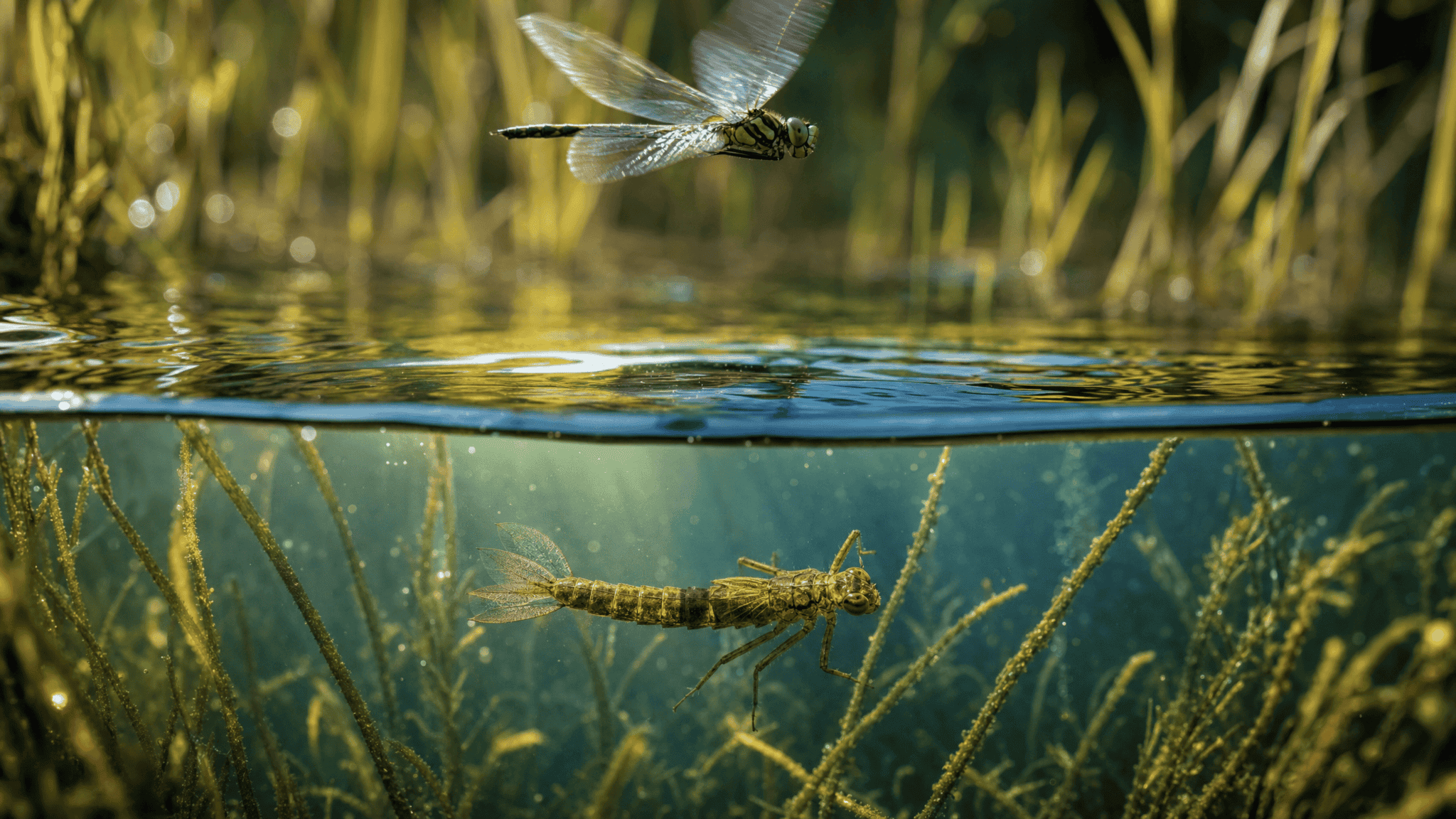
Damselflies and dragonflies get lumped together constantly, and then fished with one retrieve like they’re the same bug. The trouble is their nymphs don’t move anything alike, so treating them as one hatch can hand you the wrong presentation. A nymph is the insect’s immature underwater form, and both spend the vast majority of their lives down there. The fairly brief adult stage buzzing around over the water is the only part most people notice.
FIELD PLATE · FORAGE
Silhouette and movement beat a confident guess.
The part you see is the short part
Adults get noticed because they’re flying around in plain sight and often colorful. The nymph, meanwhile, can spend a year or more underwater before it ever emerges. So nymphs are a much more consistently available food than that short adult flight period makes it look.
Two very different ways to swim
Damselfly nymphs are slender, with three visible tail-like gills. They swim with an undulating, side-to-side wiggle through weedy, vegetated water.
Dragonfly nymphs are stockier and don’t have those tail gills. They move by expelling water, which shoves them along in a jerky, almost explosive burst — nothing like a damselfly’s smoother swim. It’s jet propulsion on a bug that doesn’t look like it should be capable of anything that dramatic.
A retrieve built for one doesn’t necessarily sell the other, and that matters when fish are keyed on nymphs instead of adults. Hatch Match lets you set that movement next to the other forage clues without turning one nymph into a pattern for everything.
Weedy, still water
Both kinds favor vegetated water over open, current-swept water. Weed beds, lily pads, slow backwaters and pond margins are where I look.
That preference also decides whether they’re worth thinking about at all. Damselfly and dragonfly nymphs are particularly relevant forage in ponds and along lake weed edges, and in slow river backwaters too. In fast, rocky trout water they matter a lot less.
The trip to shore is the dangerous part
When it’s time to emerge, nymphs migrate toward shore or vegetation, and on the way they’re more exposed than at any other point in their underwater life. That sometimes sets off a real feeding window, with fish keying on the migration itself instead of picking off the odd nymph.
Nymphs crawling on visible vegetation near the surface are what I watch for. That’s a good sign emergence is happening right now.
Adult damselflies can matter too, just differently
Adult damselflies fly low and keep landing on vegetation near the water, so they end up on the surface fairly often, especially during egg-laying. Some fish will key on adults skimming the surface, particularly in ponds and slow water. It’s a smaller, more situational chance than the nymph stage, but around weed beds where damsels are busy landing near the water it’s worth keeping an eye on.
Right fly, wrong motion
Tie a damselfly nymph too stiff and it starts borrowing a dragonfly nymph’s proportions — a chunkier pattern that usually gets worked with shorter, sharper movement. Even a damsel with the shape exactly right can get fished with the wrong motion. Strip a slender, willowy nymph like it was built to explode off the bottom and it quits matching the animal long before color is the problem.
So when a damsel pattern isn’t getting looks, the fly on the end might be fine, and the way it’s moving is the first thing I’d change. Slow it down toward a lazy swim before you start digging through the box. That pace can feel like you’ve stopped fishing altogether, especially if your arm is used to stripping streamers, so count the pauses in your head until you trust it.
Entomology basis: Penn State Extension — dragonfly and damselfly nymphs · Penn State Extension — aquatic insect life stages. Odonate nymph habitat and fish response vary by species, vegetation and water type.