Spotted Gar Already Left the Ring You’re Casting At
Spotted gar hunt the clearer, weedy backwaters, and the roll you just saw is where one was, not where it is. Cast ahead along the lane, wait for the grab to turn purposeful, and have the pliers out before you start.
By HunterUpdated September 19, 2026Read 7 min
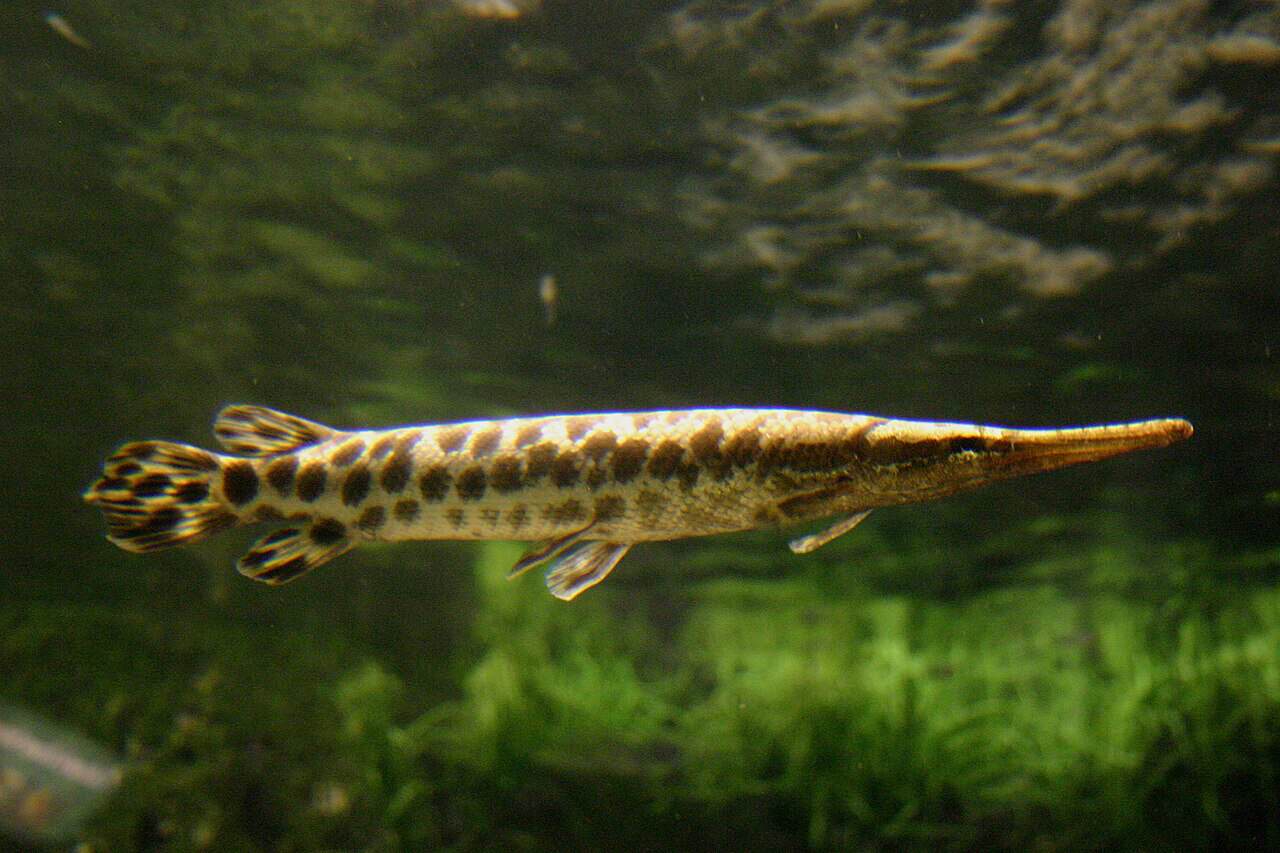
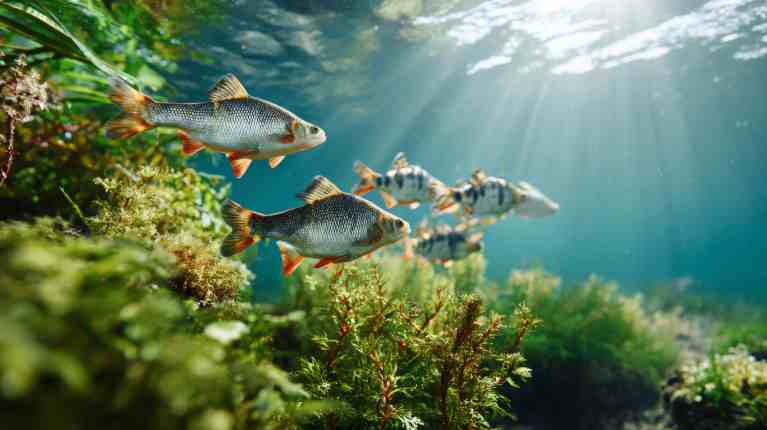
A spotted freshwater fish swimming in a lush aquatic environment, showcasing vibrant colors and natural habitat.
A gar rolling at the surface just told you it used that lane. It didn’t promise to still be sitting in it, and a bait slapped down on the ring is usually how that conversation ends. I haven’t fished for gar, but casting at the splash instead of ahead of the fish is a mistake I’ve made on other water and will probably make again.
Spotted gar live on the quiet side of the map: vegetated sloughs, oxbows, flooded timber, marsh edges and protected backwaters. The cast that earns its keep follows a weed lane or an ambush edge.
Scientific name
Lepisosteus oculatus
Best field mark
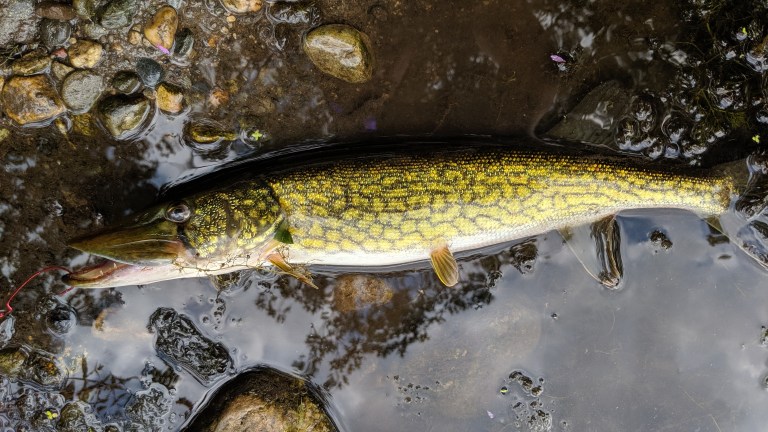
Dark round spots on the top of the head and on paired fins, paired with a relatively short broad snout.
Core water
Clearer, quiet backwaters with vegetation, flooded timber, sloughs, swamps, and protected lake or river margins.
Best clue
A repeated roll pattern beside one weed edge, timber aisle, shade line, or pocket mouth.
Presentation
Small baitfish profile moving slowly through a clean lane, under a float or on a controlled artificial.
Identification
Spots in the right places
Head and paired fins
Many gars show spots somewhere. Spotted gar are marked across the top of the head and snout and on all fins, including the paired fins. Longnose gar may be spotted but carry a much longer, narrower beak.
Shortnose comparison
Shortnose gar usually lack the strong head-and-paired-fin spotting pattern and have a different scale-count pattern. If range overlap makes identification uncertain, photograph the head, paired fins, and full side and release the fish.
Do not use size alone
A young longnose or alligator gar can overlap an adult spotted gar in length. Head proportions, tooth rows, and spotting distribution beat body length.
If a young fish doesn’t obviously fit one silhouette, I’d photograph the head and paired fins before reaching for a tape measure — length is the argument that ends worst on a rocking boat.
Habitat
Fish the protected side
Backwater specialist
Start in oxbows, sloughs, swamp channels, river backwaters, shallow lake margins, and quiet pools with submerged plants or flooded wood. Spotted gar are less tied to open main-channel water than longnose gar.
Clarity matters
This species is less tolerant of continuous turbidity than several other gars. In a muddy system, search for the clearest connected feeder, spring influence, protected pocket, or settling backwater.
The edge within the edge
A giant weed bed is not one spot. Look for a point, inside turn, narrow aisle, isolated stalk clump, shade pocket, or clean bottom window. Those features concentrate both bait and casting opportunity.
Local status
Spotted gar may be common in one state and a conservation concern near a range edge in another. Never copy a neighboring state’s classification.
No relocation
Do not transport or release a live gar into another water. Distribution records, native status, and management goals are location-specific.
Approach
See the fish without ruining the lane
Low entry
Idle early, pole or paddle where practical, and keep deck noise down. In shallow still water, one slammed hatch can erase the evidence for several minutes.
Read repeated rolls
A roll may be breathing, not feeding. Plot two or three appearances. A line of rings along one weed face shows direction; several fish rolling across a broad mat suggests a holding zone that needs smaller sub-areas.
Cast beyond
Land in open water beyond the route and draw the bait through it. A direct splash over the fish is especially costly in clear, shallow backwater.
Timing
Match light, oxygen, and access
Early and late
Low light improves stealth and often pulls forage along exposed edges. Start on outside weed lines and pocket mouths, then look farther under cover as light strengthens.
Warm calm periods
Surface rolls can become easier to spot as warm water raises the value of atmospheric air. Treat this as a locating advantage, not proof of aggressive feeding.
Flood connection
Spring or early-summer connection to newly flooded vegetation can move fish into temporary habitat. Falling water reverses the map quickly; leave shrinking pockets before fish become isolated.
Presentation
Keep it in the clean lane
Float rig
Where legal, suspend a small legal baitfish or cut bait at the depth fish are cruising. Set the float shallow enough to pass over vegetation and cast past the target so the bait enters quietly.
Artificial coverage
Compact swimbaits, spoons, minnow plugs, or weed-resistant single-hook presentations can follow an aisle. Use a slow controlled retrieve with brief pauses beside openings. Oversized noisy hardware can spook more fish than it attracts in clear backwater.
Depth control
If fish roll high but refuse, run the next cast one vegetation layer deeper. If the rig fouls every pass, shorten the drop or move to the next clean lane; dragging salad does not test the fish.
Hook timing
Read movement instead of counting seconds
Crosswise grab
A gar may seize a bait sideways and turn before the hook can reach useful tissue. Watch the float or line for direction. Come tight smoothly only after movement becomes steady and purposeful.
Artificial strike
On a moving lure, keep reeling until the rod loads, then sweep. A reflex snap at the first flash often removes the lure from the fish.
Miss response
After a missed fish, check hook point and leader, then rest the lane. Re-enter from a new angle with a smaller profile. Repeatedly bombarding one shallow pocket usually makes the lesson less clear.
Setting the hook the second the float dips is a reflex most other fish have trained into you. Gar are where that reflex needs retraining instead of trusting.
Tackle
Backwater control without brute force
Rod
A medium-heavy rod with leverage for vegetation is a practical base. Select line for cover and fish size, then add an abrasion-resistant leader. Thin leader is not stealth if it fails against teeth.
Hooks
Use strong, extremely sharp hooks matched to the bait. Barbless or pinched-barb setups can shorten removal where appropriate and legal, but they demand steady pressure.
Tools
Carry long pliers, cutters, a large knotless net, protective gloves, and a wet unhooking surface. Stage them before the first cast; a hooked gar is the wrong time to open packaging.
Landing
Protect hands and fish
Final surge
Keep the fish out of the thickest vegetation and guide it headfirst into a net that supports the body. Do not beach it over gravel or lift it by line, jaw, or gill opening.
Head control
Teeth and hard scales can injure hands. Keep fingers out of the mouth and gills, work from behind the head, and let long tools reach the hook.
Fast release
Keep the fish wet, horizontal, and supported. Prepare the camera before lifting, take one image, and return it. In warm backwater, minimize air exposure and allow the fish to regain balance before release.
Decision tree
Make each cast answer one question
Fish roll on an outside edge
First cross the route at their apparent depth. If ignored, go slightly deeper. If still ignored, reduce size or switch presentation type before leaving.
Fish vanish into a mat
Do not throw blindly into impossible cover. Follow the vegetation to the nearest opening, point, or connecting aisle and intercept the exit.
Water is dirty everywhere
Find inflow with better clarity or protected settling water. If none exists, switch species or water rather than forcing a sight-oriented backwater pattern.
One pocket produces
Identify why: depth, plant species, shade, inflow, or bottom opening. Then find the next pocket with the same combination instead of simply fishing every weed bed.
Field notes
Build a backwater pattern
Log the habitat
Record water clarity, level trend, vegetation type, open-lane depth, shade, forage, roll direction, presentation depth, and exact take location. “Caught near weeds” is too vague to repeat.
The honest summary
Spotted gar reward quiet observation and precise lane fishing. Find connected clear backwater, break the vegetation into small targets, place a modest offering ahead of the route, and have safe release tools ready.
A gar thrashing beside the boat with a mouthful of teeth is a lot to deal with the first time. That’s the whole reason the pliers, cutters and net get laid out before the first cast: it turns the scariest thirty seconds of the day into a routine one, for your hands and for the fish.
Sources
FEEDING · ONE SHORT SIDEWAYS STRIKE
It hangs still in the weed lane until something small swims past, then takes it with a quick turn of the head.
What it eats
Small fishes are major adult prey, supplemented by crayfish, shrimp, and aquatic insects. Juveniles use smaller invertebrates and small fish.
How and where it hunts
A shallow-water ambush predator that stalks prey through weed lanes, quiet backwaters, marsh edges, sloughs, and other low-current cover. It often holds nearly motionless before a short lateral strike.
When it feeds
No universal diel feeding window is established here. Warm-season use of shallow vegetation and backwaters can make feeding fish conspicuous; spring spawning activity is kept separate from ordinary feeding behavior.
What changes as it grows
Young spotted gar begin with small aquatic invertebrates and small fishes, then become increasingly fish-oriented as they grow.
The standardized block does not borrow longnose-gar behavior where this profile does not support it.
The article is the long version. These are the pieces worth carrying into the next trip.
The 30-second version
Spotted gar hunt the clearer, weedy backwaters, and the roll you just saw is where one was, not where it is. Cast ahead along the lane, wait for the grab to turn purposeful, and have the pliers out before you start.
What to watch
Spots in the right places
Fish the protected side
See the fish without ruining the lane
Match light, oxygen, and access
Field card
USGS Nonindigenous Aquatic Species — Spotted Gar
Missouri Department of Conservation — Spotted Gar
RIGHT TOOL, NEXT
Species & Presentation
Carry the species behavior and presentation question into a narrower water-to-fish-to-presentation handoff.
We use necessary cookies to operate the site. With your choice, we may also use analytics and advertising cookies. Choose Accept All, Reject, or Preferences.
Contains information related to marketing campaigns of the user. These are shared with Google AdWords / Google Ads when the Google Ads and Google Analytics accounts are linked together.
90 days
__utma
ID used to identify users and sessions
2 years after last activity
__utmt
Used to monitor number of Google Analytics server requests
10 minutes
__utmb
Used to distinguish new sessions and visits. This cookie is set when the GA.js javascript library is loaded and there is no existing __utmb cookie. The cookie is updated every time data is sent to the Google Analytics server.
30 minutes after last activity
__utmc
Used only with old Urchin versions of Google Analytics and not with GA.js. Was used to distinguish between new sessions and visits at the end of a session.
End of session (browser)
__utmz
Contains information about the traffic source or campaign that directed user to the website. The cookie is set when the GA.js javascript is loaded and updated when data is sent to the Google Anaytics server
6 months after last activity
__utmv
Contains custom information set by the web developer via the _setCustomVar method in Google Analytics. This cookie is updated every time new data is sent to the Google Analytics server.
2 years after last activity
__utmx
Used to determine whether a user is included in an A / B or Multivariate test.
18 months
_ga
ID used to identify users
2 years
_gali
Used by Google Analytics to determine which links on a page are being clicked
30 seconds
_ga_
ID used to identify users
2 years
_gid
ID used to identify users for 24 hours after last activity
24 hours
_gat
Used to monitor number of Google Analytics server requests when using Google Tag Manager
1 minute
Jetpack's built-in visitor analytics. It records page views, referring sites, search terms, and outbound link clicks, and also carries the shared visitor-tracking library used by Jetpack Instant Search and WooCommerce Analytics.