Most river panfish get caught by accident while somebody’s fishing for something else. A redbreast is worth going after on purpose, and the reason is where it sits: the soft pocket beside fast water, not the fast water itself. That turns every cast into a question about the seam, which is a question anybody who grew up on trout water has been asking for years.
Redbreast sunfish are a river panfish, and current is part of every good presentation. They don’t usually sit in the fastest water. They use the soft pocket beside it: behind a boulder, under a root, along a shaded bank, or at the tail of a pool where insects and small prey arrive without forcing the fish to swim at full speed.
Species: Redbreast sunfish, Lepomis auritus. Native to Atlantic-slope drainages and introduced elsewhere. Regional status matters because a desirable native stream fish in one watershed can be nonnative in another.
Read one pool in order
- Head: fish the first soft water below the riffle, especially beside—not inside—the strongest chute.
- Sides: work undercut banks, root wads, boulder cushions, and shade lines.
- Middle: check any submerged wood or depth break that interrupts uniform flow.
- Tail: drift the slowing seam before water accelerates into the next riffle.
- Exit: if no position produces, move to the next pool rather than changing lures ten times in empty water.
Trust the long ear flap over the red belly
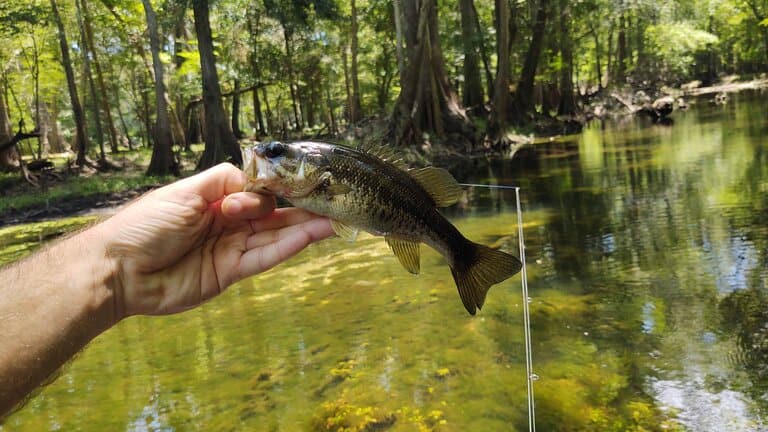
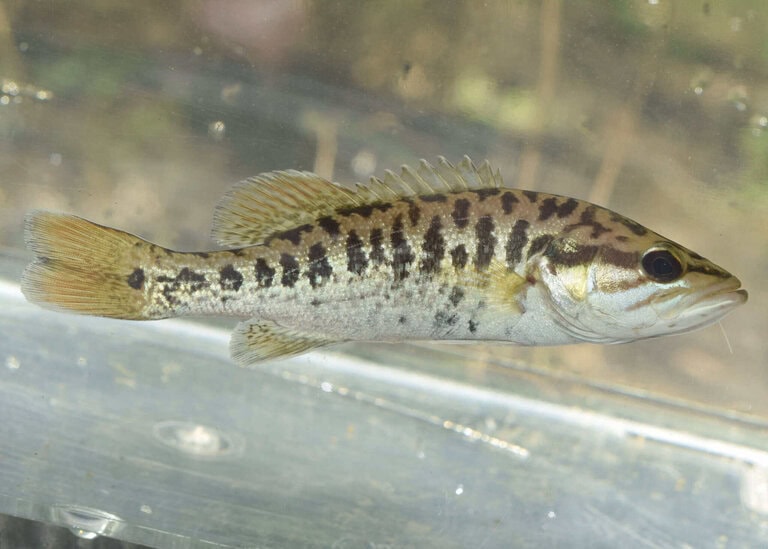
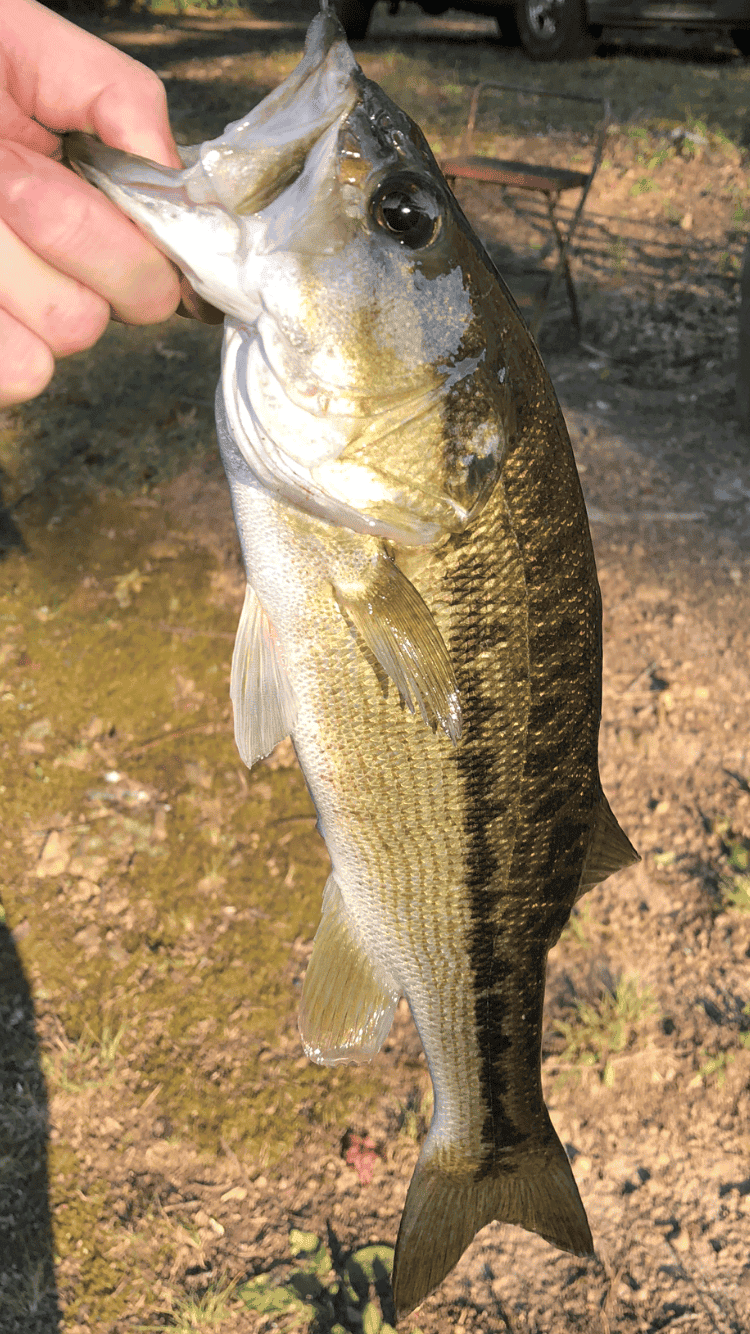
Adult males can show a bright orange or red breast, blue-green lines on the face, and a long dark opercular flap with a pale margin. Females and juveniles are less colorful. The body is deeper than a typical stream minnow but often more streamlined than a bluegill.
Color varies with sex, season, water, and stress. The extended ear flap, mouth size, pectoral shape, cheek markings, and fin pattern are more reliable together. Longear sunfish can look similar but usually show different ear-flap margins and stronger body patterning. Photograph uncertain fish from the side and do not transfer them.
Current speed is not holding speed
A redbreast may feed in fast water but rest in reduced velocity. Boulders create a cushion on the upstream face, narrow seams along the sides, and a larger eddy behind. Root wads break flow into pockets. A bank indentation can be only a few inches slower than the main current and still hold fish.
Watch leaves, foam, or bubbles to map speed. The best drift often rides the edge between two velocities. If the bait rockets through, add control or change angle; if it never moves, it may look dead. The goal is a natural travel speed with enough contact to detect the take.
Foam sitting still while the current right beside it keeps moving marks the seam. Find that line before you start thinking about bait or fly — miss it, and the bait-or-fly argument doesn’t matter much.
Water level changes the map
At normal flow, fish can spread among riffle margins, runs, and pocket water. Rising stained water pushes them toward banks, flooded grass, tributary mouths, and larger current breaks. Falling water can concentrate them in pool centers, deeper slots, and remaining cover.
Very low summer flow makes fish vulnerable and reduces oxygen in isolated pools. Approach quietly, avoid trampling redds or spawning beds of other species, and stop fishing if fish cannot recover. After a hard rain, never wade a rising stream simply because the bank bite may improve.
In cooler seasons, redbreast often favor deeper, slower water and longer pauses. Spring warming and insect activity can pull them toward shallower edges. Calendar dates vary by latitude; measure water and observe insects rather than copying a report from another state.
Natural bait in moving water
Worms, crickets, grasshoppers, grubs, and other legal local baits work when drifted through the seam rather than anchored in the strongest flow. A small float helps map shallow runs; split shot should be just heavy enough to reach the lane. In deeper pockets, tight-line or short-drop rigs offer better contact.
Cast upstream of the target so the bait reaches depth before entering it. Mend line to reduce drag. When the float pauses, moves sideways, or dips, lift into the fish rather than making a violent hookset. If hooks are swallowed, increase hook size, shorten reaction time, or switch to an artificial.
Spinners, jigs, and small plugs
A small inline spinner, spoon, crankbait, or jig searches several current lanes. Cast quartering upstream and retrieve only fast enough to keep the lure working. Across-stream casts can sweep naturally into a pocket; directly downstream retrieves often force the lure against current at an unnatural speed.
A jig beneath a small float can hover in an eddy or travel along a seam. Match weight to flow. If the jig drags bottom and wedges, lighten it or raise the float. If it skips above fish, add a small amount of weight or cast farther upstream.
Color choice follows visibility: natural profiles in clear water, stronger contrast or vibration in stain. Depth and drift remain more important.
Fly presentation: eliminate drag before changing flies
Redbreast take dry flies, terrestrials, nymphs, and small streamers. A foam beetle or hopper fits shaded summer banks; a nymph reaches riffle margins; a small streamer appeals to larger fish using minnows. But a perfect pattern dragging across two currents still looks wrong.
Use short casts, high-sticking, reach casts, and small mends to keep the fly in one lane. Fish close water first. Wading into the pool to reach the far bank often destroys the near-bank opportunity and sends silt downstream.
Tackle and landing in tight cover
Ultralight spinning gear or light fly tackle is enough, but leader strength must account for roots and rock. A slightly heavier line may land more fish and lose fewer lures than delicate tackle in woody water. Barbless hooks or crushed barbs speed release where appropriate.
Keep the rod low and angle the fish away from the root wad. Do not let a small fish spin against dry rocks. Wet hands, support it, avoid the dorsal spines, and release it into the same quiet edge from which it was taken.
Next-cast decisions
- Float outruns the bubbles: mend line or change angle to remove drag.
- Fish strike at the pool head: repeat the seam from a slightly different upstream start.
- Only tiny fish bite: move to deeper shade, larger cover, or the pool tail with a slightly larger profile.
- Follows stop at your feet: lengthen the cast only after backing away and reducing silhouette.
- No fish in three distinct lanes: advance to the next pool.
- Water warms and fish recover slowly: stop. Small stream fish can be stressed before the angler feels uncomfortable.
Spawning and ethical pressure
Redbreast build and guard nests in suitable shallow areas during the warm season. Visible beds can produce easy catches, but repeated removal of guarding males exposes eggs and fry. Fish a range of habitat rather than targeting every nest in a small reach.
Small streams also concentrate angler impact. Use established access, avoid eroding banks, clean gear to reduce invasive spread, and keep precise fragile locations private.
A bed producing on every single pass is easy, not necessarily good — I’d rather fish past it and come back later than lean on the same three fish until the water quits giving them up.
FEEDING ECOLOGY · STANDARDIZED
How this fish gets fed.
Current delivery is feeding ecology; a lure drifting naturally is the angling translation of that biology.
Field notes and sources
Record river stage, clarity, water temperature, pool position, current lane, cover, shade, insect activity, presentation weight, drift angle, strike point, and fish size. The strongest repeatable note is often spatial: “fish on the inside seam below every riffle,” not “orange worked.” I haven’t caught a redbreast myself, so the pool-by-pool reading here is trout-seam logic carried over to a sunfish, and your own notes should outrank it quickly.
Distribution and status reference: USGS redbreast sunfish profile.
Compiled 2026-09-11. Limits and advisories are set per water and per state and change between seasons — the managing agency for wherever you are fishing has the current answer.