Half of why the Ned rig works is that it gives you permission to do less.
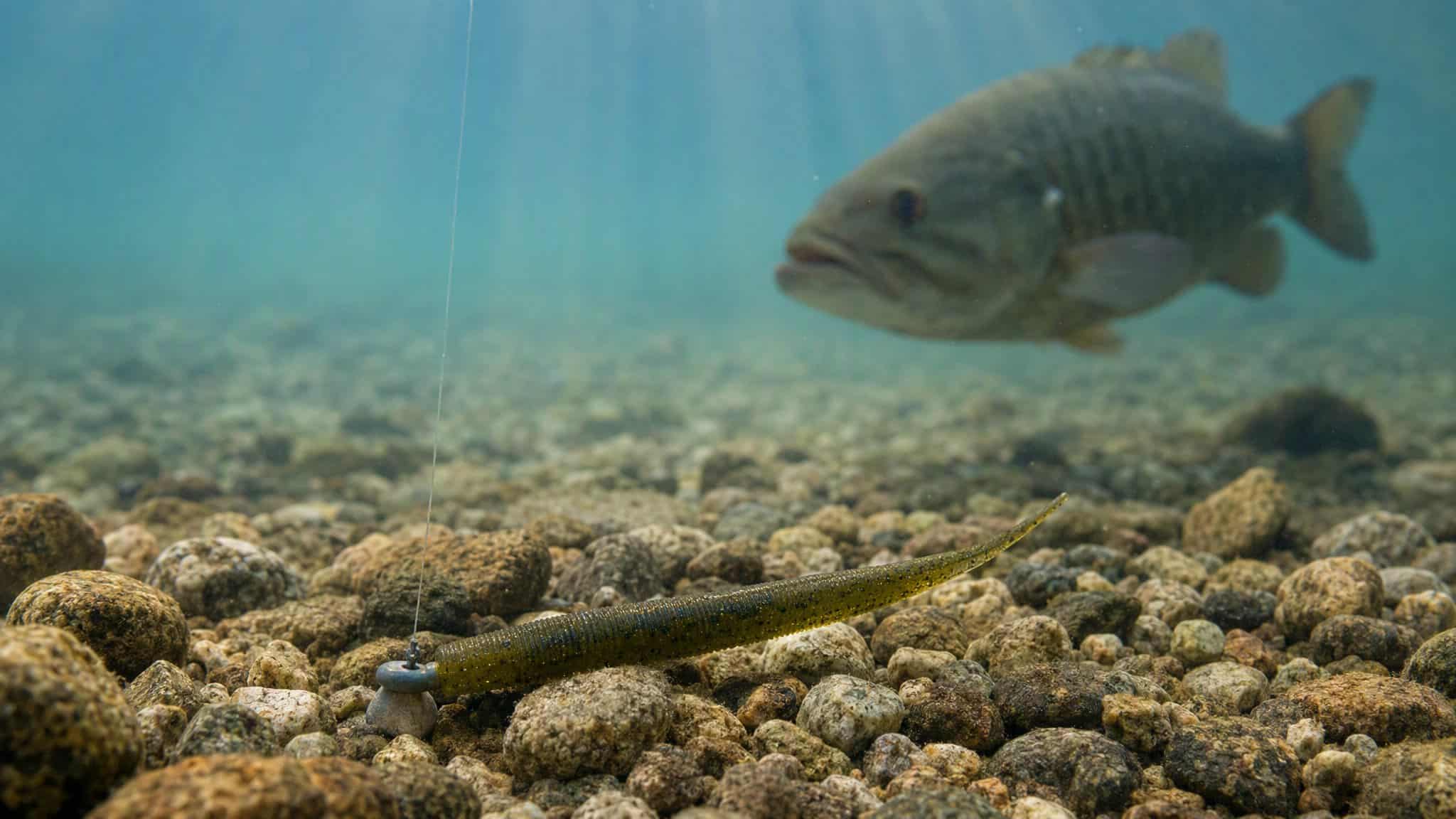
A small soft plastic on a compact jig head will fall, glide, stand up off the bottom, or just sit there while the water and your line keep nudging it. The usual mistake is turning a finesse rig into a tiny jerkbait because the rod hand got bored.
Build a rig you can actually read
The basic version is a short finesse plastic on a light jig head, usually a mushroom-style head or something similarly compact. Plastic length, head weight, hook and line all depend on depth, cover, wind, current, fish size, and how much of the setup you can really keep track of that day.
Take Me Fishing describes the same light jig-and-plastic idea, and the Missouri Department of Conservation lists the Ned rig among its finesse presentations for bass. Nothing magic in either description. It’s a small bait you can put in one lane and still understand while it’s down there.
How heavy a head
The lightest jig in the pack isn’t automatically right. You want enough weight that you know where the bait is and can keep it in the layer you’re after.
If the wind bows your line so badly you can’t tell whether the lure is falling, dragging, or hung on a rock, it’s too light for that job. If it’s crashing into every crack, dropping straight through suspended fish, or making the whole thing jerky, it’s probably heavier than it needs to be. Change weight because your control changed, not because a number on the package got promoted to gospel.
Weedguard or bare hook
A bare hook is simple and efficient over gravel, sand, rock, sparse weeds, and mostly open bottom. Around wood or thicker vegetation, a protected or weed-resistant head spends more of its time fishing and less of it stuck to the lake.
Neither one is snag-proof. A guard that’s too stiff costs you hookups, and an exposed hook that wedges every other cast isn’t fishing either. Pick the compromise the cover in front of you is asking for.
Rig the plastic straight
A crooked plastic spins, rolls, or pulls off to one side, and suddenly the simplest lure you own is the most confusing one. Check it after hard casts, snags, and missed fish. A bait that’s slid down the shank can look fine at the rod tip and swim terribly underwater.
Let the bait do less
Let it fall
Cast past the target and let the bait sink on a controlled line. Watch the line at least as much as the rod. A bite can show up as a little jump, the line sliding sideways, the fall stopping early, or the line just going tight before you feel anything.
If wind or current keeps carrying the bait off before it reaches the depth you wanted, fix the angle or the weight. Color can wait.
Drag and pause
A slow drag works across gravel, rock transitions, points, flats, and sparse cover. Move it a short distance, then stop. The pause lets the bait settle and gives you a second to feel what the bottom actually is.
If the jig wedges every few feet, dragging harder won’t fix it. Change the angle, the weight, or the hook protection.
Hop and let it settle
Small lifts walk the lure over rocks or weeds and let it fall back into the zone. Start with less rod than your instinct wants. Once line angle gets involved, a little lift at the tip moves the bait farther than you’d guess.
Swim it when bottom is the wrong place to be
Nothing says a Ned rig has to stay glued to the bottom. A light head reeled slowly will swim through the water column, along a weed edge, or over shallow rock. That’s worth knowing when fish are suspended, or when bottom contact has turned every cast into a rescue mission.
Sometimes the best retrieve is close to none
Once the bait’s in the zone, stop. Current, waves, the plastic’s own buoyancy, line tension and the shape of the head can keep the lure moving after your hand quits.
If the bites are coming on the pause, make the pause longer before you invent anything fancier. The lure doesn’t need you hovering over it.
Read what the bottom and the bite are telling you
Rock isn’t one habitat
“Rock” can mean gravel, riprap, chunk rock, ledges, scattered boulders, or a hard edge right next to something soft. The change from one to the other usually tells you more than the label does.
A spot where gravel turns into rock, or the first break off a flat, gives you one specific lane to test. Somebody told you Ned rigs like rock? Fine. That still isn’t a reason to fish the entire bank.
Snags can improve your map of the bottom
If the rig hangs at the same distance or angle again and again, that’s real information about what’s down there. Come at it from a different direction, go lighter, lift a little sooner, or switch to a protected hook.
You want enough bottom contact to understand the water without donating a whole row of jig heads to it.
Match the hookset to light tackle
A small jig hook doesn’t need a violent swing. When the line loads, reel down into the weight and use a controlled sweep that fits the hook, rod, line, distance and cover. Let the drag protect whatever’s weakest in the setup.
A big snap on light line turns a good bite into a knot test.
Change one thing, and know when to put the rig down
Change one useful thing at a time
When it isn’t producing, test one thing that actually changes the presentation — depth, head weight, angle, speed, pause length, plastic profile, or hook exposure.
Swap the head, the color, the plastic, the spot and the retrieve all at once and you might still catch a fish, but you won’t know which change did it. Change One Thing Before You Change Everything gets into why that matters more than it sounds like it should.
Know when a Ned rig is the wrong tool
Put it down when it can’t reach the fish efficiently, when the cover needs more power or protection, when active fish are chasing something faster, or when wind and current make a bait this small impossible to control.
Finesse earns its spot when a small, controlled bait solves the problem in front of you. Already being tied on doesn’t count as solving anything.
One lane, two retrieves
- Pick one point, hard-bottom edge, weed edge, or other defined target.
- Use the lightest head that still gives you reliable depth control.
- Run several drag-and-pause presentations through one lane.
- Run the same lane again with a small hop-and-settle.
- If fish respond, keep that depth and cadence steady.
- If the rig keeps snagging or losing depth, fix control before you change the bait.
If a lane gives you even one bite, go back through it with a longer pause before touching anything else. It’s a little plastic on a little head, and it still has more settings than most people bother to try.
Sources checked
- Take Me Fishing: Ned Rig Fishing Tips
- Missouri Department of Conservation: finesse bass presentation including the Ned rig
FIELD OBJECT
This one should leave the page.
The article is the long version. These are the pieces worth carrying into the next trip.
The 30-second version
A Ned rig asks you to do less, which is harder than it sounds. Pick a head you can actually feel, rig the plastic straight, and give the pause more of the work than your rod hand wants to.
What to watch
- Build a rig you can actually read
- How heavy a head
- Weedguard or bare hook
- Rig the plastic straight
Field card
- Pick one point, hard-bottom edge, weed edge, or other defined target.
- Use the lightest head that still gives you reliable depth control.
- Run several drag-and-pause presentations through one lane.
- Run the same lane again with a small hop-and-settle.
- If fish respond, keep that depth and cadence steady.
RIGHT TOOL, NEXT
Species & Presentation
Carry the species behavior and presentation question into a narrower water-to-fish-to-presentation handoff.