Longnose Gar Follow the Bait Down the Channel Edge
Longnose gar are big-river fish that eat mostly other fish, so the rolls follow the bait. Read the route before you cast, get the bait ahead of the fish, and never eat the roe — gar eggs are toxic.
By HunterUpdated September 12, 2026Read 8 min
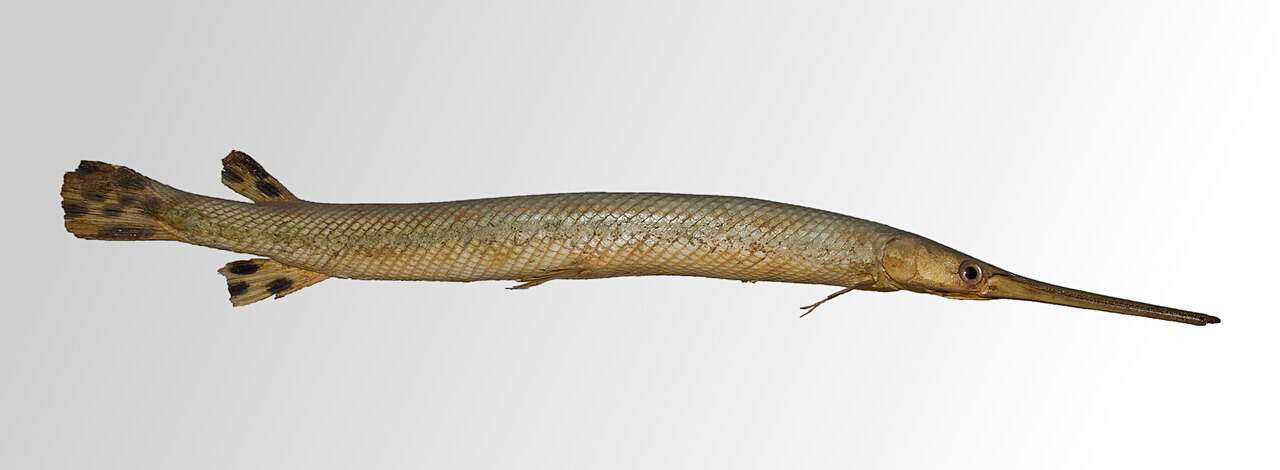
A pike fish, known for its elongated body and sharp snout, popular among freshwater anglers.
Start with the bait, not the gar. Adult longnose eat mostly fish, so when the shad school slides down the channel edge the rolls tend to slide with it, and a gorgeous pool with nothing swimming in it can be worse than a plain seam that’s busy. Following the food before touching the lure box is how most days get fixed on the trout water I know, and I haven’t seen anything yet suggesting a gar plays by different rules.
So watch first. A roll proves a fish used that lane; it doesn’t prove the fish fed there. Track two or three rolls, find the edge or bait line connecting them, and put the presentation ahead of the fish.
Scientific name
Lepisosteus osseus
Best field mark
An extremely long, narrow snout; its width at the nostrils is less than the eye diameter.
Core water
Large rivers, reservoirs, deep sluggish pools, backwater mouths, oxbows, and slow channel margins.
Best clue
Repeated rolls following one seam, shelf, creek mouth, or bait lane—not a single random splash.
Tackle priority
Abrasion resistance, controlled pressure, a large net or landing cradle, and long hook-removal tools.
Critical warning
Gar eggs are toxic. Never eat the roe, and verify local harvest and method rules before fishing.
Identification
Know the fish before choosing the method
Long nose, not just spots
Longnose gar can carry dark spots, so spotting alone is a bad shortcut. The decisive feature is the exaggerated, narrow beak. Spotted and shortnose gar have substantially shorter snouts; alligator gar have a broad head and two rows of large upper-jaw teeth.
One photograph that helps
For an identification photo, keep the whole fish in frame and take a square side view of the head. A blurry overhead shot hides snout width, paired-fin markings, and tooth rows—the characters that separate similar gar.
Water map
Find the route before the fish
Main-channel position
In a river, begin where fast water hands food to slow water: an eddy lip, outside-bend shelf, downstream bridge slack, wing-dike pocket, tributary mouth, or the head of a deep pool. Longnose gar are more willing than spotted gar to use open water and broad channel margins.
Reservoir position
Watch long flats adjoining a creek channel, wind-blown bait concentrations, marina edges with moving forage, and the first drop outside a shallow bay. Do not glue every cast to bottom; a gar may cruise high over much deeper water.
Nursery water is different
Young longnose gar use quiet, shallow vegetation more heavily than big adults. Seeing small fish in a weedy pocket does not mean the largest fish in the system live in the same two feet of water.
Observation
Turn surface rolls into a cast
Respiration is not a strike
Gars gulp air through a vascularized swim bladder. Warm, low-oxygen water can make them surface often. Mark the ring, then watch where the next fish appears. A repeated direction reveals a travel line; scattered rings usually call for more observation.
The intercept rule
Cast beyond and ahead of the route, then bring the offering across it. Dropping a bait on a gar’s head often turns a visible fish into a disappearing fish.
Bait tells the truth
Adult longnose gar eat mostly fish. If rolls vanish when the shad school moves, move with the forage before changing lures. A quiet “perfect” pool without bait can be worse than an ordinary seam full of life.
Timing
When the observation game improves
Warm-season window
Calm mornings and evenings make rolls easiest to see, but midday heat can increase air gulping. Use low light for stealth and active forage; use brighter calm periods when your main job is locating travel routes.
Rising water
A moderate rise can open feeder mouths, flooded margins, and new slack pockets. Muddy water and heavy debris can erase visibility and make safe presentation harder. Follow the cleanest fishable seam rather than assuming every rise improves fishing.
Spring caution
Adults can move upstream and into shallow gravel or tributary habitat for spawning. Treat grouped fish in obvious spawning water carefully, check seasonal rules, and avoid turning a reproductive concentration into an easy harvest opportunity.
Presentations
Build a controlled first setup
Natural bait under a float
Where legal, suspend a locally legal baitfish or cut bait at the depth gar are cruising. A float makes direction visible and keeps the bait out of wood. Match hook size to bait, not to the gar’s total length, and use the smallest rig you can control.
Artificial option
A narrow swimbait, spoon, or shallow minnow plug can cover a defined lane. Strong sharp hooks matter, but a bony mouth still produces misses. Keep the retrieve steady through the intercept zone; wild speed changes often pull the lure away from a following fish.
About rope lures
Rope-style gar lures entangle teeth rather than hook the mouth. Legality varies, fibers can remain in the jaw, and release requires complete removal. If you cannot verify the rule and carry tools to remove every strand, choose a conventional hook presentation.
Hook timing
Let the fish show you what happened
Do not strike at the splash
A gar may grab bait crosswise, turn, pause, or release it. With a float rig, follow the direction and wait for steady purposeful movement before smoothly loading the rod. The exact delay changes with hook style, bait size, and local rules.
Miss diagnosis
One boil and instant slack usually means you pulled too soon or the fish never controlled the bait. Steady movement followed by weight and then release suggests hook placement or sharpness. Repeated follows without contact calls for a smaller profile or slower crossing angle.
After two misses
Do not repeat the identical cast five times. Rest the lane, sharpen or change the hook, reduce bait bulk, and intercept from a different angle.
Tackle
Control the fish without overbuilding
Rod and line
Use a medium-heavy or heavy rod with enough length to steer a fish beside the boat or bank. Main line must withstand current, vegetation, and a long fight; an abrasion-resistant leader protects against teeth and rough scales. Inspect the first foot after every fish.
Landing kit
Set out a large knotless net or cradle, long pliers, cutters, gloves with real puncture resistance, and a wet measuring surface before casting. A small bass net is not a landing plan for a long rigid fish.
Pressure rule
Keep the rod loaded and steer the fish away from anchors, rocks, and timber. Do not wrap line around a hand, grab the narrow jaw as a handle, or lift a heavy gar vertically by the leader.
Landing
A calm release starts before the cast
At boatside
Expect another surge when the fish sees the bank or hull. Lead the head into the net while maintaining body support. Never place fingers in the mouth or gill opening.
Unhooking
Keep the fish wet and horizontal. Control the head from behind with tools doing the close work. If a hook cannot be removed quickly without tearing tissue, cut the hook or leader as appropriate rather than extending a dry wrestling match.
Photo and release
Support the belly and tail, keep the head controlled, and take one prepared photo. Revive the fish facing gentle current until it maintains balance and pushes away. Large females may represent many spawning seasons.
Decision tree
What the next cast should change
Rolls, no takes
Move the bait deeper or farther ahead before changing location. If fish keep rolling but ignore three clean intercepts, shrink the presentation or switch from artificial to legal natural bait.
No rolls, bait present
Fish the first depth break and current handoff for 15–20 minutes. If nothing shows, move to the next connected bait concentration rather than waiting in scenery.
Hookups, then silence
A fight can scatter a route. Rest the spot, inspect the leader, and work the next parallel seam. Return after the water settles.
Conservation
Do not transport, do not consume roe
Do not transport fish
Never move a live gar between waters. Native status and conservation need vary across the species’ range, and unauthorized release can create both ecological and legal problems.
Food safety
Gar flesh may be eaten where legal, but the eggs are toxic to humans and other warm-blooded animals. Do not consume roe; prevent it from contacting meat and preparation surfaces.
Field notes
Record the pattern, not just the catch
Useful log
Write down water level trend, clarity, temperature, time, wind, forage position, roll direction, lane type, presentation depth, take direction, and hook timing. Those details rebuild a pattern on the next trip.
The honest summary
Longnose gar are not a random surface target. The repeatable game is finding forage, reading a route, intercepting ahead of the fish, and landing it with tools already staged.
Two follows and no take on a clean lane is the test worth running before switching lures. Drop half a size on the next intercept and try the identical seam once more, because a bony strike zone forgives a smaller profile more readily than it forgives a slower retrieve. What I can’t tell you from here is whether that follow was real interest or a reflex swipe at something passing through — that only shows itself watching how the fish turns on your line, on your water.
Sources
FEEDING ECOLOGY · STANDARDIZED
How this fish gets fed.
Primary prey
Fishes dominate the adult diet, with crayfish and other crustaceans also taken. Young fish use smaller invertebrates and small fishes.
Feeding mode / location
A stalking ambush predator that often feeds near the surface or upper water column along channel edges, backwaters, weed lines, and quiet current margins. It approaches prey slowly and uses a rapid lateral strike rather than sustained pursuit.
Diel / seasonal pattern
No universal diel feeding window is established in this profile. Warm-season surface activity and access to shallow backwaters can make fish more visible; spring spawning movement is reproductive behavior rather than a feeding schedule.
Ontogenetic diet shift
Young longnose gar begin on small invertebrates and small fishes, then become increasingly piscivorous as body and jaw size increase.
Surface rolling for air or visibility is not automatically evidence of active feeding.
River FishRiver-fish species profiles covering habitat, behavior, seasonal movement, fishing approaches, conservation status, and regional variation across the United States.49 articles
Species & BehaviorFish behavior, habitat, depth, forage relationships, and species-specific field decisions. Start with the Freshwater Fish Species field guide.159 articles
Cookie Consent
We use cookies to improve your experience on our site. By using our site, you consent to cookies.
Used to determine whether a user is included in an A / B or Multivariate test.
18 months
_ga
ID used to identify users
2 years
_gali
Used by Google Analytics to determine which links on a page are being clicked
30 seconds
_ga_
ID used to identify users
2 years
_gid
ID used to identify users for 24 hours after last activity
24 hours
_gat
Used to monitor number of Google Analytics server requests when using Google Tag Manager
1 minute
_gac_
Contains information related to marketing campaigns of the user. These are shared with Google AdWords / Google Ads when the Google Ads and Google Analytics accounts are linked together.
90 days
__utma
ID used to identify users and sessions
2 years after last activity
__utmt
Used to monitor number of Google Analytics server requests
10 minutes
__utmb
Used to distinguish new sessions and visits. This cookie is set when the GA.js javascript library is loaded and there is no existing __utmb cookie. The cookie is updated every time data is sent to the Google Analytics server.
30 minutes after last activity
__utmc
Used only with old Urchin versions of Google Analytics and not with GA.js. Was used to distinguish between new sessions and visits at the end of a session.
End of session (browser)
__utmz
Contains information about the traffic source or campaign that directed user to the website. The cookie is set when the GA.js javascript is loaded and updated when data is sent to the Google Anaytics server
6 months after last activity
__utmv
Contains custom information set by the web developer via the _setCustomVar method in Google Analytics. This cookie is updated every time new data is sent to the Google Analytics server.
2 years after last activity
Jetpack's built-in visitor analytics. It records page views, referring sites, search terms, and outbound link clicks, and also carries the shared visitor-tracking library used by Jetpack Instant Search and WooCommerce Analytics.