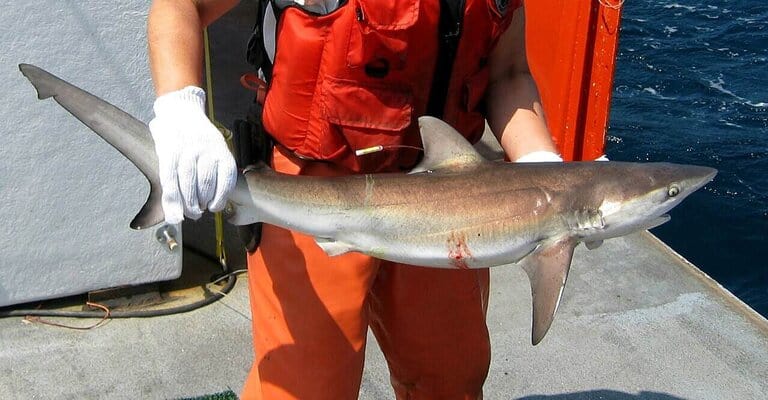
Little Tunny get called bonito all the time, but they carry wavy worm lines behind the dorsal and dark spots low on the chest. They crash bait schools close to shore, so plenty of people catch one before they know what it is.
By HunterUpdated September 12, 2026Read 6 min
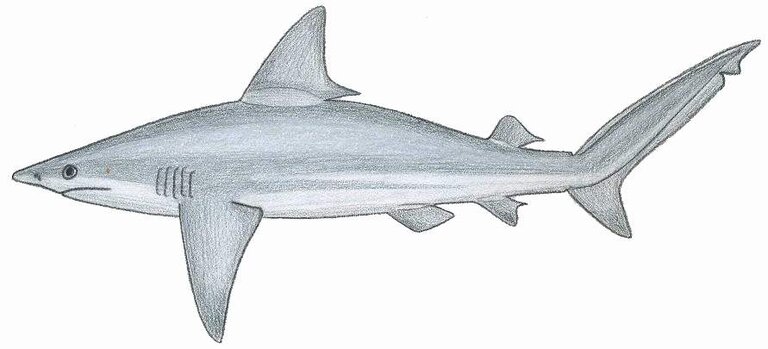
Image: scribbled back under the surface
Bonito, false albacore, albie — Little Tunny answer to a lot of names, and none of them is their actual name.Euthynnus alletteratus is a small tuna relative, and it isn’t Atlantic Bonito. The dark worm-like markings behind the dorsal and the small dark spots low on the chest are the quickest way to stop that argument before the fish goes back over the side.
At a glance · The short version
Scientific name
Euthynnus alletteratus
Best ID clues
Dark wavy vermiculations behind the dorsal plus several dark spots between the pectoral and pelvic fins.
Habitat
Warm nearshore and shelf water, current edges, estuaries/bays at times, and surface bait schools.
Spawning
Florida Museum synthesis: April–November in the Atlantic, outside the continental shelf in water at least about 25°C / 77°F.
Fecundity
Up to about 1.75 million eggs released in multiple batches.
Called bonito, built differently
Identification
The back squiggle
Dark, wavy, worm-like lines run across the upper back behind the first dorsal. That vermiculated patch is the fastest visual difference from Atlantic Bonito, which carries straighter diagonal stripes across the upper sides.
NOAA’s tuna key uses four to eight dark spots low on the chest/belly region as another useful Little Tunny character. The Florida Museum describes several dark spots between the pectoral and pelvic fins. Use them with the back pattern rather than trying to identify a blurred surface fish from one spot.
Little Tunny lack the clean diagonal-back-stripe pattern of Atlantic Bonito and the bright finlet pattern of several true Thunnus tunas. A clean identification should be made with the fish in hand, not from the violence of the surface strike.
Common names are not taxonomy
“Bonito” and “false albacore” are common regional fishing names for Little Tunny. They do not make the fish a bonito or an albacore. The scientific name is the cleanest way to keep the profile, regulations and records attached to the right animal.
A tuna that comes close enough to see the blitz
Range & Habitat
Warm Atlantic/Gulf distribution
Little Tunny occupy warm Atlantic and Gulf waters and can occur from the shelf to nearshore bays and estuaries. Florida Museum material emphasizes their coastal/shelf use compared with many larger tunas, which helps explain why shore, inlet and small-boat anglers encounter them regularly.
Adults commonly school by size and can feed with other scombrids. Herring and sardines are taken at the surface, which is why birds, nervous bait and rapidly moving foam lines are legitimate search evidence rather than folklore.
Florida Museum references place the species from near the surface through roughly 150 m in parts of its range. A visible blitz is one feeding mode, not proof that the whole school stays in the top five feet all day.
Fast life history, pelagic eggs
Age & Reproduction
Maturity
Florida Museum summaries place female maturity roughly around 27–37 cm in some populations and male maturity around 40 cm. Those are population-level measurements rather than a legal or universal maturity length.
In the eastern and western Atlantic, spawning is reported from April through November. Florida Museum’s synthesis places spawning outside the continental shelf in water at least about 25°C / 77°F. Mediterranean timing differs, another reason not to turn one month into a worldwide rule.
Females can release up to roughly 1.75 million eggs in multiple batches. The eggs are pelagic and buoyant, and larvae enter the open-water food web immediately after hatching.
Florida Museum’s species synthesis reports individuals to about 10 years in some ageing work. That is a useful upper observed age, not a reason to assign age from length at the rail.
The prey can make a violent fish look picky
Diet
Generalist predator
Little Tunny eat fish, squid, crustaceans and tunicates. Herring and sardines are important surface prey in documented diets. A predator with a broad lifetime diet can still become very narrow in what it attacks during one bait event.
A school keyed to tiny glass minnows or silversides can ignore a lure that is “tuna sized” but wrong for the forage in front of it. The useful adjustment is size, profile and retrieve before concluding the fish are uncatchable.
How I would approach the blitz
Field Decisions
Evidence level. The school behavior and diet are sourced. The decisions below come from chasing moving surface feeders on other water, so they’re starting points, not Little Tunny gospel.
Get ahead of movementinference
A surface eruption tells me where the school was. Birds and bait direction tell me where it may be going. I would rather position ahead of the moving line than chase each finished boil and spend the morning arriving late.
Downsize before reinventing the lureworth testing
If fish are visibly feeding but refusing, the first test I would make is prey scale. A smaller metal, fly or soft bait that matches the visible forage is a more controlled experiment than switching simultaneously to a different size, color, depth and retrieve.
Speed is useful but not sacredinference
Fast retrieve is a common way to keep a small bait in front of a fast school, but “faster always catches more” is still too broad. Match speed to the bait and the fish response rather than using speed as identity.
Watch the school after the hooksetinference
A hooked fish can move away from the school and pull the boat’s attention with it. Keep one person looking for birds and bait rather than assuming the school will still be where the first fish ate.
Release and food value
Handling
Release preparation
A fish built for constant swimming and high metabolic output should not spend unnecessary time on deck. If it is being released, have pliers and camera ready, support it, minimize air exposure and return it promptly.
Dark meat is preference, not defect
Little Tunny flesh is dark and strongly flavored, which is why many anglers release it or use legally retained fish as bait. That is a culinary preference and handling choice, not proof the fish is “bad” food. If retained, chill it rapidly and follow local consumption guidance.
What is not established here
Open Questions
one universal maturity length
that every visible blitz is Little Tunny rather than bonito, mackerel or another predator
that a fish refusing a large lure is always keyed to glass minnows
that dark flesh is objectively poor table fare
— · Sources
FEEDING ECOLOGY · STANDARDIZED
How this fish gets fed.
Primary prey
Small schooling fishes such as anchovies, menhaden, sardines and other baitfish are major prey, with squid and crustaceans also taken.
Feeding mode / location
A schooling pelagic pursuit predator that attacks bait in nearshore and offshore open water, often around birds, current seams, beaches, inlets, and concentrated surface forage.
Diel / seasonal pattern
Feeding can become visibly intense when bait is compressed at the surface, but the profile does not establish one universal clock. Seasonal abundance and water temperature shift where schools occur along the coast.
Ontogenetic diet shift
Young fish use more small crustaceans and very small fishes; larger little tunny become increasingly fish- and squid-oriented as prey size expands.
Birds and surface boils are search evidence; species identification still requires the fish itself.
Compiled 2026-09-11. Limits and advisories are set per water and per state and change between seasons — the managing agency for wherever you are fishing has the current answer.
People can argue about the name all the way back to the ramp. The fish settles it faster — flip it over, find the worm lines on the back and the spots low on the chest, and you’re holding Euthynnus alletteratus. The spawning numbers, the maturity lengths and whatever rules apply all hang on getting that call right.
Saltwater & CoastalSurf, shoreline, nearshore, offshore, and deep-sea fishing — technique, gear, and safety content spanning the full range from the beach to blue water.103 articles
Species & BehaviorFish behavior, habitat, depth, forage relationships, and species-specific field decisions. Start with the Freshwater Fish Species field guide.159 articles
Cookie Consent
We use cookies to improve your experience on our site. By using our site, you consent to cookies.
Contains information related to marketing campaigns of the user. These are shared with Google AdWords / Google Ads when the Google Ads and Google Analytics accounts are linked together.
90 days
__utma
ID used to identify users and sessions
2 years after last activity
__utmt
Used to monitor number of Google Analytics server requests
10 minutes
__utmb
Used to distinguish new sessions and visits. This cookie is set when the GA.js javascript library is loaded and there is no existing __utmb cookie. The cookie is updated every time data is sent to the Google Analytics server.
30 minutes after last activity
__utmc
Used only with old Urchin versions of Google Analytics and not with GA.js. Was used to distinguish between new sessions and visits at the end of a session.
End of session (browser)
__utmz
Contains information about the traffic source or campaign that directed user to the website. The cookie is set when the GA.js javascript is loaded and updated when data is sent to the Google Anaytics server
6 months after last activity
__utmv
Contains custom information set by the web developer via the _setCustomVar method in Google Analytics. This cookie is updated every time new data is sent to the Google Analytics server.
2 years after last activity
__utmx
Used to determine whether a user is included in an A / B or Multivariate test.
18 months
_ga
ID used to identify users
2 years
_gali
Used by Google Analytics to determine which links on a page are being clicked
30 seconds
_ga_
ID used to identify users
2 years
_gid
ID used to identify users for 24 hours after last activity
24 hours
_gat
Used to monitor number of Google Analytics server requests when using Google Tag Manager
1 minute
Jetpack's built-in visitor analytics. It records page views, referring sites, search terms, and outbound link clicks, and also carries the shared visitor-tracking library used by Jetpack Instant Search and WooCommerce Analytics.