Atlantic Bonito: Easy to Identify, Oddly Unstudied in U.S. Waters
Atlantic Bonito wear straight diagonal stripes and real teeth, which is how you tell them from the Little Tunny sharing their nickname. What U.S. science hasn’t pinned down yet is growth, maturity, mortality and stock structure.
By HunterUpdated September 12, 2026Read 7 min
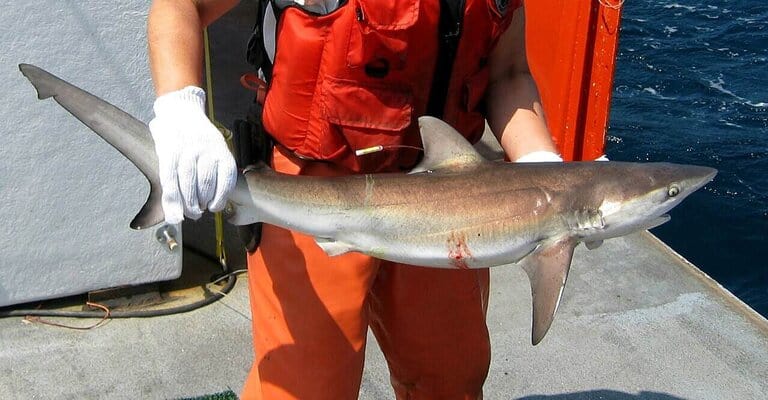
Image: striped back under the surface
Say “bonito” on a dock and there’s a decent chance somebody means Little Tunny.Sarda sarda is easy to separate once it’s in hand: straight diagonal dark stripes over the upper sides, a clean silver lower body, and real small sharp teeth. The stranger part is what’s missing. A 2026 peer-reviewed review found the U.S. fishery still lacks domestic growth, maturity and mortality studies, and stock structure is poorly understood on top of that — a lot of blank space for a fish this easy to recognize.
At a glance · The short version
Scientific name
Sarda sarda
Best ID clue
About 5–12 oblique dark stripes across the upper sides/back; no Little-Tunny chest spots or worm-like dorsal pattern.
Western Atlantic range
Nova Scotia to Argentina; seasonal coastal migrant in the northeastern U.S., with relatively little activity in the Caribbean/Gulf.
Feeding
Fast schooling predator of small fishes including mackerel, menhaden, sand lance and other clupeiform prey; squid also occurs in diet studies.
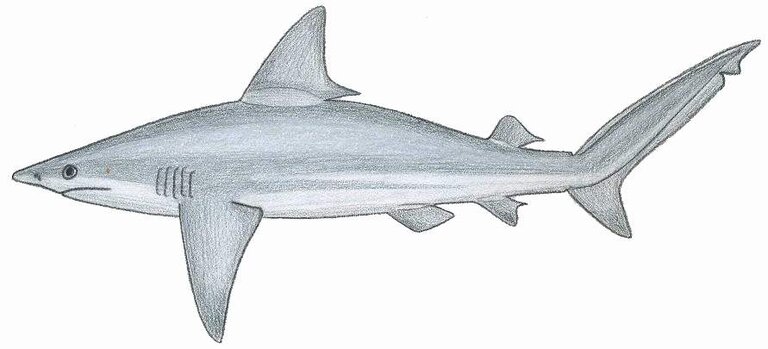
Diagonal stripes, not a back squiggle
Identification
Upper-side stripes
NOAA’s western Atlantic tuna guide describes roughly nine to twelve diagonal stripes on the upper sides, while Massachusetts material describes about five to eleven oblique stripes depending on the fish and how the count is framed. The exact count can vary; the important geometry is straight/oblique stripes rather than Little Tunny’s vermiculated worm-like patch.
Little Tunny show dark chest spots and a wavy black pattern behind the dorsal. Atlantic Bonito lack that combination. If the nickname on the dock is “bonito,” ignore the nickname and inspect the fish.
Atlantic Bonito carry small sharp teeth, unlike several tuna species anglers may be thinking of when they see the streamlined body. That matters for leader abrasion and handling but does not automatically make wire leader the correct presentation in clear water.
Massachusetts describes Atlantic Bonito from Nova Scotia to Argentina, with little activity in the Caribbean and Gulf of Mexico compared with other western Atlantic scombrids. The U.S. fishery is therefore strongly Atlantic-coast oriented.
In Massachusetts, bonito are most common roughly July through October, especially south of Cape Cod. That is a regional window, not a coastwide season. The fish follows coastal temperature and forage north and south along the seaboard.
Massachusetts characterizes the species as epipelagic/neritic, schooling in the upper coastal water column while occasionally entering estuaries and bays. Structure gets too much credit here — bait concentration decides more of where bonito show up than any patch of permanent bottom does.
A February 2026 peer-reviewed review led by UMass Dartmouth concluded that U.S. waters still lack Atlantic Bonito growth, maturity and mortality studies and that stock structure remains poorly understood. So any number that came from the Mediterranean or eastern Atlantic has to say where it came from instead of quietly passing as U.S. biology.
Older Massachusetts outreach, drawing on eastern Atlantic/Mediterranean studies, notes rapid growth and maturity within the first year around roughly 20 inches in some populations. That’s useful context, but the 2026 review is explicit that the United States lacks its own comparable maturity study. That twenty-inch figure belongs to eastern Atlantic and Mediterranean fish, not a confirmed U.S. maturity threshold.
NOAA’s tuna guide places western Atlantic spawning in June and July, generally in warm coastal water. Massachusetts outreach similarly points to June as important. The 2026 review cautions that U.S.-specific reproductive biology remains thin, so this stays a broad seasonal reference rather than a precise local spawning calendar.
Massachusetts lists mackerels, menhaden and sand lance among important prey. Diet studies elsewhere in the Atlantic show strong piscivory, often centered on clupeiform schooling fishes. The prey is fast and concentrated, which explains the surface streaking and leaping behavior without needing a mythical “bonito lure.”
Both NOAA and Massachusetts describe bonito leaping or skipping at the surface while pursuing prey. Surface action is therefore species-compatible behavior, but one distant boil still cannot distinguish bonito from Little Tunny, mackerel or another pelagic predator.
Evidence level. I have not fished Atlantic Bonito. These are field inferences from the documented schooling/predator behavior, with older speculative claims kept as hypotheses rather than rewritten as experience.
Identify the first fish before changing the whole riginference
Little Tunny, bonito and Spanish mackerel can occupy similar surface-feeding water. I would use the first landed fish to settle stripes/spots/teeth before deciding the rest of the school requires a different leader or lure system.
Match small forageinference
Small metals, flies and baitfish profiles make sense when the documented prey is menhaden, sand lance, mackerel and similar schooling fish. Scale should be matched to what is visibly being chased, not to the size of the predator.
Retrieve speed is a variableworth testing
Fast presentations are conventional for bonito, but one earlier claim overreached by saying speed “does the sorting.” If a school refuses, I would test speed before changing everything else, but I would still let the fish response decide whether faster is actually better that day.
Leader strength follows evidenceinference
Bonito have real teeth, so stepping up abrasion/cut resistance can be sensible. That does not prove light mono fails every time. Start with a leader appropriate to water clarity and lure, then change if actual cut-offs or abrasion show the system is underbuilt.
The U.S. fishery is mostly recreational
Fishery & Release
Release is common enough to matter
The same review estimated about 39% of recreationally caught individuals were released. Post-release mortality is one of the identified research gaps, which means a “swam away strong” observation should not be converted into a population survival rate.
If the fish is not being retained, control it with wet hands or a suitable tool, remove the hook efficiently and minimize air exposure. A highly active pelagic fish does not benefit from a long identification/photo session on a hot deck.
Not established is part of the dossier
What U.S. Science Still Needs
U.S.-specific growth studies
U.S.-specific maturity studies
U.S.-specific natural and fishing mortality estimates
resolved Northwest Atlantic stock structure
better standardized recreational catch-rate indices
post-release mortality estimates
expanded tagging and biological sampling
— · Sources
FEEDING ECOLOGY · STANDARDIZED
How this fish gets fed.
Primary prey
Small schooling fishes such as sand lance, anchovies, sardines, mackerels and similar baitfish dominate, with squid and crustaceans also taken.
Feeding mode / location
A schooling pelagic pursuit predator that hunts through nearshore and offshore bait concentrations, current seams, rips, shoals, and surface bird activity rather than relating strongly to bottom structure.
Diel / seasonal pattern
The profile does not establish a universal daily feeding clock. Seasonal coastal movement, water mass, and prey concentration determine availability; visible surface feeding is a prey event, not a permanent habitat rule.
Ontogenetic diet shift
Young fish use smaller planktonic and fish prey; larger Atlantic bonito become increasingly oriented toward schooling fishes and squid. The profile does not support a precise size threshold for that shift.
“Bonito” common-name confusion is kept separate from feeding biology.
Compiled 2026-09-11. Limits and advisories are set per water and per state and change between seasons — the managing agency for wherever you are fishing has the current answer.
The most useful thing the 2026 review does is refuse to sound complete. Atlantic Bonito is easy to identify once the stripes are visible and surprisingly hard to describe with U.S. population numbers once the fish is gone. Before you repeat a number, check whether it came from American fish. If it traces back to the Mediterranean, it’s borrowed biology.
Saltwater & CoastalSurf, shoreline, nearshore, offshore, and deep-sea fishing — technique, gear, and safety content spanning the full range from the beach to blue water.103 articles
Species & BehaviorFish behavior, habitat, depth, forage relationships, and species-specific field decisions. Start with the Freshwater Fish Species field guide.159 articles
Cookie Consent
We use cookies to improve your experience on our site. By using our site, you consent to cookies.
Contains information related to marketing campaigns of the user. These are shared with Google AdWords / Google Ads when the Google Ads and Google Analytics accounts are linked together.
90 days
__utma
ID used to identify users and sessions
2 years after last activity
__utmt
Used to monitor number of Google Analytics server requests
10 minutes
__utmb
Used to distinguish new sessions and visits. This cookie is set when the GA.js javascript library is loaded and there is no existing __utmb cookie. The cookie is updated every time data is sent to the Google Analytics server.
30 minutes after last activity
__utmc
Used only with old Urchin versions of Google Analytics and not with GA.js. Was used to distinguish between new sessions and visits at the end of a session.
End of session (browser)
__utmz
Contains information about the traffic source or campaign that directed user to the website. The cookie is set when the GA.js javascript is loaded and updated when data is sent to the Google Anaytics server
6 months after last activity
__utmv
Contains custom information set by the web developer via the _setCustomVar method in Google Analytics. This cookie is updated every time new data is sent to the Google Analytics server.
2 years after last activity
__utmx
Used to determine whether a user is included in an A / B or Multivariate test.
18 months
_ga
ID used to identify users
2 years
_gali
Used by Google Analytics to determine which links on a page are being clicked
30 seconds
_ga_
ID used to identify users
2 years
_gid
ID used to identify users for 24 hours after last activity
24 hours
_gat
Used to monitor number of Google Analytics server requests when using Google Tag Manager
1 minute
Jetpack's built-in visitor analytics. It records page views, referring sites, search terms, and outbound link clicks, and also carries the shared visitor-tracking library used by Jetpack Instant Search and WooCommerce Analytics.