When I was newer to topwater, I treated the pause like dead air between the real work — the walk, the pop, the chug. I had that pretty much backwards. Most of my topwater retrieves now are stillness with some movement mixed in, not the other way around, and the stillness is where a fish usually makes up its mind.
FIELD PLATE · THE PAUSE
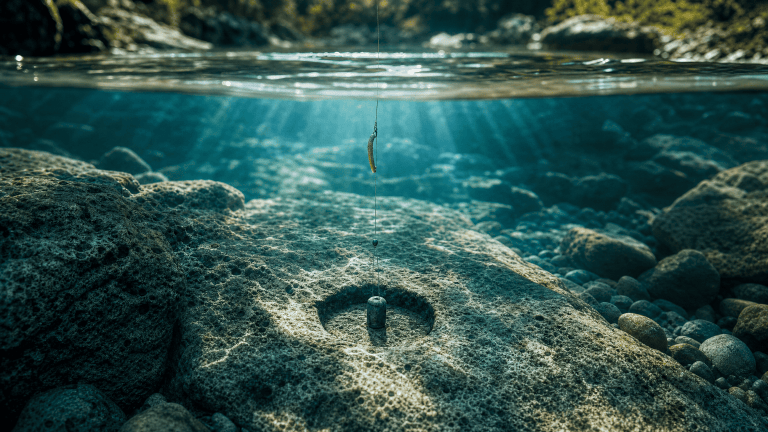
On topwater the path stays at the top and the decision happens where it stops.
I treat the pause as the decision point
Moving the lure is what gets a fish’s attention. The pause is what gives that fish time to close the distance and commit. A retrieve with no pause at all is basically asking a predator to hit a moving target with no window to intercept it. Some fish can pull that off. Plenty won’t bother trying.
If I’m getting follows and blowups that miss, lengthening the pause is usually a more useful first adjustment for me than swapping the lure entirely.
Pause length isn’t one number I use everywhere
Cold, sluggish fish generally want longer pauses from me — sometimes several seconds of the lure sitting dead still before the next twitch. Warm, actively feeding fish often want a shorter pause and a quicker cadence overall, because a lure that sits too long can look less alive than the moment calls for.
Those several seconds are the hard part when you’re starting out. Doing nothing while a fish might be sitting right under the lure feels a lot longer than it is, so count it out in your head instead of guessing.
Water clarity changes it too. In clear water, a fish can see the lure from farther off and needs more time to close in and size it up. In stained water or low light, fish are usually reacting to something closer and more sudden, so a shorter pause keeps the lure from stalling out of the small window that fish actually has to notice it.
I watch the water, not just the lure
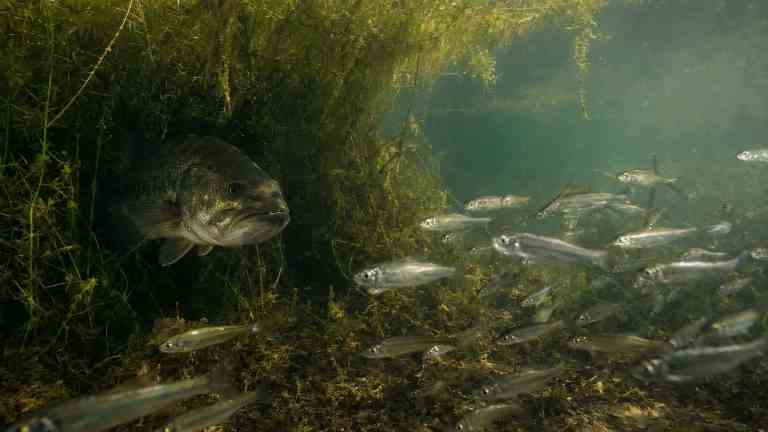
A wake or a swirl during the pause, or baitfish scattering nervously near the lure, usually means a fish is already interested and deciding. That’s exactly the wrong moment to twitch the lure away. I let it sit, or move it just enough to look alive without covering any ground.
The strike usually comes right as movement resumes
A fish that’s been watching a motionless lure often commits the instant it starts moving again, not during the pause itself. So the moment the lure goes from still to moving deserves as much attention as how long you paused. Jerk it out of the pause unnaturally and you can spook a fish that was already sold on it.
Looking busy isn’t the same as working
A walk-the-dog retrieve that looks impressive from the boat isn’t automatically the one that catches fish. When a lure that was working with heavy action and constant motion stops producing for me, I try stripping it way down to fewer twitches and longer pauses. Sometimes the fish want less of a show, which is a little humbling right after you finally got good at the show.
Where this stops being general advice
Species and conditions vary a lot in how they respond to topwater cadence, so this is where I start, and the fish that day get the final vote on how long the pause should be. Fishing Presentation keeps the pause tied to speed, line angle and the layer the bait’s actually occupying.
And when a fish blows up on the lure and misses, leave it sitting right there for a second. A fish that just missed hasn’t necessarily left.
FIELD OBJECT
This one should leave the page.
The article is the long version. These are the pieces worth carrying into the next trip.
The 30-second version
I used to treat the pause on a topwater retrieve like dead time. It's where the fish makes up its mind, and the strike often comes the instant the lure moves again.
What to watch
- I treat the pause as the decision point
- Pause length isn't one number I use everywhere
- I watch the water, not just the lure
- The strike usually comes right as movement resumes
Field card
- I treat the pause as the decision point
- Pause length isn't one number I use everywhere
- I watch the water, not just the lure
- The strike usually comes right as movement resumes
- Looking busy isn't the same as working
RIGHT TOOL, NEXT
Species & Presentation
Carry the species behavior and presentation question into a narrower water-to-fish-to-presentation handoff.