Species Intelligence · Western Atlantic coastal sharks
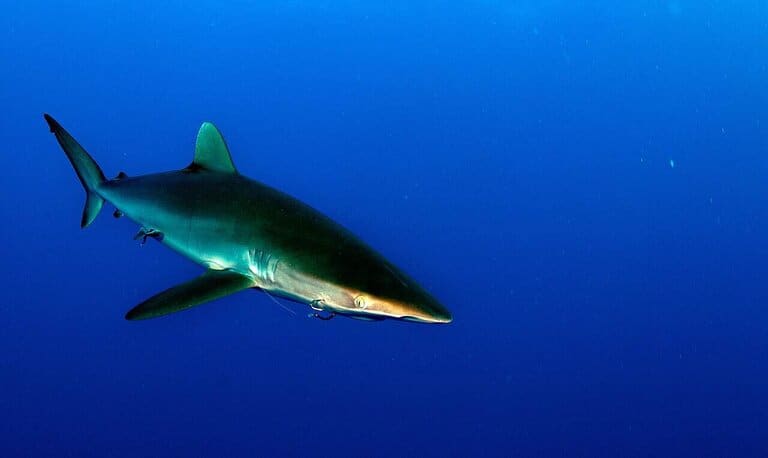
A spinner shark earns its name while driving through a bait school, rotating on the way out of the water. The show is real. The legal identification still happens on the fins.
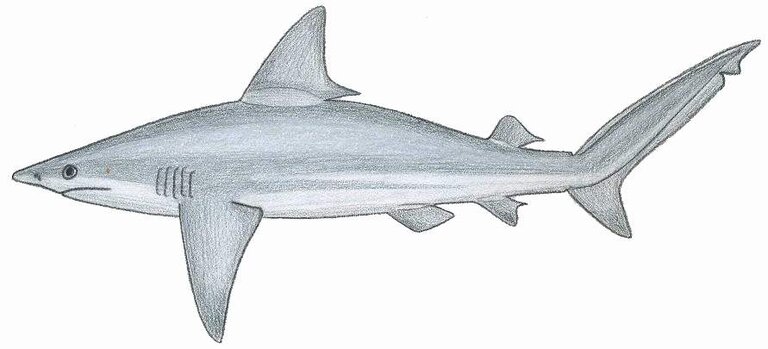
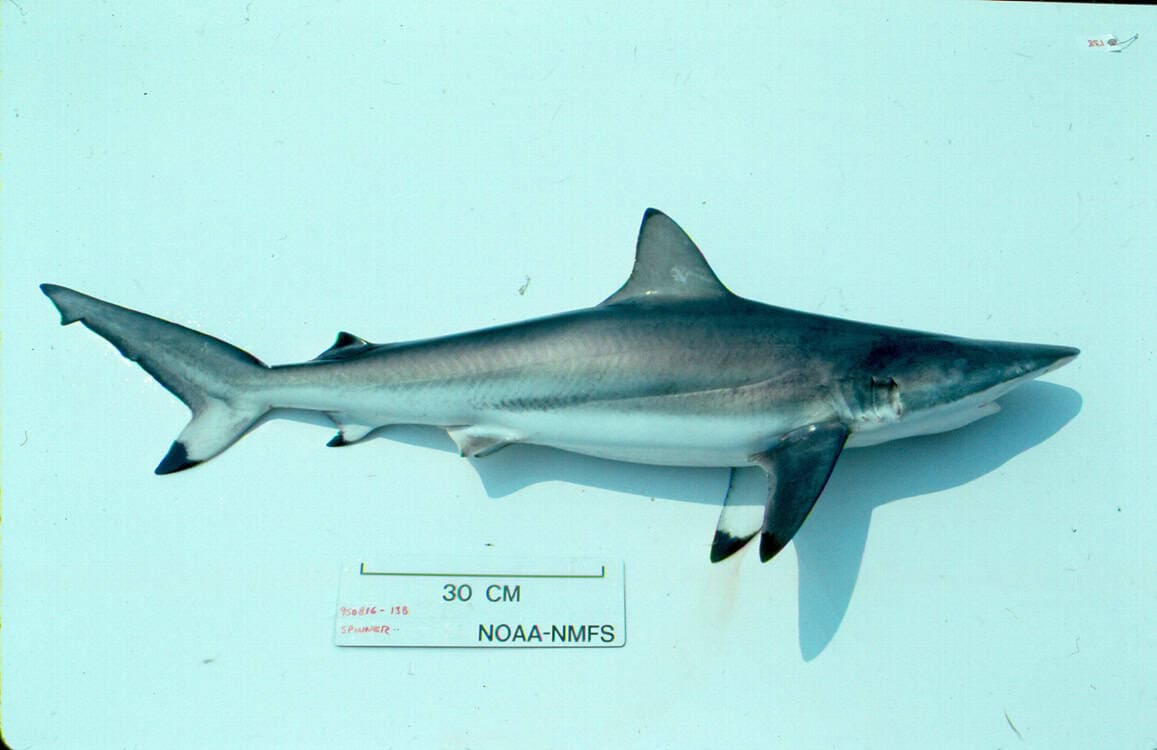
The mark to photograph: an adult spinner has a black-tipped anal fin. Its first dorsal also begins behind the rear edge of the pectoral fin. Blacktips can leap and spin, so the jump cannot make the call.
1. The fast read
Carcharhinus brevipinna is a narrow, fast requiem shark of warm inshore and shelf water. It follows schooling prey, sometimes attacks upward through a bait ball, and can leave the surface twisting around its long axis.
- Adult field mark: black tip on the anal fin.
- Body-geometry check: first dorsal begins behind the pectoral fin rather than over its inner rear margin.
- Typical water: beaches, passes, coastal shelf, and higher-salinity inshore water; juveniles may enter lower bays.
- Current federal retention: 54-inch minimum fork length, inside the one-shark-total-per-vessel-per-trip aggregate.
The species can reach roughly seven to eight feet. That maximum should not set the expectation for every bite, but it should shape the release kit and the amount of control built into the tackle.
2. The anal fin settles the blacktip argument
Spinner and blacktip sharks share the exact traits people reach for first: pointed snout, gray-bronze back, pale underside, black fin tips, fast surface feeding, and airborne fights. Those similarities are why a single photograph from above is often useless.
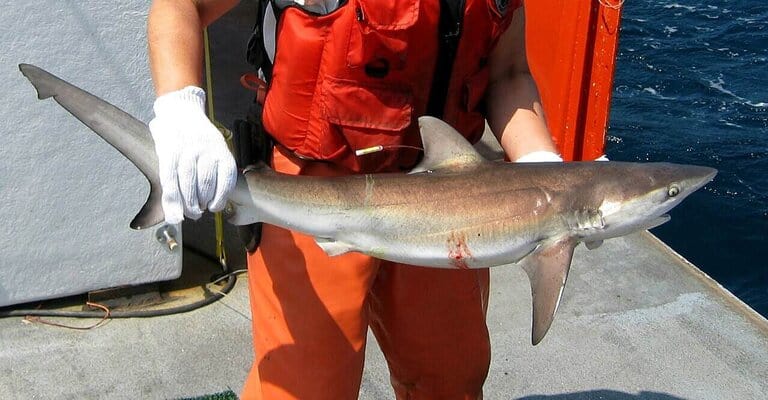
Check the anal fin on the underside near the tail. An adult spinner carries a dark tip there. An adult blacktip does not. Then check where the leading edge of the first dorsal sits relative to the pectoral: behind it on a spinner, over the pectoral’s inner margin on a blacktip.
Young fish are harder because markings develop and fade with growth. Keep a fish in the water while working through the features. If the lower fins and dorsal placement cannot be seen clearly, the correct retention decision is release—not a guess built from the way it jumped.
3. Why the shark spins
The feeding move begins below or beside a school. The shark accelerates upward, turning as it cuts through prey, and the momentum can carry it clear of the surface. The rotation is a consequence of the attack, not a circus behavior added for anglers.
A hooked spinner may also jump and rotate. That creates two practical problems: slack develops quickly as the fish comes toward the surface, and the leader can wrap across the body or tail. Keep a bent rod and recover line without trying to lock the fish against every jump.
Blacktips perform similar leaps. Surface action tells you a fast shark is feeding; it does not tell you which one. Biology gives the spectacle. Anatomy gives the name.
4. Range, salinity, and the coastal shelf
Spinners occupy tropical and warm-temperate water worldwide. In the western Atlantic they move along the southeastern United States and through the Gulf and Caribbean. Florida’s profile places them from inshore to offshore water, usually favoring higher salinity.
That preference helps explain why a clean ocean side, pass, or inlet mouth can be more consistent than the back of a freshened bay after heavy rain. Juveniles can follow tides into lower bays, but “inshore shark” does not mean they ignore salinity, oxygen, temperature, or water exchange.
On the shelf, contour and prey replace the visible beach structure. A subtle drop, color boundary, or current seam that holds bait can organize a wide piece of water.
5. Movement is the pattern, not the inconvenience
Spinner sharks are highly migratory. Seasonal warming opens northern water; cooling shifts useful habitat south or offshore. Within that broad migration, a school can cover miles while staying with bait.
That makes yesterday’s exact waypoint less important than yesterday’s conditions. Record water temperature, depth, tide stage, bait species, current direction, and whether the sharks were traveling or feeding. Those details can repeat even when the coordinate does not.
From shore, watch for along-beach bait movement and cuts that let prey cross the bar. From a boat, search at a speed that lets you interpret birds and marks instead of charging between splashes after they disappear.
6. Pelagic prey changes the presentation
Spinners feed mainly on schooling pelagic fishes and also take squid, octopus, and rays. The important word is schooling. Their attack is built around prey compressed tightly enough that speed pays.
A bait suspended or slow-trolled near the working depth can look more natural than a heavy bait pinned far below a surface feed. On the beach, a compact fresh bait placed in the moving trough may beat a giant slab that tumbles and twists the leader. Offshore, match the forage and keep enough separation between baits that a hooked fish cannot sew the spread together.
If bait is scattered and unbothered, the shark pattern may not be active yet. Fish the edge or wait for the current to rebuild the concentration rather than turning the water into a chum dump.
7. Search for compression
Birds are useful when they keep turning over one patch, not merely when they travel. Tight bait marks, nervous surface water, repeated boils, and predators attacking from below all indicate compression. A single jump with no following sign may be a traveler.
At an inlet, think about where outgoing water meets the coastal current and where an incoming tide pushes clear water over a bar. On an open beach, identify the deep slot and its exits. Offshore, follow the contour and pay attention to the up-current face of structure or weed rather than the object alone.
The spinner’s speed can make the water look random. Usually the prey has been organized first.
8. Build the outfit for lateral speed
Spinner sharks do not only pull away. They change direction, jump, and can run across other lines. The useful outfit has enough drag to shorten the fight, enough capacity for the first run, and a rod the angler can keep loaded while recovering line.
From shore, a long cast is worthless if the outfit cannot steer a shark away from swimmers, pilings, or another angler. From a boat, clear unused rods early and keep the engines in the plan. A fish crossing under the hull can cut the main line or put the leader against metal.
A fighting belt or harness can improve control on heavier tackle, but it does not replace drag discipline. Increase pressure in deliberate steps and know the tested strength of knots and leaders before the fish decides to test them.
9. Circle-hook mechanics begin at the pickup
Federal Atlantic HMS rules require a non-offset, non-stainless-steel circle hook on a line targeting sharks with natural bait. The shape is meant to slide toward the jaw corner under steady tension.
Let the fish take the bait, close the system smoothly, and wind into the load. Do not answer a fast run with a bass-style hook-set. The harder swing can pull the bait free or defeat the placement advantage the hook was chosen to provide.
Leader length and material depend on fish size and environment, but every rig should have a planned failure point and a way to cut metal. Bolt cutters that cannot cut the actual hook belong in a garage, not in the release kit.
10. Manage the aerial fight without chasing it
When the shark jumps, keep pressure but allow the rod to absorb direction changes. Reel quickly when the fish comes toward you; lower the rod enough to avoid yanking it sideways in the air. If it lands across the leader, expect abrasion and inspect the entire rig after release.
Use side pressure when safe to turn the shark rather than holding the rod high for the whole fight. High-sticking reduces leverage and risks the rod. In surf, time the final approach with a wave but do not let receding water drag the shark backward by the leader.
The fight is finished when the release is finished. A shark at the wash is not under control just because the reel handle stopped turning.
11. Release from the side, not over the fish
Stage the dehooker and cutters before anyone touches the leader. Keep spectators behind the working angler. Do not sit on, kneel on, or straddle the shark; those positions add stress and put legs within the turning radius of the head.
If the hook is visible and comes free promptly, use the long tool. If removal is going to enlarge a wound or extend air exposure, cut close. A shark that cannot be retained must stay in the water under federal rules. That instruction also preserves options when the identification is uncertain.
Support the fish upright in moving water and let it swim forward. Pulling a shark backward is not revival. Photograph the diagnostic anal fin only if the image can be made without extending the release.
12. Current Atlantic rules put Spinner with Blacktip
NOAA’s live recreational status page currently lists spinner shark as open with a 54-inch minimum fork length. It sits in the one-shark-total-per-vessel-per-trip aggregate alongside blacktip and the other listed large coastal and pelagic sharks. That is one total from the group, not one spinner plus one blacktip.
The vessel must carry the appropriate Atlantic HMS permit and shark endorsement. Natural-bait shark gear requires the specified circle hook. State law may be stricter and can govern licenses, shore-based permits, prohibited species, allowable gear, landing, and handling.
Verify NOAA’s current shark status page and the local agency before fishing. Measure fork length in a straight line from the snout to the fork of the tail.
Diagnose the spinner bite before changing everything
| Observation | Likely problem | First adjustment |
|---|---|---|
| Sharks jump but ignore the spread | The prey layer or direction is wrong | Match bait size, move to the working edge, and place one bait at the depth of the feed. |
| Fast pickups end without a load | Hook gap is blocked or pressure starts too abruptly | Trim the bait, expose the circle-hook gap, and wind smoothly into the run. |
| Leader wraps after a jump | Slack or a sharp angle lets the fish cross the line | Recover line sooner, clear neighboring rods, and inspect every abraded section afterward. |
| Every fish reaches the rail exhausted | Tackle or drag is stretching the fight | Increase usable pressure, shorten the spread, and choose a landing lane sooner. |
| Species remains uncertain | The view never showed lower fins and dorsal placement | Keep the fish wet, make the release, and redesign the documentation angle next time. |
Change one variable at a time. If depth, leader, bait size, weight, and boat speed all move together, the next bite teaches nothing.
When a surface feed collapses
A spinner attack can drive prey down, scatter it, or move it laterally faster than a boat can follow. Do not race straight through the last splash. Circle wide, watch the direction birds reset, and check whether bait re-forms on the same contour or down-current.
If the marks drop deeper, a suspended bait or slow controlled sink may stay connected to the prey better than a surface presentation. If the bait spreads thin, waiting for the current or another predator to compress it can be more efficient than filling the water with lines.
Release notes worth keeping
Record whether the fish jumped, but also record hook location, wraps, fight time, water temperature, fork length if measured legally, and the marks used for identification. An image of the black-tipped anal fin and rear-set first dorsal has lasting value; a splash frame does not settle the species.
Track failures too. A cut leader, crossed spread, or fish that required an extended revival is the evidence needed to improve layout, drag, and crew roles. The goal of a log is not to prove every trip went well.
Stop conditions
- Boat traffic or swimmers enter the landing lane.
- Repeated aerial fights foul sharks in leaders.
- The crew cannot distinguish spinner from blacktip without removing fish from the water.
- Water temperature, fight length, or shark condition makes prompt recovery doubtful.
13. Compare the whole coastal set
Open the Blacktip Shark profile beside this one and compare lower-fin color and first-dorsal placement. Then use Atlantic Sharpnose to see why a small coastal shark falls under a different federal bag rule. Bonnethead leaves the requiem-shark body plan entirely and turns the head into a shallow-flat sensory platform.
Those handoffs are not trivia. They build the habit of using multiple marks, which matters when a prohibited shark enters the same spread.
14. Primary references and verification trail
- Florida Fish and Wildlife Conservation Commission: Spinner Shark — identification, habitat, feeding, reproduction, and movement.
- NOAA Fisheries: current Atlantic recreational shark status, sizes, and bag limits.
- NOAA Fisheries: 2026 HMS Recreational Compliance Guide.
- NOAA Fisheries: 2024–2025 Atlantic HMS Stock Assessment and Fishery Evaluation Report.
- FWC: current recreational shark regulations.
Biology and regulation links were checked September 15, 2026. The live agency pages outrank this profile when a rule changes.
Bottom line: enjoy the spin, identify the fin. An adult black-tipped anal fin plus a first dorsal set behind the pectoral makes the spinner case; anything less certain stays wet and goes back.