Species Intelligence · Western Atlantic coastal sharks
Blacktips are built for warm, shallow edges where bait gets pinned against beaches, bars, inlets, and color changes. That access makes them familiar. It does not make the identification or the release casual.
The useful question: Can you prove it is a blacktip before the fish leaves the water? The cleanest adult field mark is not the leap. It is the pale anal fin, checked against a spinner shark’s black-tipped anal fin.
1. The fast read
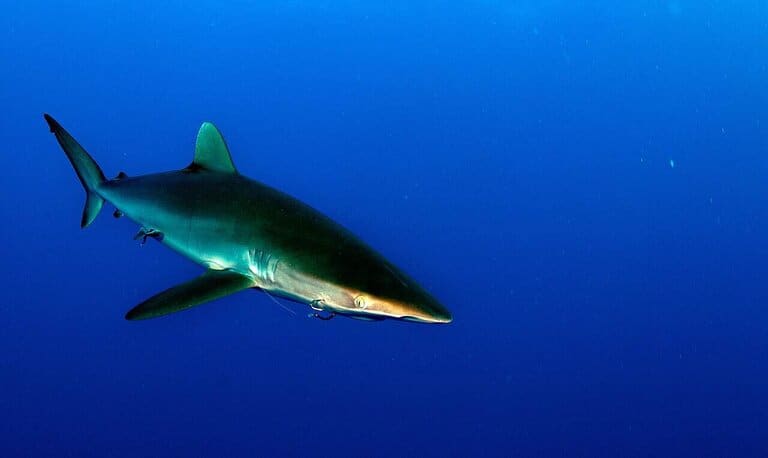
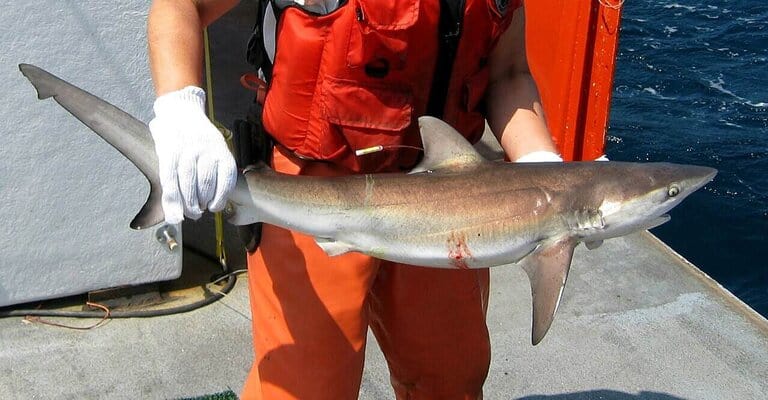
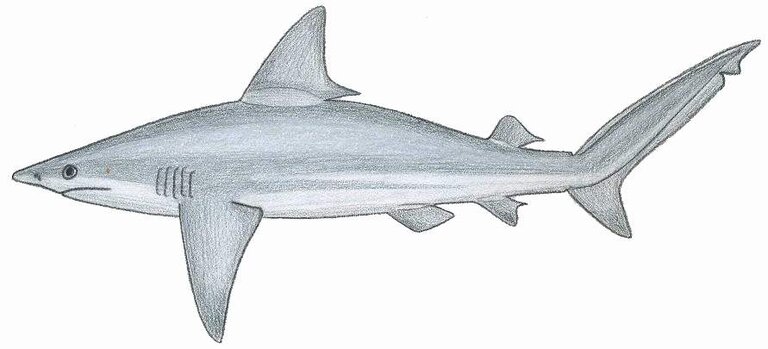
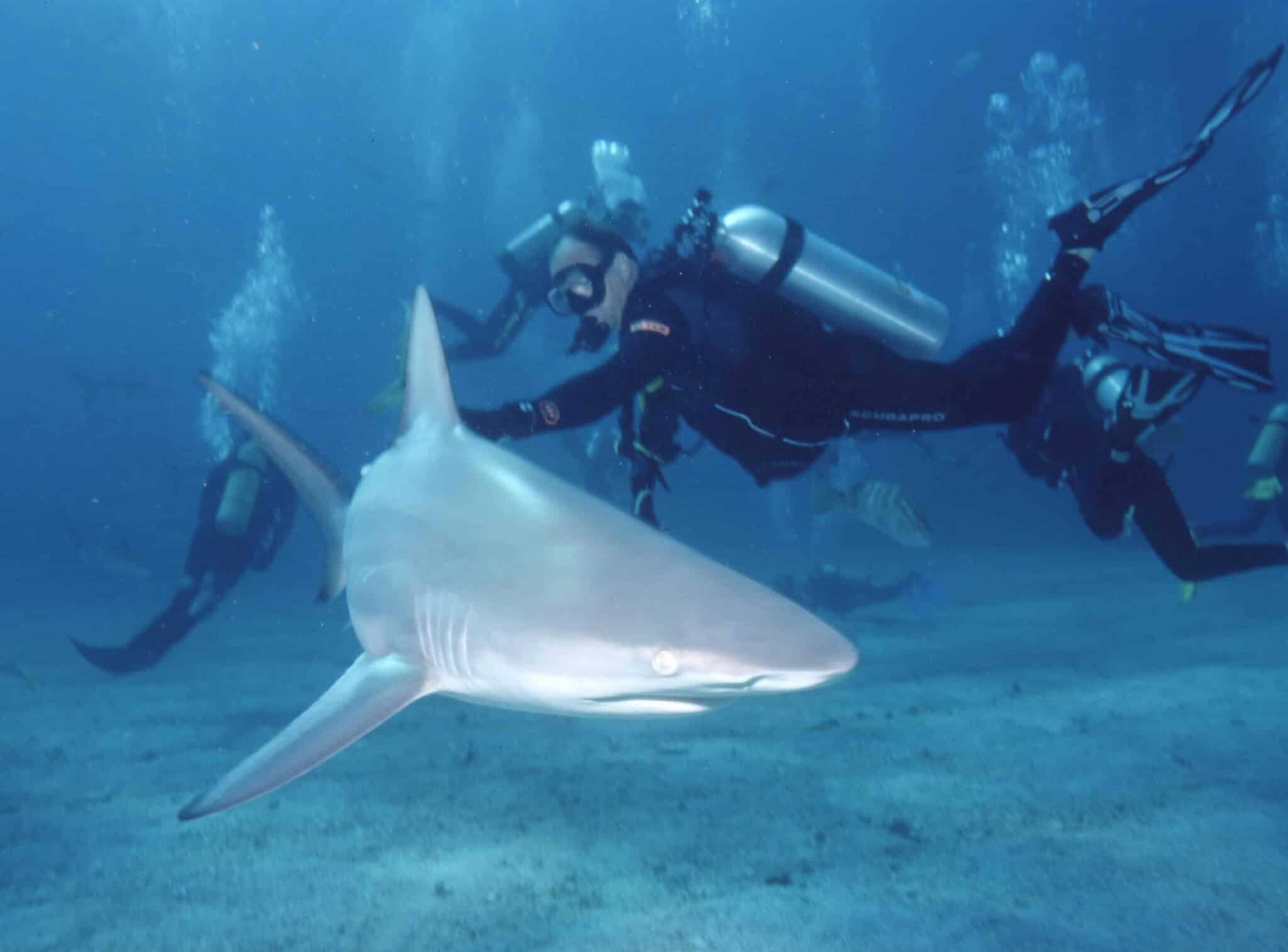
Carcharhinus limbatus is a streamlined requiem shark with a pointed snout, a gray-to-bronze back, a pale underside, and dark tips on several fins. It works continental-shelf water but regularly comes close enough to beaches, river mouths, bays, and estuaries to meet ordinary coastal tackle.
- Best adult separation: blacktip’s anal fin is pale; an adult spinner’s anal fin has a black tip.
- Second check: the blacktip’s first dorsal begins roughly over the inner rear margin of the pectoral fin; the spinner’s begins farther back.
- Federal recreational class: large coastal shark, currently 54-inch minimum fork length and one shark total per vessel per trip within the aggregate.
- Release priority: decide early, shorten the fight, keep a fish that must be released in the water, and have the leader cutter ready before the bite.
A blacktip may jump and twist, but behavior is supporting evidence. Blacktips spin too. Calling every airborne shark a spinner is a shortcut that fails exactly where the legal decision gets serious.
2. Blacktip or spinner: start underneath
The two species overlap in shape, water, prey, and performance. Both have long pointed snouts, narrow bodies, conspicuous fin markings, and the speed to leave the water. From the beach, the silhouette can look nearly interchangeable.
On a mature fish, inspect the anal fin first. The blacktip normally carries no dark apical mark there, while the spinner does. Then look at dorsal placement: the blacktip’s first dorsal starts over the rear portion of the pectoral base; the spinner’s starts behind it. Juvenile markings can complicate the first clue, so use both. A photograph of the lower rear fins and a broad side view is more useful than ten close-ups of the teeth.
The absence of an interdorsal ridge helps separate both species from some other gray coastal sharks, but it does not split this pair. Neither does a dramatic jump.
3. A coastal shark with two managed stocks
Atlantic blacktips range through warm western Atlantic shelf water. NOAA describes them as common from Virginia through Florida, with movements as far north as Cape Cod, and present year-round in the Gulf. Beaches, estuaries, bays, reefs, and river mouths all fit the species.
“Atlantic blacktip” is not one coastwide biological unit for management. NOAA recognizes an Atlantic stock and a Gulf stock. The agency’s current species page reports both as not overfished and not subject to overfishing, based on the latest listed assessments. That is useful context, not permission to stop checking current fishery status. The recreational rule page is the operational source on fishing day.
Local abundance can also change fast. A warm-water migration, a bait push, or a nursery season can make a beach look packed even when the broader stock question is measured across years and regions.
4. Migration is a temperature-and-forage map
Blacktips do not use every beach in the same way all year. Temperature sets the broad seasonal door; forage and water movement decide which section of coast matters on a given tide. In Florida, large winter aggregations can be visible near shore. Farther north, the useful window shifts later with warming water.
Watch the system rather than a calendar date: bait holding tight to the first trough, birds working just outside the bar, mackerel or menhaden moving alongshore, a clean edge meeting dirty inlet water, or a tide that concentrates prey instead of spreading it across a flat.
A single fin is weak evidence of a feeding lane. Repeated directional passes, bait tightening, and surface strikes reveal more. If the sharks are traveling without reacting to forage, moving a bait into the route may still get a bite, but it is not the same problem as fishing an active feed.
5. Nursery water changes the ethical calculation
Females give birth to live young, and shallow coastal habitat gives juveniles refuge from larger sharks. NOAA notes that pups remain in nursery grounds after females depart. Barrier-island margins, marsh-connected systems, estuaries, and protected shoals can therefore hold many small blacktips.
That concentration is not a reason to scale down until every fish can be exhausted. It is a reason to match tackle for a decisive fight and to move if repeated juvenile catches make careful release difficult. Small sharks are still sharks: flexible, fast, and able to turn toward a hand that looked safely behind the head a second earlier.
Nursery habitat also explains why inshore development, water quality, and estuary function matter to an animal commonly imagined only as an open-ocean predator.
6. What blacktips are actually chasing
Blacktips eat schooling fishes along with squid, shrimp, crabs, rays, and smaller sharks. On an angler’s scale, the repeatable pattern is usually fish pushing fish: menhaden, mullet, sardines, anchovies, jacks, and mackerel concentrated by a shoreline, bar, current seam, or inlet mouth.
Match the size and condition of the local forage instead of defaulting to the largest bait you can cast. A fresh, streamlined bait often fishes better in current and is easier for a shark to take cleanly. If cut bait is washing scent through a trough, place it where the tide carries the trail toward traveling fish, not where waves immediately roll it into a weed pile.
Blacktips may investigate discards around boats. That does not mean feeding scraps creates a controlled situation; it can bring several sharks tight to the stern and turn a planned release into a line-management problem.
7. Read the beach as moving structure
A surf zone has edges even when there is no rock or timber. The inside trough, a cut through the outer bar, a rip, a point of sand, and the down-current side of an inlet all redirect prey. Blacktips use those temporary lanes.
Build a short observation pass before casting. Note where foam exits, where waves stop breaking, where bait repeatedly flashes, and whether birds are moving with or against the tide. Then choose a lane that lets you land and release the shark without dragging it over rocks, through swimmers, or hundreds of yards down a crowded beach.
From a boat, the same reasoning becomes depth contour, temperature edge, color change, bait mark, and current face. The shark is mobile; the useful “spot” is the part of the water that is currently compressing food.
8. Tackle should buy time for the shark
The job is not merely to avoid being spooled. A balanced outfit should apply steady pressure, control direction near shore, and finish the fight before exhaustion becomes the whole landing plan. Line capacity matters, but usable drag and angler control matter more.
For surf fishing, choose rod length for the cast and beach geometry, then choose reel, main line, and shock leader as a system. From a boat, shorter rods make it easier to pull from the rail and keep the fish clear of engines. Heavy tackle that cannot cast the intended bait is not balanced; light tackle that forces a long, soft fight is not sporting to the shark.
Keep the landing kit staged: gloves, long-handled dehooker, bolt cutters capable of cutting the hook, leader cutters, measuring tool, and a camera already set. Searching a tackle bag while a shark ventilates poorly is preventable delay.
9. The terminal rig has three separate jobs
The hook must lodge predictably, the leader must survive teeth and abrasion, and the sinker system must not become a projectile or tether if something breaks. Those are separate engineering problems.
When targeting Atlantic sharks with natural bait under federal HMS rules, use a non-offset, non-stainless-steel circle hook. Non-stainless material can corrode if a hook must be left. The circle design also improves the chance of a jaw placement when the angler lets the line come tight instead of swinging hard.
Use enough bite leader for the fish and enough abrasion leader for sand, shell, hull, and tail contact. Inspect every crimp, knot, and connection. A break above the rig can leave more gear attached than a deliberate cut close to the hook.
10. The bite is not permission for a giant hook-set
With a circle hook, point the rod at the load, engage smoothly, and let pressure move the hook toward the corner of the jaw. A theatrical strike can pull the bait away or drive the hook somewhere the rig was designed to avoid.
Once connected, keep the drag working and change angles when you can. In surf, use the wash without giving the shark slack each time a wave recedes. From a boat, move the vessel or the angler to prevent a long stalemate directly below the rod tip.
Watch the fish as it comes close. A blacktip that appears finished may surge in ankle-deep water. The last ten feet are when line, leader, waves, people, and teeth occupy the same small piece of coast.
11. A release is a prepared sequence
Clear bystanders first. Keep hands away from the mouth and do not straddle the shark. Control the leader from the side, use a long dehooker when the hook is accessible, and cut the leader close when removing it would cost more time or tissue.
A shark that cannot legally be retained must remain in the water under federal rules. Even where temporary removal is legal, air exposure and dragging are costs with no biological upside. In Florida, current state guidance requires the gills of prohibited sharks to remain submerged; shore-based anglers also face permit, gear, and handling requirements. Treat those rules as a floor.
Point the shark into clean flow, support it without squeezing the gills, and release when it is holding itself upright and swimming with purpose. Do not pull a shark backward through the water. Water needs to move forward across the gills.
12. The rule check belongs before the bait
As of this profile’s September 2026 verification, NOAA lists the Atlantic recreational fishery for blacktip as open, with a 54-inch minimum fork length and a one-shark-total-per-vessel-per-trip aggregate shared with the other listed large coastal and pelagic sharks. Measure in a straight line from snout to tail fork.
A vessel targeting Atlantic sharks needs the correct Atlantic HMS Angling or Charter/Headboat permit and shark endorsement. Federal rules also require the natural-bait circle hook described above. State waters can add licenses, protected-species lists, gear rules, landing conditions, and shore-based permits. The stricter applicable rule controls.
Check NOAA’s live Atlantic shark status page and the relevant state agency on the day you fish. A species profile cannot know whether a fishery closed after publication.
A field board for the first sixty seconds
| Moment | Question | Useful response |
|---|---|---|
| Before casting | Can this fish be landed away from swimmers, rock, and traffic? | Move the position or do not deploy the bait. Landing geometry is part of tackle choice. |
| First run | Is the drag controlling speed without locking the line? | Settle into firm pressure. Clear rods and people before the shark reaches the inside trough. |
| First clear view | Are the anal fin and first-dorsal origin visible? | Use both marks. Do not substitute a jump, black fin tip, or assumed size. |
| At leader | Is the fish green, exhausted, or fouled? | Keep its head in water, control from the side, and choose dehook or cut quickly. |
| Release | Can it hold level and move forward? | Support into clean flow. Do not pull backward or extend handling for a better photograph. |
This sequence should be assigned before the bite. One person manages the rod and line, one manages the tool, and one keeps the beach or cockpit clear when enough people are available. Nobody needs to improvise a job beside the mouth.
What to record after a clean release
A useful log goes beyond length and location. Record estimated or measured fork length, water temperature, tide stage, depth, bait species, hook position, fight time, handling time, and the identification marks visible in the image. Note whether the shark was traveling with a group or responding to a feeding event.
That record separates pattern from story. If several fish arrive only on the outgoing inlet edge with menhaden present, the current and forage deserve credit. If fight time increases as water warms or tackle gets lighter, the release data argues for a change before the next trip.
Photographs should show what another observer needs: side profile, pale adult anal fin, first-dorsal origin, and enough scale to understand size. A wide image that documents the decision can be more valuable than a close crop built around teeth.
Three reasons to stop fishing the bite
- The landing zone has become crowded or unsafe.
- Repeated fish are deeply hooked, tail-wrapped, or leaving in poor condition.
- The identification cannot be resolved before handling would exceed a quick in-water release.
Stopping is not a failure of persistence. It is feedback that the conditions, rig, or location no longer support the release standard.
13. Follow the identification problem sideways
Read the Spinner Shark profile next and compare the anal fin and first-dorsal position while the two descriptions are fresh. For a smaller shark that lands under a different federal bag rule, move to Atlantic Sharpnose. For the shallow grass-flat member of the hammerhead family, see Bonnethead.
The handoff matters because “gray shark with dark fins” is not a legal identification. Several prohibited Atlantic species can be confused with harvestable sharks. When the marks do not resolve cleanly, release the fish in the water.
14. Primary references and verification trail
- NOAA Fisheries: Atlantic Blacktip Shark — appearance, stocks, biology, range, and management.
- NOAA Fisheries: current recreational Atlantic shark status, sizes, and bags.
- NOAA Fisheries: 2026 HMS Recreational Compliance Guide — permits, endorsement, gear, measurement, retention, and release rules.
- Florida Fish and Wildlife Conservation Commission: Blacktip Shark — field identification and Florida natural history.
- FWC: current recreational shark regulations.
- SEDAR 65: Atlantic Blacktip Shark stock assessment.
Biology and rule links were checked September 15, 2026. Regulations remain time-sensitive.
Bottom line: the blacktip is close to shore, not simple. Read the anal fin, build the landing plan before the cast, and let uncertainty end in a wet release.