Sheepshead Have People Teeth and Steal Bait With Them
Sheepshead crop barnacles and shellfish off pilings with incisors and crushing molars, which is why a bait can vanish on a tap that never pulls. Put the bait tight to the growth and wait for the weight.
By HunterUpdated September 19, 2026Read 6 min
Sheepshead (Archosargus probatocephalus). Photo: Linda Tanner / Wikimedia Commons, CC BY 2.0.
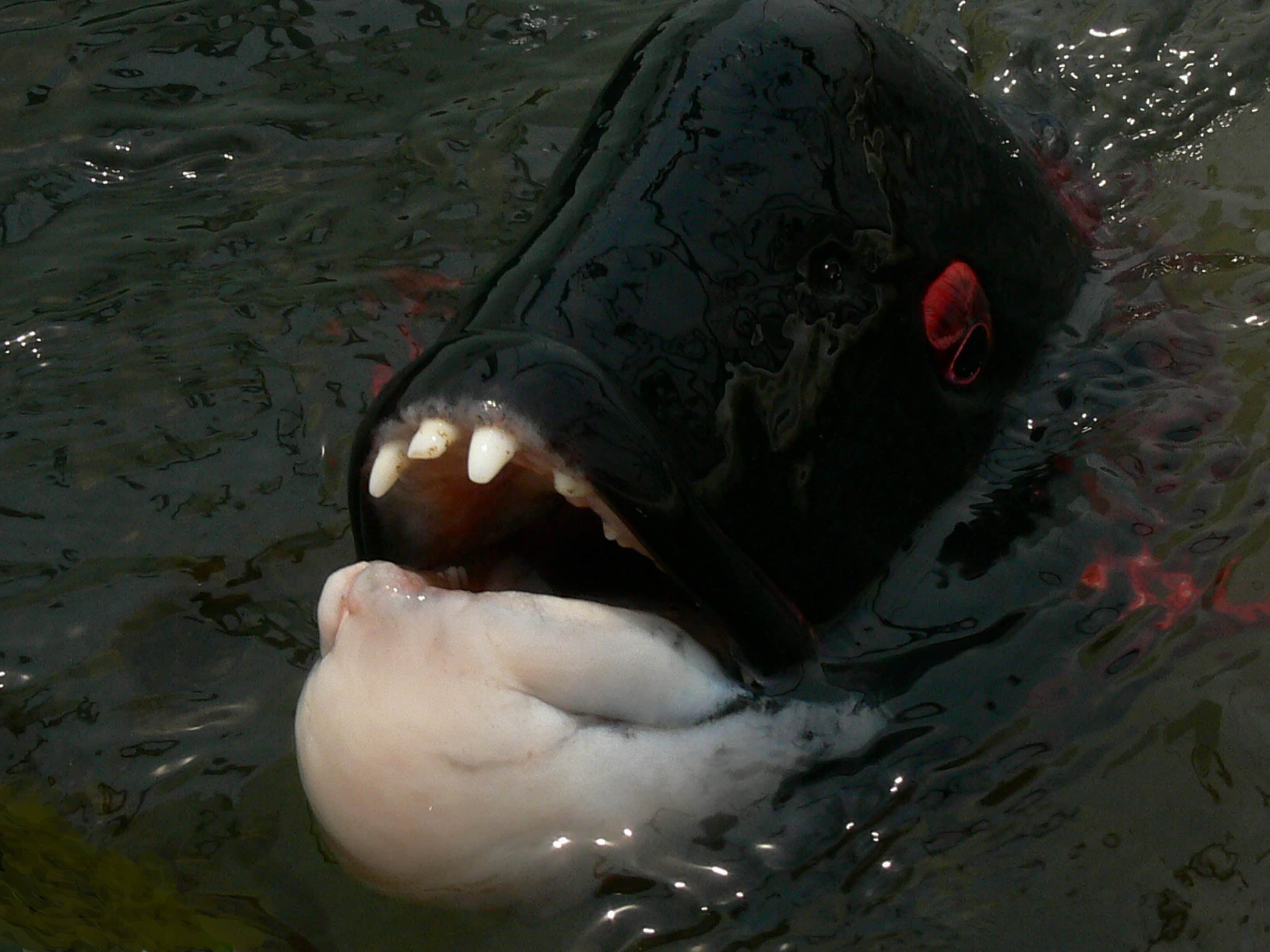
Sheepshead have a mouth full of flat, blunt, unsettlingly human-looking teeth, and that mouth explains why this fish has a reputation for eating bait without ever getting hooked.Archosargus probatocephalus works pilings, oyster bars, jetties, seawalls, reefs and other hard coastal structure along the Atlantic and Gulf. The nice thing is how readable the mechanism is. The teeth explain the bite, and the bite explains the timing: that first tap is a heads-up, and the load that follows it is what you’re actually waiting for.
At a glance · The short version
Scientific name
Archosargus probatocephalus
Best ID clues
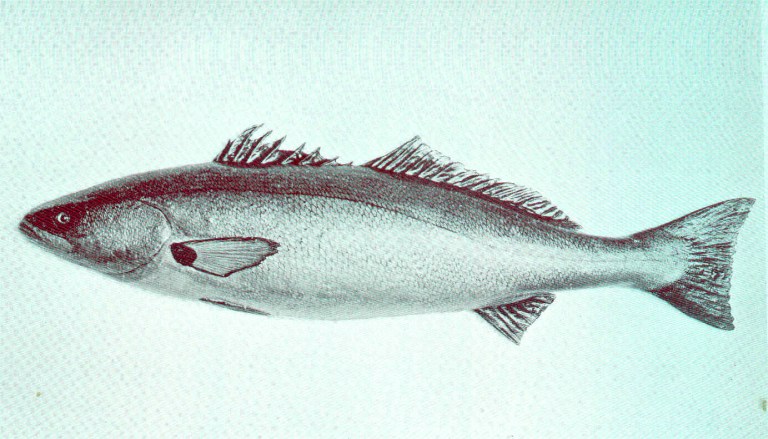
Silvery body with dark vertical bars; prominent incisor-like front teeth plus molars/grinders; no chin barbels.
Adult habitat
Oyster bars, pilings, seawalls, docks, jetties, rock piles, reefs and tidal-creek structure.
Juvenile habitat
Shallow grassy areas where food and shelter are abundant.
Spawning
Late winter into spring; Florida commonly March–April, Texas commonly February–March near Gulf jetties/rock/reef areas.
The teeth settle most arguments
Identification
Bars
FWC describes a lightly colored body crossed by vertical black bars. Those “convict” stripes are obvious on many fish, but pattern alone is not the best separator because young Black Drum also carry vertical bars.
The mouth is the structural giveaway. FWC lists prominent incisors, molars and rounded grinders. Those teeth let the fish crop and crush hard prey rather than simply engulfing it. The famous human-looking front teeth are only the visible half of the feeding system.
Black Drum can share the barred look when young, but Black Drum carry chin barbels and lack the sheepshead’s incisor-like front teeth. That combination is more reliable than trying to decide which fish looks darker.
Strong dorsal/anal spines and a sharp gill-cover edge make handling less casual than the teeth alone suggest. Texas specifically warns that the spines and razor-edged gill cover can make cleaning and handling difficult.
Pilings, rock piles, oyster bars, jetties, reefs and seawalls do more than provide cover. They grow barnacles, mollusks and crustaceans. A piling can therefore be both habitat and feeding surface, which is why a bait six feet away from “good structure” may actually be outside the useful zone.
TPWD places young sheepshead in shallow grassy areas where food and shelter are abundant. That matters because the juvenile map is not just a smaller version of the adult piling map. Nursery habitat precedes the hard-structure fishery most anglers know.
FWC includes tidal creeks in the species’ coastal habitat. Shell, current and a hard edge inside a creek can therefore be more useful than running directly to the most obvious bridge or jetty.
FWC describes sheepshead as omnivorous with a diet dominated by crustaceans and small fish; Texas emphasizes barnacles and small shellfish grazed from hard substrate. Fiddler crabs, sand fleas, shrimp and similar small natural baits make sense because they overlap the prey and scale of the feeding apparatus.
A fish capable of nipping and crushing food off structure does not need to run away with a shrimp to eat it. That is why the bite can register as a tap while the hook comes back perfectly clean. The bait-stealing reputation is not magic; it matches the feeding hardware.
Spawning changes concentration, not the mouth
Seasonal Pattern & Reproduction
Florida
FWC calls sheepshead fractional spawners and places typical Florida spawning in March and April in inshore waters. Fractional spawning means eggs are released in portions over the season rather than one single event.
TPWD describes February–March spawning in Gulf waters near jetties, rock piles and reefs. That regional difference is exactly why this page says late winter into spring rather than printing one coastwide spawning month.
More fish around spawning structure can create a much more productive fishery, but it does not change the feeding mechanics. The same small bait and same subtle load can be present even when the school is much denser.
What I actually trust on the rod
Field Decisions
Evidence level. The habitat and biology around this section are agency-sourced. The bite timing is reasoned from that mechanism, not counted off a season of lost baits.
Put the bait beside the foodinference
A fiddler, shrimp or barnacle bait belongs tight enough to the piling or rock that the fish doesn’t have to leave its normal feeding surface to inspect it. “Near the dock” is too vague; the productive line can be inches from where the growth is.
The tap is informationinference
“Set on the first tap” and “wait for the load” both get handed out as sheepshead advice, and they can’t both be right. Treat the first tap as a warning that the bait is being worked. Stay ready, and come tight when the fish’s weight starts to load the line. Expect to blow that call plenty before it feels natural.
Small sharp hook, minimal slackinference
The hook needs to disappear inside a small hard bait and still find purchase quickly. Excess slack makes the subtle sequence harder to read. That does not mean locking the rig rigidly against current; it means knowing what the sinker is doing so a change in weight is distinguishable from the structure.
Three patient holdsinference
I would rather make several deliberate drops against one productive piling than fan-cast away from the food source. If the bait is disappearing, the location is already giving me evidence; the next adjustment is bite timing or hook exposure before relocation.
Not established here
Where this stops short
one coastwide spawning month
one universal hookset timing for every bait, current and rig
that every barred inshore fish is a sheepshead
that a denser spawning aggregation makes the bite less subtle
— · Sources
FEEDING · SCRAPED OFF HARD SURFACES
Barnacles and crabs come straight off the pilings, and the tide decides when the fish can get at them.
What it eats
Crabs, barnacles, oysters, mussels, shrimp, and other hard- or soft-bodied invertebrates dominate the adult diet.
How and where it hunts
A structure-oriented crusher and grazer that feeds around pilings, jetties, bridge structure, oyster bars, docks, rock, and other hard surfaces carrying crustaceans or mollusks.
When it feeds
Tide and current control access to structure and prey more strongly than a universal clock. Seasonal aggregation and spawning can change location, but the profile does not treat that as a feeding optimum.
What changes as it grows
Juveniles use smaller crustaceans and other small invertebrates, with some plant material reported in young fish; adults become increasingly specialized on larger hard-shelled prey that their teeth can crush.
The human-looking teeth are functional feeding equipment, not just an identification novelty.
Compiled 2026-09-11. Limits and advisories are set per water and per state and change between seasons — the managing agency for wherever you are fishing has the current answer.
The teeth are the part everybody photographs. Nobody gets better at sheepshead by studying dentistry, though. The skill is learning what a fish built to nip food off a piling feels like when it starts doing the same thing to your bait, and treating that first tap as a heads-up instead of an order.
FIELD OBJECT
This one should leave the page.
The article is the long version. These are the pieces worth carrying into the next trip.
The 30-second version
Sheepshead crop barnacles and shellfish off pilings with incisors and crushing molars, which is why a bait can vanish on a tap that never pulls. Put the bait tight to the growth and wait for the weight.
What to watch
Identification
Habitat & Life Stage
Diet & Bite Mechanics
Seasonal Pattern & Reproduction
Field card
one coastwide spawning month
one universal hookset timing for every bait, current and rig
that every barred inshore fish is a sheepshead
that a denser spawning aggregation makes the bite less subtle
Florida Fish and Wildlife Conservation Commission — Sheepshead Profile — identification, habitat, diet and spawning.
RIGHT TOOL, NEXT
Species & Presentation
Carry the species behavior and presentation question into a narrower water-to-fish-to-presentation handoff.
We use necessary cookies to operate the site. With your choice, we may also use analytics and advertising cookies. Choose Accept All, Reject, or Preferences.
Contains information related to marketing campaigns of the user. These are shared with Google AdWords / Google Ads when the Google Ads and Google Analytics accounts are linked together.
90 days
__utma
ID used to identify users and sessions
2 years after last activity
__utmt
Used to monitor number of Google Analytics server requests
10 minutes
__utmb
Used to distinguish new sessions and visits. This cookie is set when the GA.js javascript library is loaded and there is no existing __utmb cookie. The cookie is updated every time data is sent to the Google Analytics server.
30 minutes after last activity
__utmc
Used only with old Urchin versions of Google Analytics and not with GA.js. Was used to distinguish between new sessions and visits at the end of a session.
End of session (browser)
__utmz
Contains information about the traffic source or campaign that directed user to the website. The cookie is set when the GA.js javascript is loaded and updated when data is sent to the Google Anaytics server
6 months after last activity
__utmv
Contains custom information set by the web developer via the _setCustomVar method in Google Analytics. This cookie is updated every time new data is sent to the Google Analytics server.
2 years after last activity
__utmx
Used to determine whether a user is included in an A / B or Multivariate test.
18 months
_ga
ID used to identify users
2 years
_gali
Used by Google Analytics to determine which links on a page are being clicked
30 seconds
_ga_
ID used to identify users
2 years
_gid
ID used to identify users for 24 hours after last activity
24 hours
_gat
Used to monitor number of Google Analytics server requests when using Google Tag Manager
1 minute
Jetpack's built-in visitor analytics. It records page views, referring sites, search terms, and outbound link clicks, and also carries the shared visitor-tracking library used by Jetpack Instant Search and WooCommerce Analytics.