SPECIES INTELLIGENCE · LOOKALIKES
Redfish or Black Drum?
The difference that actually matters, and it isn’t the color you’re guessing by.
Both are drum. Both thump the dock when you land them. And a big, sun-faded black drum next to a bronze-backed redfish get mixed up at the cleaning table more often than anyone wants to admit — which matters, because slot limits and bag limits are set separately, by species, and “it looked reddish” isn’t a defense that holds up to anyone checking.
Coppery-bronze, one or more dark spots near the tail, no chin barbels, subtly downturned mouth, sleek and streamlined.
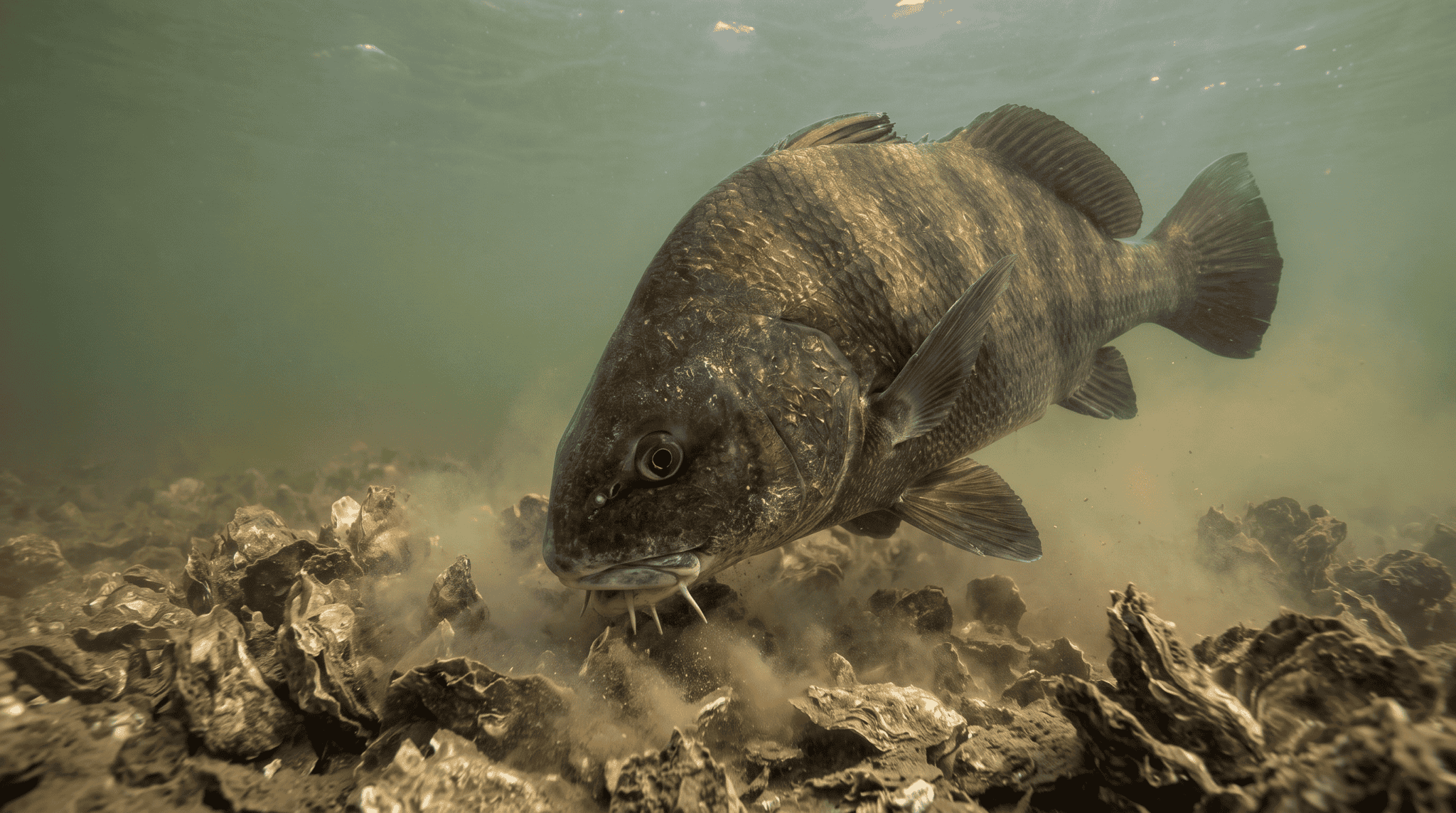
Silvery-gray to bronze-black, a cluster of barbels under the chin, deep-bodied with a humped back, underslung bottom-feeding mouth.
THE ONE FEATURE THAT DOESN’T LIE
Check the chin, not the color.
Color is the tell everybody reaches for first, and it’s the worst one. It fades, and a stressed redfish held wrong in bad light can look nearly as dull as a black drum. The barbels don’t change. Black drum carry a small cluster of them under the lower jaw, built for feeling out shellfish on the bottom. Redfish have none, ever, at any age or color phase. If you’re not sure what’s on the end of your line, look under the chin before you look at anything else.
The other tells, in order of reliability
- Tail spots. A redfish typically carries one or more distinct black eyespots (ocellated spots) near the tail base. Black drum don’t have those as adults, but juveniles show vertical dark bars that fade with age — so a young striped black drum can fool you if you’re in a hurry. Bars aren’t spots, even when you want them to be.
- Body shape. Redfish run sleek and torpedo-shaped. Black drum carry a noticeably higher-arched back and a deeper, bulkier body at the same length.
- Mouth position. Both feed near bottom, but the black drum’s underslung mouth is more pronounced, built around crushing shellfish rather than chasing prey through the water column.
ON THE TABLE
They don’t fish the same, either.
Redfish respond to aggressive presentations worked through the water column. Black drum want a patient bottom presentation with natural bait and will sit over it far longer than a redfish ever will. Get the ID wrong and the filet is the smaller problem. The bigger one is spending the next hour fishing for a fish that isn’t the one you’ve got.