Hook the Horizon
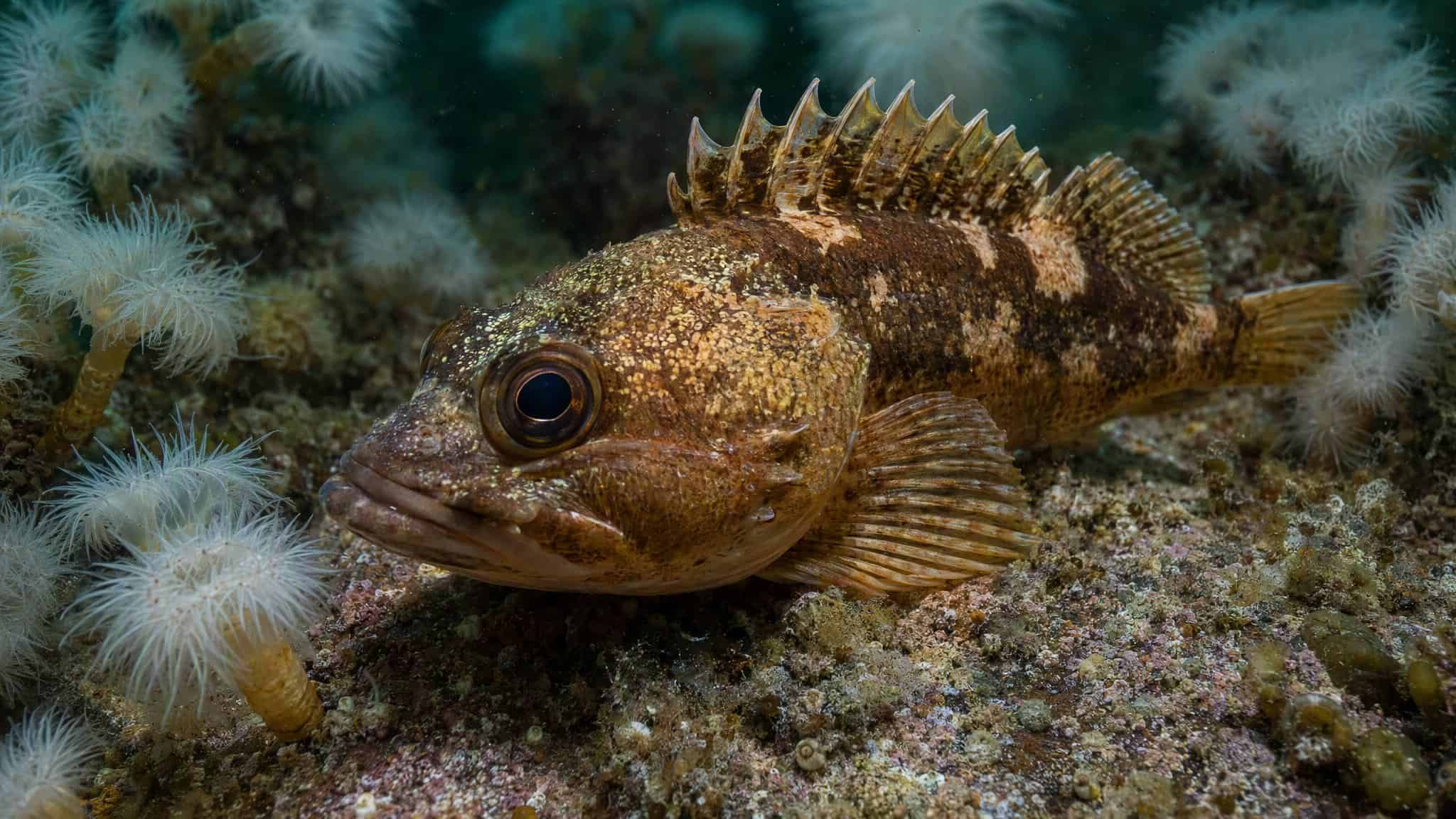
Mottled brown quillback rockfish resting on a rocky reef among white plumose anemones
,

Quillback Rockfish Can Be Older Than the People Catching Them

Quillback rockfish can live about 95 years, don’t mature until around 11, and stick close to one reef. Learn the dorsal fin before you keep a rockfish, and have a descending device rigged for the ones you can’t.

“It’s a rockfish” isn’t an identification, and quillback are the fish that prove it. Sebastes maliger is a slow-growing, long-lived demersal rockfish from California through Alaska, tied closely to rocky reef and boulder habitat. It can also come up on a jig meant for some other groundfish in water where you’re not allowed to keep it, so the dorsal fin and the descending device both matter before the fishing does.

At a glance · The short version

Scientific name
Sebastes maliger
Maximum age
Alaska’s current rockfish identification program lists about 95 years.
Age at maturity
About 11 years in Alaska’s current rockfish reference.
Identification
Brown with yellow/orange blotches, yellow streak in first dorsal, deeply incised dorsal-fin membranes and prominent quill-like spines.
Core habitat
Rocky reefs, boulders, crevices, pinnacles, and demersal shelf structure.

What fish is this?

The Dorsal Fin Is Supposed to Look Like Quills

Color and dorsal
Alaska’s current identification key describes brown coloration with yellow-to-orange blotches, a yellow streak on the first dorsal fin, and deeply incised membrane between the dorsal spines. The tall separated spines are what give the common name real diagnostic value.

Source: Alaska Department of Fish and Game Rockfish Identification

Why color is not enough
Copper, China, tiger, yelloweye, and other nearshore/demersal rockfish can share the same reef and can look much more alike under boat light than they do in a clean field-guide plate. Use dorsal membrane, head, mouth, blotches, lateral pattern, and a current regional key before a retention decision.
Size
ADF&G lists a maximum size around 61 cm / 24 in. A large quillback is therefore not a giant rockfish, but biologically it can be older than many anglers fishing for it.

Source: ADF&G

Why one reef can matter for decades

Slow Life History Changes the Meaning of a Hot Spot

Longevity
ADF&G lists quillback to about 95 years and maturity around age 11. That is enough to make local age structure part of stock resilience. Removing a concentration of old fish from one reef is not equivalent to removing the same number of fast-growing coastal fish that mature at age two.

Source: ADF&G Rockfish Identification

Home-range logic
Quillback are demersal shelf rockfish closely associated with fixed rocky habitat. The practical conservation consequence is local: a productive pinnacle can repeatedly expose the same resident population. A reef that keeps giving up fish is not necessarily being replenished from the next county.
Structure is not season-proof
Adults are strongly structure-associated, but that doesn’t make every individual permanently glued to one boulder or make season irrelevant. “Resident and demersal” is as far as the evidence goes. It isn’t the same fish sitting on the same rock all year.

Where do I find them?

Relief, Crevices, and the Face of the Structure

Core water
Rocky reef, boulder fields, pinnacles, and high-relief hard bottom are the right search image. Quillback are categorized by Alaska as nonpelagic/demersal shelf rockfish, which means the first search should stay near the structure rather than chase open-water schools.

Source: ADF&G

Micro-positioninference
Faces, cracks, the base of relief, and pockets between boulders give a fish both shelter and an ambush lane. A jig several yards off the rock can be in the correct depth and still outside the quillback’s usable space.
The gear-loss tradeoffinference
Fishing tight enough to contact the habitat costs jigs. The answer is not to live on the bottom; it is to touch down, establish depth, and work just above the snag field so the lure remains in the fish’s vertical neighborhood without being donated to every crack.

Diet and presentation

Bottom Prey, Fish, and a Short Feeding Radius

Food
Quillback consume fishes and benthic invertebrates such as crabs and shrimp. That broad prey field supports jigs and natural bait, but the habitat position remains more important than an exact bait brand.
Vertical controlinference
A compact jig or bait that can hold just off rocky relief fits the feeding job. If the current is pushing the line so far that the offering is well off the face, add enough weight or change boat angle before changing lure color.

Barotrauma

The Release Is Not Finished at the Surface

Why rockfish struggle
Rockfish with closed swim bladders can experience expanding gas and internal pressure injury when brought rapidly from depth. A fish that cannot descend on its own is still in distress even if it swims a few feet away from the boat.
Descending device
A descending device returns the fish toward capture depth, where pressure recompresses the swim-bladder gas.
Rig it before the first dropdecision rule
Quillback can be illegal bycatch while targeting another groundfish. The descending device therefore belongs ready before the first jig goes down, not in a package buried under the seats.

The decision layer

After the First Quillback

One quillback appears in a no-retention fishery
Identify, release promptly with a descender if needed, then move depth/structure if repeated bycatch begins. Continuing to fish the same resident pocket is not a neutral choice.
Mixed rockfish catch
Slow the identification down before retention. A legal black rockfish beside an illegal quillback does not make the pile generically legal.
Good reef keeps producing
Treat repeatability as evidence of residency and vulnerability, not proof the reef is inexhaustible.

— · Not established

The Things This Reef Cannot Tell You

  • a claim that quillback never move
  • a universal best depth independent of latitude and reef
  • a safe visual shortcut that replaces a current regional rockfish key

Ninety-five years is a long time to spend on one reef, waiting to find out whether the rules changed while it wasn’t looking. A descending device isn’t paperwork. Sending a bycatch quillback back down to pressure is the one part of the whole routine that gives a fish that old a real shot at the next few decades.

FEEDING ECOLOGY · STANDARDIZED

A Short Feeding Radius on Old Reef

Primary prey
Fishes plus benthic invertebrates, including crabs and shrimp.
Feeding mode / location
A demersal reef predator feeding close to rocky relief, boulders, crevices, pinnacles, and the faces or bases of hard structure. Its feeding radius is short enough that depth alone is not sufficient if the presentation is well off the reef face.
Diel / seasonal pattern
The profile establishes a resident, structure-associated pattern but does not establish a universal diel feeding window or a coastwide seasonal feeding schedule.
Ontogenetic diet shift
The sources behind this page don’t cover it.

Only feeding biology established by this profile is summarized; angling depth and barotrauma guidance remain separate.

Keep-or-descend gate · Decide before another drop

A Quillback Changes the Rest of the Stop

California
Quillback rockfish may not be retained in California in 2026. Stop treating identification as a cooler decision: the fish needs a prompt depth return under the current CDFW rules.
Alaska
Southeast Alaska places quillback in the demersal-shelf group, not the pelagic group. Bag, possession, and release rules differ by area, so use the current ADF&G booklet rather than transferring a California rule north.
Next-drop decision
After one quillback, move the presentation farther above bottom or leave that face. Compare the shallower schooling pattern in Black Rockfish, then keep the descending-device sequence ready.

— · Sources

Identification, Longevity, and Regional Rules

Reviewed 2026-09-14. “Protected” is not a coastwide legal category. California’s 2026 rules prohibit quillback retention, while Alaska classifies quillback within its demersal-shelf rockfish group and applies area-specific rules. Identify the fish before possession, then check the exact management area and emergency orders. In both California vessel fisheries and Alaska rockfish fisheries, current rules can require a deepwater-release device to be immediately available.
More like this

Where this one lives

  • Saltwater & CoastalSurf, shoreline, nearshore, offshore, and deep-sea fishing — technique, gear, and safety content spanning the full range from the beach to blue water.103 articles
  • Species & BehaviorFish behavior, habitat, depth, forage relationships, and species-specific field decisions. Start with the Freshwater Fish Species field guide.159 articles

Discover more from Hook the Horizon

Subscribe now to keep reading and get access to the full archive.

Continue reading