A gag eats and heads back for the ledge before you’ve finished being surprised. Why it’s on that ledge at all starts in estuary seagrass and ends with males that may be only 2–3% of the Gulf stock.
By HunterUpdated September 12, 2026Read 6 min
Image: luxury editorial portrait
A gag grouper doesn’t give you much time to decide what kind of fight this is going to be. Mycteroperca microlepis comes off the ledge, eats, and heads straight back for it, so the first few seconds settle more than the next five minutes do. What a lot of grouper writing skips is why that fish is on that ledge at all. It started life in estuary seagrass, and the biggest, oldest ones are the fish most likely to have switched from female to male.
At a glance · The short version
Scientific name
Mycteroperca microlepis
Best field separator from black grouper
Strongly serrated spur on the lower preopercle; black grouper has a more gently rounded edge.
Juvenile habitat
Estuaries and seagrass beds before movement to nearshore hard bottom.
Sex system
Protogynous: fish begin female; some older/larger fish transition to male.
What fish is this?
Marbling Is Useful; the Cheek Edge Is Better
Body pattern
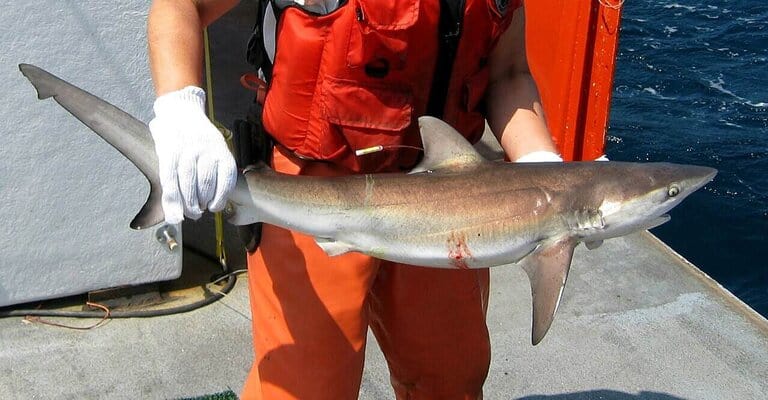
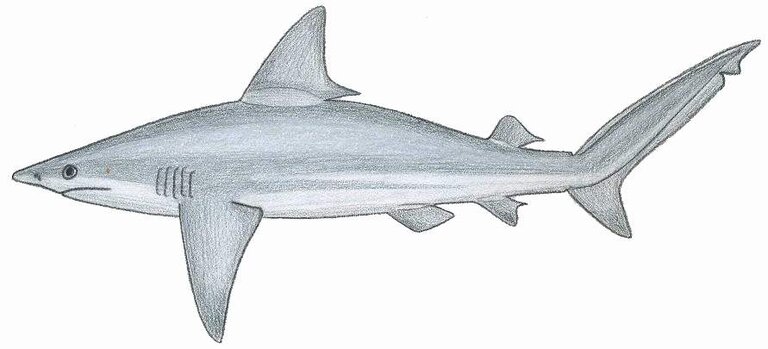
Gag are brownish-gray with dark worm-like markings, dark fins, pale margins on the anal fin and tail, and dark lines radiating from the eye. The pattern helps, but grouper color changes enough that it should not be the only character.
The lower edge of the preopercle carries a strong serrated spur. FWC uses that to separate gag from black grouper, whose comparable edge is more gently rounded. On a fish where retention depends on species, that structural check is worth learning.
Young gag settle into estuarine seagrass as nursery habitat. FWC’s current spatial-ecology work places them there through the early juvenile phase before they move offshore toward nearshore hard bottom.
Fish roughly one to four years old move onto nearshore hard bottom, around 22 m in the FWC conceptual model. That means the ‘reef grouper’ label skips an entire estuary-to-hard-bottom transition that matters to recruitment.
Maturing females form pre-spawning aggregations from roughly November through February, then many move to shelf water deeper than 50 m during the February-March core spawning period. FWC’s work suggests males may remain offshore year-round. That sex-specific geography is why a simple ‘big fish live deeper’ rule misses the biology.
Gag begin life as females and some transition to males as they age and grow. Current FWC research has focused specifically on low male abundance because removing large fish can alter the breeding structure in a way that a pounds-landed total does not show.
FWC summarizes prior stock-assessment work that predicted only roughly 2-3% of the Gulf gag population was male, one reason researchers have been studying spawning grounds and sex-specific movement instead of treating all adult fish as interchangeable units.
That 2 to 3 percent estimate is the one number in this profile I’d hold loosest. It comes out of older stock-assessment modeling, not a body count, and if a newer survey moved it, I’d lean toward believing the fish over the spreadsheet.
What does it eat?
Structure Is Both Cover and Feeding Position
Diet
FWC lists fishes and invertebrates. The species is an ambush predator around rocky bottom, reefs, drop-off walls, and other structure rather than a fish that has to roam open water continuously to find prey.
A ledge lip, wreck edge, undercut, or high-relief piece of hard bottom gives the grouper a short route from shelter to prey and back. That is why the fight and the habitat are the same problem.
The first three seconds
The First Three Seconds Are a Pressure Problem
Before the biteinference
Set drag before the bait goes down, keep the rod in hand, and make sure the connection knots and leader have already survived a real load test. A grouper does not give a useful adjustment window after it turns.
After the biteinference
The goal is to turn the head immediately. If the fish gets back under a ledge or into a wreck, the line is suddenly fighting rock, shell, or steel as much as fish. Heavy tackle is not a macho choice here; it changes whether the fish is controlled before abrasion decides the outcome.
If it holes upconvention
Backing off pressure and giving a holed fish a chance to move can sometimes recover the situation. It is not reliable enough to be the plan. The better plan is not letting the fish reach the hole.
Before that bait even goes down, the thing I’d check twice is the drag — not the leader, not the hook. Get bit and turn the wrong direction once, and there’s no window left to fix it from the reel.
Deep release
Getting a Big Gag Back Down
Release fish from depth
Grouper brought up from deeper water can show barotrauma. Florida state-water reef-fish rules require a descending device or venting tool rigged and ready on vessels targeting reef fish and require use when a fish shows barotrauma signs. South Atlantic federal rules require a descending device on board and readily available.
A large gag may be disproportionately important as a male. A quick, controlled return to depth therefore aligns handling quality with the species’ reproductive biology rather than treating release as an afterthought.
The decision layer
What Changes the Next Drop?
Good structure, no bites
Check depth, season, and whether the fish’s life stage should even be on that class of structure before grinding the mark harder.
Fish keeps reaching cover
The tackle/drag/boat-angle system is underpowered or poorly positioned. Fix that before changing bait.
Large fish must be released
Minimize deck time and use the correct barotrauma tool if needed. A big gag is biologically more than a big fillet.
— · Not established
What I Will Not Generalize
a universal ‘best’ gag depth across Gulf and Atlantic stocks
a precise drag setting independent of line, hook, rod, fish size, and structure
a claim that every large gag is male
— · Sources
FEEDING ECOLOGY · STANDARDIZED
How this fish gets fed.
Primary prey
Fishes are major adult prey, supplemented by crabs, shrimp, squid and other large reef-associated animals.
Feeding mode / location
A reef ambush predator using ledges, holes, wrecks, rocky structure and hard-bottom relief. It often feeds close enough to shelter that the first seconds after a strike determine whether prey—or an angler’s fish—reaches cover.
Diel / seasonal pattern
Low light can be useful, but the profile does not establish one universal daily feeding clock. Seasonal spawning movement, water temperature, depth and prey distribution change where adults concentrate.
Ontogenetic diet shift
Juveniles in shallow nursery habitat use more crustaceans and small fishes; larger gag grouper become increasingly piscivorous while continuing to take large crustaceans and cephalopods.
Spawning aggregation and sex change are reproductive biology, not ordinary feeding patterns.
Primary References
Size shifts the odds that a gag is male, but it doesn’t settle it for any one fish. The 2 to 3 percent figure is a stock-assessment estimate, and knowing a particular fish’s sex for sure takes a look at its gonads, which no photo over the rail is going to give you.
Compiled 2026-09-11. Limits and advisories are set per water and per state and change between seasons — the managing agency for wherever you are fishing has the current answer.
Saltwater & CoastalSurf, shoreline, nearshore, offshore, and deep-sea fishing — technique, gear, and safety content spanning the full range from the beach to blue water.103 articles
Species & BehaviorFish behavior, habitat, depth, forage relationships, and species-specific field decisions. Start with the Freshwater Fish Species field guide.159 articles
Cookie Consent
We use cookies to improve your experience on our site. By using our site, you consent to cookies.
Contains information related to marketing campaigns of the user. These are shared with Google AdWords / Google Ads when the Google Ads and Google Analytics accounts are linked together.
90 days
__utma
ID used to identify users and sessions
2 years after last activity
__utmt
Used to monitor number of Google Analytics server requests
10 minutes
__utmb
Used to distinguish new sessions and visits. This cookie is set when the GA.js javascript library is loaded and there is no existing __utmb cookie. The cookie is updated every time data is sent to the Google Analytics server.
30 minutes after last activity
__utmc
Used only with old Urchin versions of Google Analytics and not with GA.js. Was used to distinguish between new sessions and visits at the end of a session.
End of session (browser)
__utmz
Contains information about the traffic source or campaign that directed user to the website. The cookie is set when the GA.js javascript is loaded and updated when data is sent to the Google Anaytics server
6 months after last activity
__utmv
Contains custom information set by the web developer via the _setCustomVar method in Google Analytics. This cookie is updated every time new data is sent to the Google Analytics server.
2 years after last activity
__utmx
Used to determine whether a user is included in an A / B or Multivariate test.
18 months
_ga
ID used to identify users
2 years
_gali
Used by Google Analytics to determine which links on a page are being clicked
30 seconds
_ga_
ID used to identify users
2 years
_gid
ID used to identify users for 24 hours after last activity
24 hours
_gat
Used to monitor number of Google Analytics server requests when using Google Tag Manager
1 minute
Jetpack's built-in visitor analytics. It records page views, referring sites, search terms, and outbound link clicks, and also carries the shared visitor-tracking library used by Jetpack Instant Search and WooCommerce Analytics.