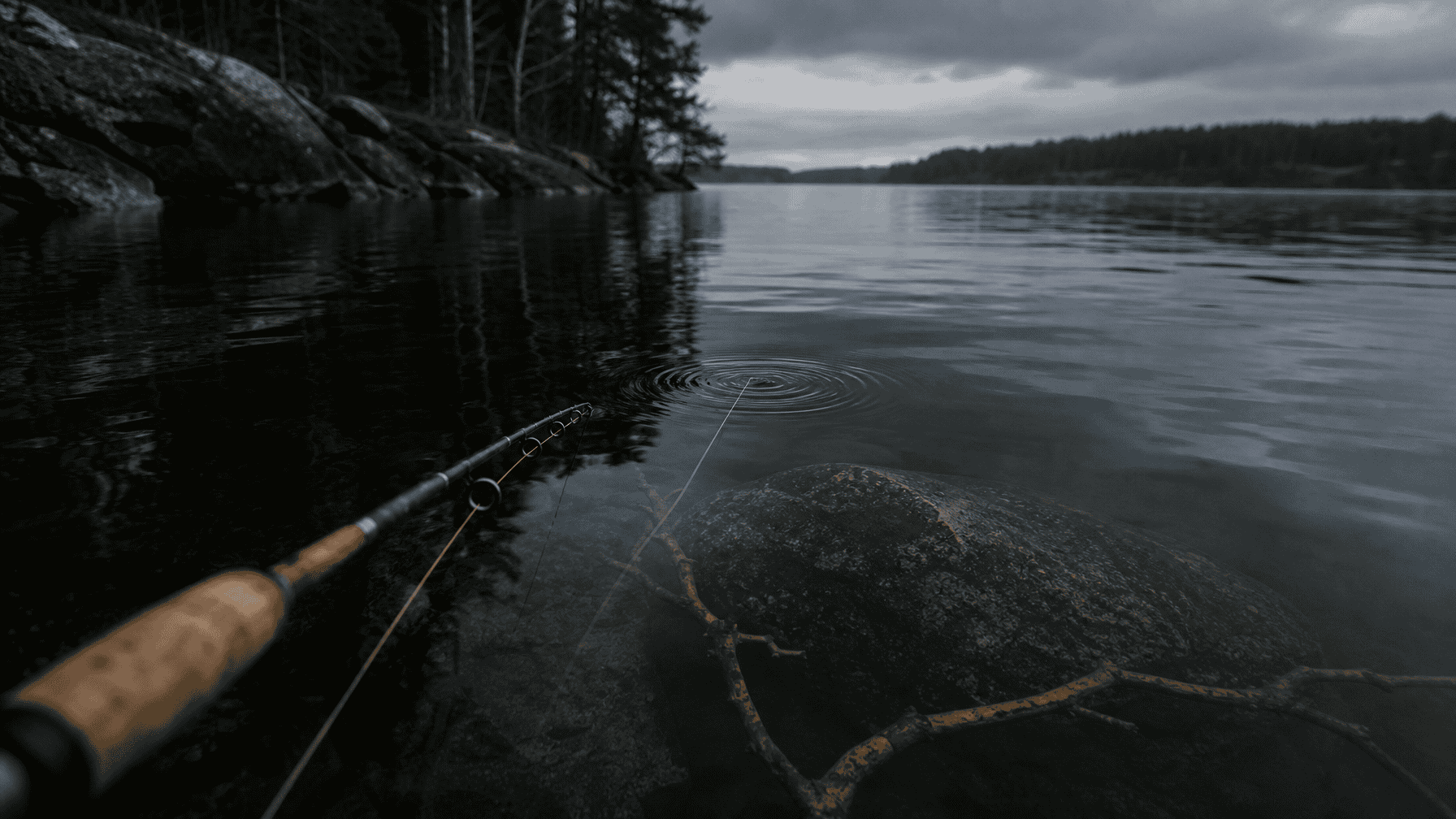
Pulling as hard as you can is what everybody’s arms want to do on a snag, and I’ve done it plenty. Mostly it buys a hook buried deeper and line that’s weaker than it was a minute ago. The bad versions end with a rod tip in two pieces, a lure coming back at your face, or your feet somewhere they shouldn’t be on a slick bank.
Figure out what it’s caught on first
The common snags let go in completely different ways, and the right move for one is the wrong move for another.
- Rock. The hook’s wedged in a crack, and pulling from the same direction drives it in deeper. Rock comes free from the opposite side more often than anything else does.
- Wood. The point’s buried in soft fiber, and the lure is often floating or hanging neutral above it. Slack is the tool here. Give the lure room and it’ll often back itself out the way it went in.
- Weed. Nothing’s really caught. It’s just loaded up. Steady, patient pressure usually pulls the whole clump through, and it’s the one snag where slow force is fine.
- Line, yours or somebody else’s. Stop. Don’t pull at all until you can see what’s connected to what.
What I try before force
Drop the rod tip, feed some line, count to ten, then take it up gently. A surprising number of snags let go while nothing’s pulling on them. If that doesn’t work, change the angle: walk twenty feet down the bank or move the boat past it, and try from a direction the hook didn’t come in from. Only after both of those do I think about force, and by then it isn’t really force anymore. It’s a decision about how to lose the lure without getting hurt.
Breaking off without wearing it
This is the part that actually hurts people, so it gets its own rules. A tight line is storing energy, and a lure that pops free rides that energy straight back down the line at whoever’s holding the rod.
- Never pull with the rod. Point it straight down the line at the snag so the blank is out of the load entirely, then back up with your body. A rod bent double against a rock is how tips explode.
- Never wrap line around a bare hand. Braid under load will open a finger to the bone. Use a glove, a rag, a stick or the reel handle — something that lets go before you do.
- Turn your face away and keep it out of the line’s path. Eye protection is worth wearing all day for the ten seconds it matters. If anybody’s nearby, they move first.
- Break it steady, not with a jerk. A smooth, building pull parts the line at its weakest point, usually the knot, and leaves a short tag. Snap-loading it sends everything flying.
Then get back what you can. Line left in the water keeps tangling birds and turtles long after anybody remembers the lure, and pulling a few feet of mono out of a branch is about the cheapest conservation work there is.
After it lets go
If rock or a hard pull was involved, check the first few feet of line after rock contact before the next cast. And if the snag happened because the first cast went straight into the thickest part of the cover, fishing the outside of a laydown first keeps you out of that tree next time.
No lure I’ve ever snagged was worth a hook in my hand or a rod in two pieces. There’s always another one in the box.
FIELD OBJECT
This one should leave the page.
The article is the long version. These are the pieces worth carrying into the next trip.
The 30-second version
A snag isn't a strength test. I give it slack and a new angle before anything else, and when it's time to break off, the rod's out of the load and my face is turned away.
What to watch
- Figure out what it's caught on first
- What I try before force
- Breaking off without wearing it
- After it lets go
Field card
- Rock. The hook's wedged in a crack, and pulling from the same direction drives it in deeper. Rock comes free from the…
- Wood. The point's buried in soft fiber, and the lure is often floating or hanging neutral above it. Slack is the tool…
- Weed. Nothing's really caught. It's just loaded up. Steady, patient pressure usually pulls the whole clump through, and it's the one snag…
- Line, yours or somebody else's. Stop. Don't pull at all until you can see what's connected to what.
- Never pull with the rod. Point it straight down the line at the snag so the blank is out of the load…
RIGHT TOOL, NEXT
Field Ops Desk
Turn the field note into a pre-trip, on-water, or debrief decision instead of leaving it as reading.