Every laydown makes the same pitch: throw it right into the thick of the branches, because that’s obviously where the big one is. Maybe. It’s also the cast most likely to leave your lure hanging in a tree, and the one that tells you the least when it comes back empty. That’s a lousy trade for a first throw.
FIELD PLATE · STRUCTURE
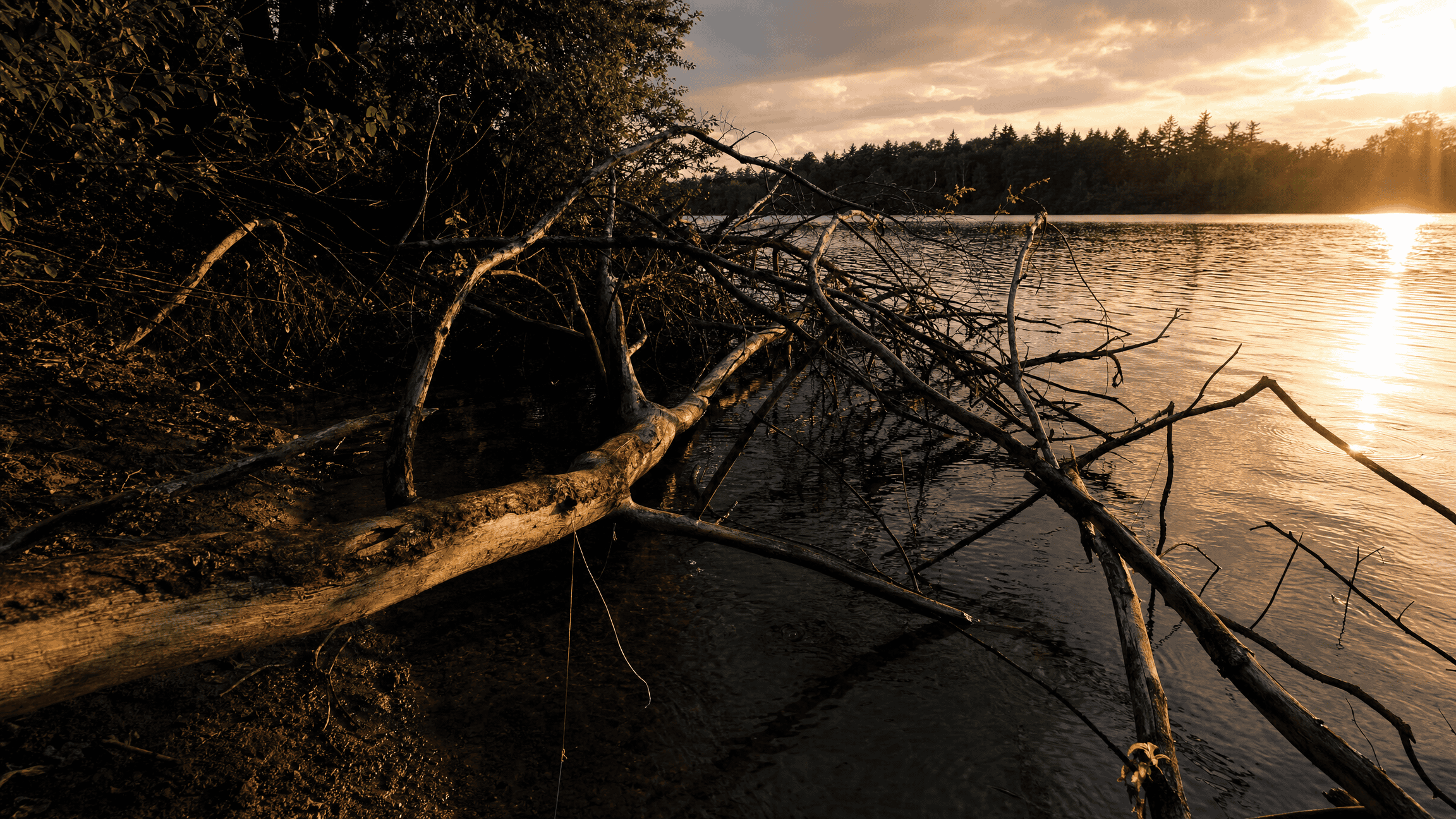
Work a laydown the way this bank is drawn, outside in.
A laydown is four different spots
Treating a fallen tree as one target is the mistake. From the bank out, you’ve got the trunk base, where the wood meets the shore and the water’s usually shallowest; the shade line, where the shadow ends and open water starts; the outer branches, which are the most complicated cover and the hungriest for lures; and the tip, where the crown reaches the deepest water. Those hold fish under different conditions, and they don’t all deserve the same cast.
The general pattern is that active fish sit on the outside, where they can watch open water and ambush whatever swims past, while fish that aren’t in the mood push into the middle where nothing can reach them. So the outside isn’t the consolation prize. It’s where the fish most likely to eat are sitting.
The order I work it
- Parallel to the outer edge, from well back. Cast past the tip and bring the lure along the shade line instead of into it. The lure stays in the strike zone for the whole retrieve instead of for one second, and a miss costs nothing.
- The tip, where the crown meets deeper water. Usually the deepest water the tree touches, and the best bet for a fish using the laydown as a stop along the way rather than a place to live.
- The shade line again, from a different angle. I still want the lure running along that edge, not across it.
- Into the branches — only if the first three came up empty, and only if my gear can actually get a fish back out.
Where I stand changes all four of those more than the lure does. The same tree fished from up the bank and from straight out in front gives you completely different retrieve paths, and where you stand matters that much on every kind of cover, not just wood.
Why a shadow is worth three casts
A shade line is an edge, and edges hold fish better than the empty water around them. This one’s a visibility edge. A fish sitting in the shadow can see out into the bright water, while anything out there is looking into the dark. That’s an ambush advantage, and it’s why the shade line gets three casts before the branches get one.
What the risky cast really costs
Every throw into the crown is a coin flip on the lure. If you do bury a hook in the wood, change the angle before you add force. But the lure’s the cheap part. Hang up in there and you’re yanking the rod around, splashing, and usually shaking the whole tree, which is a very loud way to tell every fish in it that something’s wrong.
FIELD OBJECT
This one should leave the page.
The article is the long version. These are the pieces worth carrying into the next trip.
The 30-second version
The thickest part of a fallen tree always looks like where the big one lives. It's also where lures go to retire, so that cast waits until the edges have had their turn.
What to watch
- A laydown is four different spots
- The order I work it
- Why a shadow is worth three casts
- What the risky cast really costs
Field card
- Parallel to the outer edge, from well back. Cast past the tip and bring the lure along the shade line instead of…
- The tip, where the crown meets deeper water. Usually the deepest water the tree touches, and the best bet for a fish…
- The shade line again, from a different angle. I still want the lure running along that edge, not across it.
- Into the branches — only if the first three came up empty, and only if my gear can actually get a fish…
RIGHT TOOL, NEXT
Field Sense Navigator
Take the article’s water or access question into a place-specific conditions and route check.