Bluefish follow bait and warming water up and down the Atlantic coast, and the surface blitz is only one of the ways they feed. Plan the unhooking before the school shows up, because those teeth aren’t decorative.
By HunterUpdated September 12, 2026Read 7 min
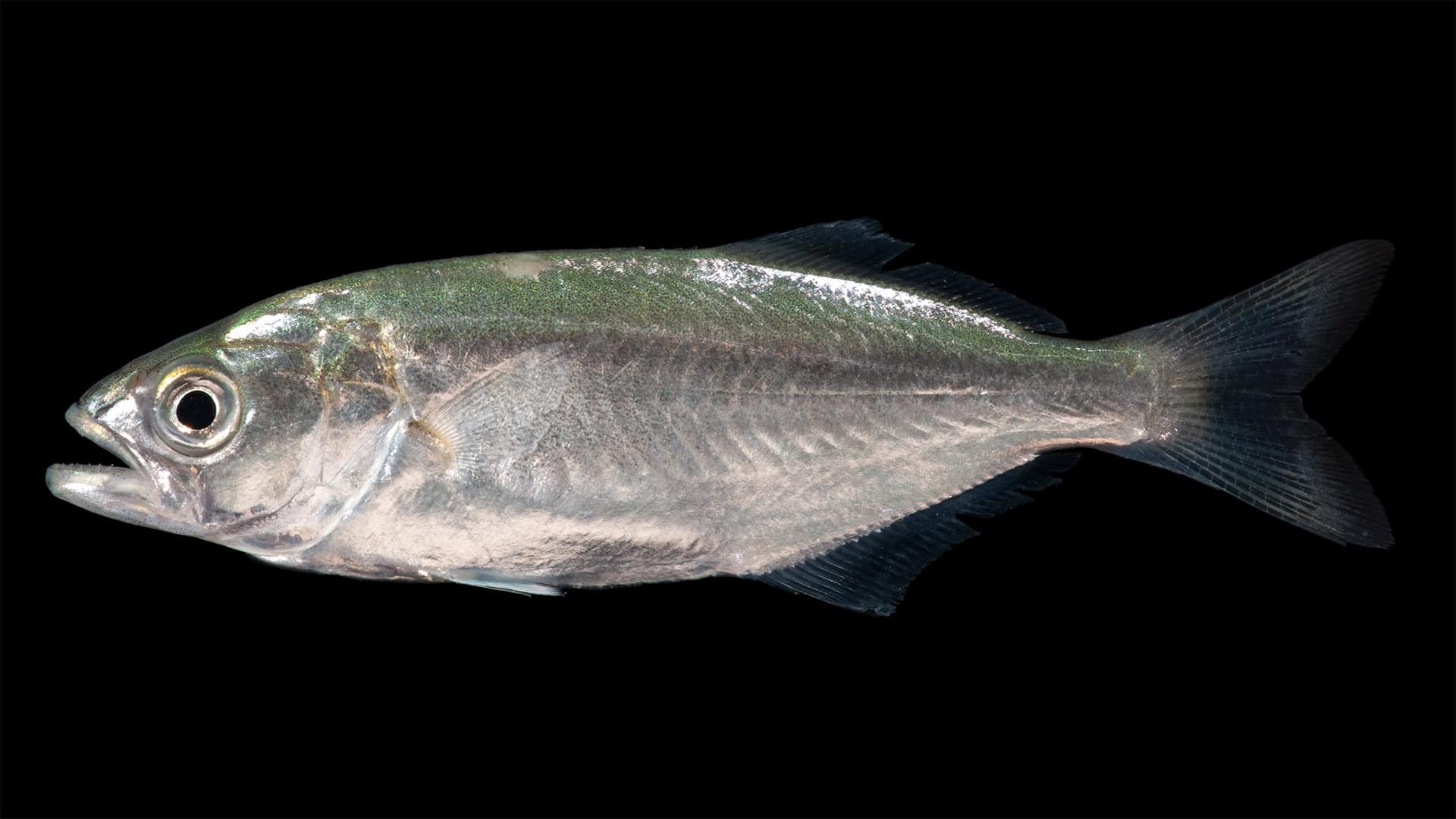
Bluefish (Pomatomus saltatrix), Rhode River, Maryland. Smithsonian Environmental Research Center / Robert Aguilar, CC BY 2.0.
The surface blitz gets all the photos. The teeth are what you should be thinking about once the fish is in your hands. Pomatomus saltatrix is a fast-growing schooling predator with a jaw full of sharp, compressed teeth, and it follows warming water north through spring and summer before sliding back south in fall and winter. The churned-up water and diving birds are real feeding evidence, and the hand injury waiting for anybody who gets casual with the unhooking is just as real.
At a glance · The short version
Scientific name
Pomatomus saltatrix
Best ID clue
Blue-green back, silver sides, strongly forked tail and a prominent jaw armed with sharp compressed teeth.
Migration
North in spring/summer with warming water; south in autumn/winter toward the South Atlantic Bight.
Life history
Live to about 12 years; reproduce by age 2 at roughly 15–20 in.
The mouth changes the whole handling plan
Identification & Safety
Teeth
NOAA describes sharp, compressed teeth in a prominent jaw. They are not decorative. The fish can shear prey, damage leaders and turn a careless unhooking job into a hand injury.
Bluefish are blue-green dorsally and silver on the sides/belly, with a forked tail and a body built for sustained movement. Small fish are often called snappers and large fish choppers, but those are size-class nicknames, not separate species.
Keep fingers away from the mouth even after the fish appears tired. Long pliers, a controlled head, and a plan for loose treble hooks matter more than trying to prove the fish is “not that big.” A thrashing bluefish and an exposed treble create two hazards at once.
A school moves with the water and the bait
Range & Seasonal Movement
U.S. Atlantic range
NOAA manages the U.S. Atlantic stock from Maine to Florida. The species is much more broadly distributed globally, but everything on this page is about the Atlantic fish.
As coastal water warms, bluefish move north through spring and summer. In autumn and winter the pattern reverses, with fish moving south toward the South Atlantic Bight. A beach can therefore “lose” bluefish because the fish and forage moved, not because the exact casting spot failed.
NOAA notes that bluefish gather by size in schools that can occupy enormous areas. That matters because a school of small snappers and a school of large choppers can be solving the same migration problem with very different tackle and handling consequences.
Eggs and larvae develop in ocean/shelf water; juveniles eventually move into estuarine and nearshore shelf habitat. That life-stage shift makes estuaries part of the bluefish system even though the iconic adult image is a surf blitz.
The blitz is one feeding mode, not the whole species
Diet & Feeding
Prey
NOAA lists fish and squid, with menhaden and smaller schooling fish such as silversides among important prey. The shearing jaws let bluefish take relatively large pieces of prey rather than being limited to swallowing whole forage of one narrow size.
NOAA explicitly describes the “bluefish blitz”: large schools attacking bait near the surface hard enough to churn the water. Birds, fleeing bait and white surface disturbance are therefore real feeding evidence, not just fishing folklore.
A blitz is conspicuous, but bluefish also feed below the surface and schools move vertically. The absence of birds or foam removes a useful clue; it does not prove the water is empty.
Fast growth and repeated spawning
Age & Reproduction
Maturity
NOAA reports bluefish reproducing by about age two, at roughly 15–20 inches. That early maturity and rapid growth are very different from the slow-replacement life histories of many sharks or rockfish.
Bluefish spawn multiple times in spring and summer. Females can carry roughly 400,000 to two million eggs depending on size. Eggs are released offshore into the water column rather than guarded on bottom structure.
NOAA lists lifespan to about 12 years and growth to roughly 31 pounds and 39 inches. Maximum observations do not describe the average surf fish, but they matter when choosing tackle and handling tools for a school with mixed sizes.
How I would read a blitz without claiming I have fished one
Field Decisions
Evidence level. I have not fished the Atlantic coast. The blitz and migration are sourced. The decisions below are inference from schooling-predator behavior and from feeding frenzies I have seen on other water, clearly labeled as such.
Follow the moving evidenceinference
If birds and bait slide down the beach, the school probably did not “turn off” at the old spot. Move with the forage when access allows rather than casting harder at the water that was productive five minutes ago.
Test the edge claimworth testing
Anglers often advise casting to the outside of a blitz rather than directly into the most chaotic center. I have not tested that on bluefish, so this page will not state it as law. It is a sensible experiment: compare hook-up quality and fouling on the perimeter against the middle instead of inheriting the claim untested.
Leader is a tradeoffinference
Wire resists teeth but can reduce presentation subtlety; heavy fluorocarbon is less obvious but is not tooth-proof. The right leader depends on fish size, water clarity, lure and whether bite-offs are actually occurring. “Mono gets cut on the first fish” gets repeated a lot, and it’s too absolute.
Single hooks reduce handling complexityinference
Where a lure works acceptably with singles, fewer exposed hook points can make a thrashing toothy fish easier to control. That is a safety tradeoff, not a claim that singles always produce the same hookup rate as trebles.
Plan the unhooking before the school arrives
Handling & Food Quality
Long pliers
Use a tool that lets the hook come out without putting fingers inside the jaw. If a fish is deeply hooked and being released, minimize time spent digging around the teeth and gills; cutting the leader can be safer for both angler and fish than prolonged handling.
Control loose hooks
On sand or deck, control the fish before grabbing the lure. A free treble on a thrashing plug is at least as much an angler hazard as the teeth.
Table quality is handling-sensitive
Bluefish is strongly flavored and high in oil. Immediate bleeding and icing is the usual advice for a fish you are keeping, but whether you like it on the plate is a matter of taste rather than technique. The durable instruction is just to get it cold fast.
Not established here
What this profile will not claim
that straight mono is cut on the first fish every time
that the outside edge of every blitz fishes better than the center
that a surface blitz is required for a productive bluefish bite
that immediate bleeding makes bluefish universally desirable table fare
— · Sources
FEEDING ECOLOGY · STANDARDIZED
How this fish gets fed.
Primary prey
Schooling fishes dominate, with squid and crustaceans also important; larger bluefish can take relatively large fish prey.
Feeding mode / location
A fast schooling pursuit predator using beaches, inlets, current rips, bays and offshore bait concentrations. Feeding schools can drive prey to the surface, but they can also work below visible activity.
Diel / seasonal pattern
The profile does not establish one universal daily feeding clock. Seasonal migration, water temperature and bait concentration determine where bluefish are available more reliably than a fixed time of day.
Ontogenetic diet shift
Juveniles use smaller crustaceans and fishes; larger bluefish become increasingly piscivorous and take larger schooling prey.
Visible surface attacks are feeding events, not evidence that the school remains on top afterward.
Compiled 2026-09-11. Bag and size limits for bluefish differ between the federal water and each state, and they change — whichever agency manages the beach you are standing on has the current answer.
The blitz is still the reason I’d want to see this fishery in person. It just isn’t the whole fish. Plenty of the time the school is feeding down below the foam, or it’s already halfway to the next beach with the bait. If I ever get that Atlantic morning, the pliers go in the bag before the lure box does.
Saltwater & CoastalSurf, shoreline, nearshore, offshore, and deep-sea fishing — technique, gear, and safety content spanning the full range from the beach to blue water.103 articles
Species & BehaviorFish behavior, habitat, depth, forage relationships, and species-specific field decisions. Start with the Freshwater Fish Species field guide.159 articles
Cookie Consent
We use cookies to improve your experience on our site. By using our site, you consent to cookies.
Contains information related to marketing campaigns of the user. These are shared with Google AdWords / Google Ads when the Google Ads and Google Analytics accounts are linked together.
90 days
__utma
ID used to identify users and sessions
2 years after last activity
__utmt
Used to monitor number of Google Analytics server requests
10 minutes
__utmb
Used to distinguish new sessions and visits. This cookie is set when the GA.js javascript library is loaded and there is no existing __utmb cookie. The cookie is updated every time data is sent to the Google Analytics server.
30 minutes after last activity
__utmc
Used only with old Urchin versions of Google Analytics and not with GA.js. Was used to distinguish between new sessions and visits at the end of a session.
End of session (browser)
__utmz
Contains information about the traffic source or campaign that directed user to the website. The cookie is set when the GA.js javascript is loaded and updated when data is sent to the Google Anaytics server
6 months after last activity
__utmv
Contains custom information set by the web developer via the _setCustomVar method in Google Analytics. This cookie is updated every time new data is sent to the Google Analytics server.
2 years after last activity
__utmx
Used to determine whether a user is included in an A / B or Multivariate test.
18 months
_ga
ID used to identify users
2 years
_gali
Used by Google Analytics to determine which links on a page are being clicked
30 seconds
_ga_
ID used to identify users
2 years
_gid
ID used to identify users for 24 hours after last activity
24 hours
_gat
Used to monitor number of Google Analytics server requests when using Google Tag Manager
1 minute
Jetpack's built-in visitor analytics. It records page views, referring sites, search terms, and outbound link clicks, and also carries the shared visitor-tracking library used by Jetpack Instant Search and WooCommerce Analytics.