Barred Sand Bass Hang Above Reefs More Than the Name Lets On
Barred sand bass work reefs, wrecks, pipes and hard edges, not open sand, and the school can suspend well above that structure. Set up down-current, cast to the up-current edge, and stop the drop where the sonar says the fish are.
By HunterUpdated September 13, 2026Read 6 min
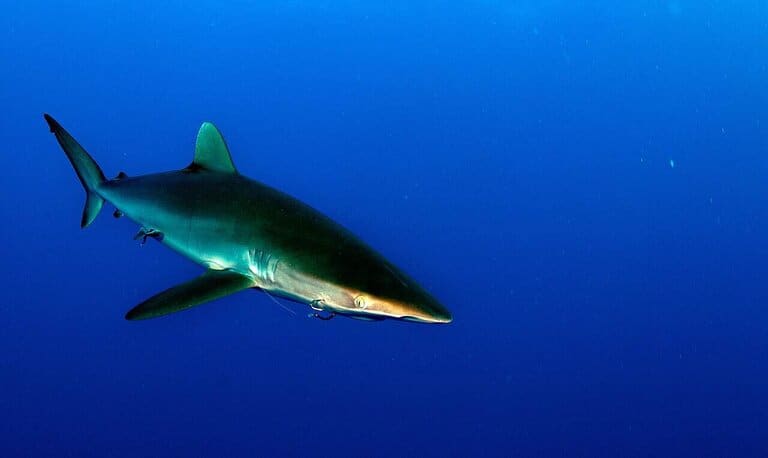
Image: over open sand, not reef
The name is doing damage. Call a fish a sand bass and you’ll go looking for featureless bottom, when Paralabrax nebulifer works reefs, wrecks, pipes and other hard edges, then may suspend well above them when bait or current pulls the school up. A name that sends you to the wrong water costs more than any lure choice ever will.
So “where’s the bottom?” isn’t the question that catches these. Where’s the structure, which way is current crossing it, and how far above it are the fish right now?
At a glance · Fish this first
First setup
Put the boat on the down-current side of a marked reef/wreck/hard-bottom piece. Cast a swimbait to the up-current edge and let it sink through the fish before retrieving with the current.
Fish on bottom
Let the bait touch bottom, slow-wind a few turns, then free-spool it back down. Keep repeating so the lure stays in the lower strike zone instead of climbing away.
Fish suspended
Lighten the jig head, count the bait down only to the marked depth, or keep live bait in the middle of the water column. Stop insisting on bottom when sonar says the school is 30 ft or more above it.
Useful lure size
4–5 in swimbaits on roughly 1/2–3/4 oz heads are a practical local starting range around moderate-depth structure; change head weight for current/depth, not because the calendar changed.
What to change first
No bite on bottom but marks are up: reduce weight/stop the drop early. Bites on descent: repeat the descent. Constant snags: adjust cast angle or retrieve height before abandoning the spot.
Structure first, current second
How to Set Up on a Spot
Find something the fish can orient to
Productive non-spawn Sand Bass water includes rocks, local reefs, wrecks, pipes and other hard-bottom structure. A sonar mark with a sharp bottom transition or bait held above it is more actionable than a broad patch of uniform sand.
A proven Southern California setup is to hold the boat on the down-current side of the structure. Fish commonly orient nose-first into current, so casting to the up-current edge lets the lure descend and swim toward them with the flow.
Do not sit directly over the best edge if you can cast it
Casting through the structure gives the bait a natural horizontal/vertical path and lets you cover the up-current face. Sitting directly over it can turn every presentation into a straight drop and increases snagging if the boat cannot hold position.
The fall is part of the retrieve
Swimbait Presentation
Cast to the up-current edge
Let the swimbait sink on controlled line all the way toward bottom. If active Sand Bass are suspended above the structure, the bite may happen before the lure ever reaches it. Watch for a line jump, sudden stop or sideways movement during the fall.
Slow-wind a few turns with current, then briefly free-spool the lure back to bottom. A continuous straight retrieve steadily lifts a lure away from structure, even when the reel handle is turning slowly. Re-dropping keeps the bait in the zone.
Experienced SoCal bass anglers commonly pair 4–5 inch swimbait trailers with roughly 1/2- or 3/4-oz heavy-duty jig/swimjig heads around structure. Use that as a moderate-depth starting point only. More current/depth may require more lead; suspended fish often need less.
Barred Sand Bass can mark far above structure. If the fish are 40 feet over a 100-foot reef, dropping a heavy swimbait to 100 feet and slowly winding the empty lower layer wastes most of the cast. Stop the bait at the mark or use a lighter head that spends more time in the suspended layer.
Live bait in the middle
A July 2026 Sand Bass primer specifically highlights keeping live bait in the middle of the water column as a key way to get bit. That’s a long way from bottom bouncing.
If a lure takes twenty seconds to reach bottom and fish are halfway down, start the retrieve around ten seconds on the next cast and watch whether bites move with that depth. The number is specific to your lure/current; the method is repeatable.
Live bait is not automatically a bottom rig
Live Bait Decisions
Let the bait swim through the marks
A lively sardine or anchovy can be flylined/weighted according to the depth of the school. If fish are suspended, use just enough weight—or none—to keep the bait in that layer. If they are tight to bottom, add enough lead to reach and hold the lower zone.
A weak bait circling under the boat gives poor information. Replace it before blaming leader diameter or hook color. The fish has to encounter a bait that behaves like prey at the depth where the school is holding.
What to change when a good mark will not bite
Failure Diagnosis
No bites; fish marked above bottom
Lighten the head, stop the drop at the mark, or fish live bait in the middle. Depth is the first correction.
Bites on the sink only
Build more sink phases into the presentation. Shorter retrieve, free-spool back, repeat. Do not wind continuously through the exact moment fish are telling you they want the bait.
Constantly snagging structure
Change boat/cast angle or use enough weight to maintain contact without dragging sideways through the roughest part. A snag every cast is a positioning problem before it is a lure problem.
Good structure, no marks
Save the waypoint and move. Structure can be seasonally excellent and empty today. Fishing architecture without fish is not a virtue.
Do not confuse aggregation with normal distribution
Barred Sand Bass can form dense seasonal spawning aggregations. A huge concentration over a flat does not mean the species normally abandons reef/hard-bottom structure. Keep spawning-fish abundance separate from the day-to-day structure fishery.
Identification after the fishing answer
Barred Sand Bass
Field marks
Gray-brown body with prominent dark vertical bars and a large bass-like mouth. Kelp Bass have a more checkerboard/blotched pattern; Spotted Sand Bass carry many small spots. Use pattern plus body shape, not one dark band distorted by stress or light.
A sand bass working a reef edge looks like a largemouth working a dock piling, and the comparison holds right up until the school stops sitting still — a bass claims one piece of cover, this fish rides current thirty feet above the structure it’s named for. Chase bottom on a suspended school and the extra split shot buys you the wrong third of the water column.
— · Sources
FEEDING ECOLOGY · STANDARDIZED
How this fish gets fed.
Primary prey
Fishes, squid, shrimp, crabs and other crustaceans are important prey, with the balance shifting by fish size and local forage.
Feeding mode / location
A structure-oriented predator using reefs, wrecks, pipes, rocks, hard-bottom edges, and the water immediately above them. Current can position fish nose-first into food delivery, making the up-current edge of structure especially relevant.
Diel / seasonal pattern
The profile does not establish one universal diel feeding window. Seasonal spawning aggregations can concentrate fish, while outside those periods depth, structure, current, and bait provide stronger feeding context.
Ontogenetic diet shift
Young fish use smaller crustaceans and small fishes; larger barred sand bass become increasingly capable of taking larger fishes and squid.
Spawning aggregation is not treated as an ordinary feeding station.
Compiled 2026-09-11. Limits and advisories are set per water and per state and change between seasons — the managing agency for wherever you are fishing has the current answer.
Saltwater & CoastalSurf, shoreline, nearshore, offshore, and deep-sea fishing — technique, gear, and safety content spanning the full range from the beach to blue water.103 articles
Species & BehaviorFish behavior, habitat, depth, forage relationships, and species-specific field decisions. Start with the Freshwater Fish Species field guide.159 articles
Cookie Consent
We use cookies to improve your experience on our site. By using our site, you consent to cookies.
Contains information related to marketing campaigns of the user. These are shared with Google AdWords / Google Ads when the Google Ads and Google Analytics accounts are linked together.
90 days
__utma
ID used to identify users and sessions
2 years after last activity
__utmt
Used to monitor number of Google Analytics server requests
10 minutes
__utmb
Used to distinguish new sessions and visits. This cookie is set when the GA.js javascript library is loaded and there is no existing __utmb cookie. The cookie is updated every time data is sent to the Google Analytics server.
30 minutes after last activity
__utmc
Used only with old Urchin versions of Google Analytics and not with GA.js. Was used to distinguish between new sessions and visits at the end of a session.
End of session (browser)
__utmz
Contains information about the traffic source or campaign that directed user to the website. The cookie is set when the GA.js javascript is loaded and updated when data is sent to the Google Anaytics server
6 months after last activity
__utmv
Contains custom information set by the web developer via the _setCustomVar method in Google Analytics. This cookie is updated every time new data is sent to the Google Analytics server.
2 years after last activity
__utmx
Used to determine whether a user is included in an A / B or Multivariate test.
18 months
_ga
ID used to identify users
2 years
_gali
Used by Google Analytics to determine which links on a page are being clicked
30 seconds
_ga_
ID used to identify users
2 years
_gid
ID used to identify users for 24 hours after last activity
24 hours
_gat
Used to monitor number of Google Analytics server requests when using Google Tag Manager
1 minute
Jetpack's built-in visitor analytics. It records page views, referring sites, search terms, and outbound link clicks, and also carries the shared visitor-tracking library used by Jetpack Instant Search and WooCommerce Analytics.