The tallest ledge on the screen is not automatically the best Scamp water. South Atlantic Fishery Management Council habitat guidance points toward low-profile live bottom as a preference, even though Scamp also gather around wrecks and rock outcrops. A crew searching only for cliffs can drive over the fish while admiring the sonar.
Scamp fishing is a subtle-relief search followed by a very unsubtle first turn. Find live bottom, isolate the edge or undercut, calculate where the rig will arrive, and settle the fight before anything eats. The species ID and release system belong in that plan, not after it.
Species: Scamp Grouper, Mycteroperca phenax. It is a western Atlantic serranid, a female-first sex changer, and one of the South Atlantic shallow-water groupers.
AT A GLANCE · SCAMP
Source: SAFMC Scamp
01 · IDENTIFICATION
Learn Scamp from the fins inward
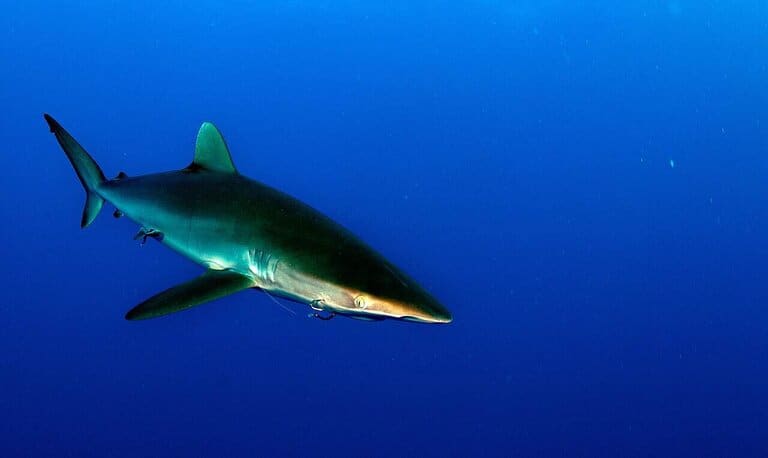
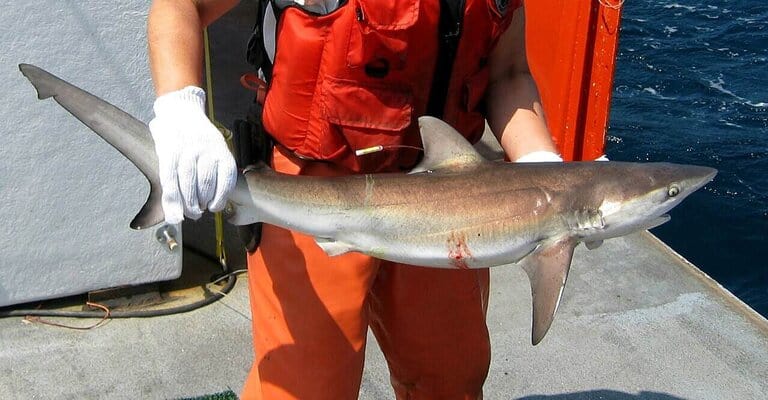
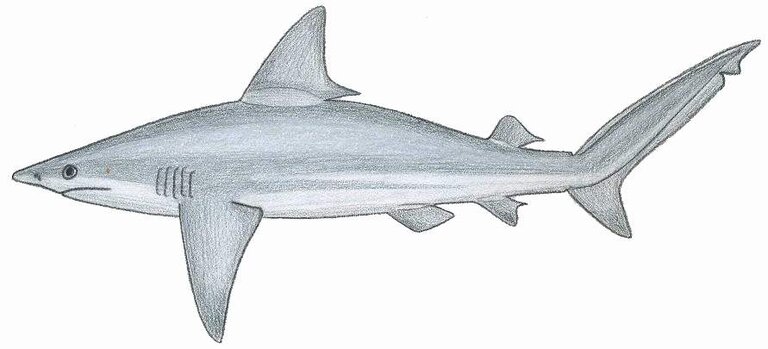
Scamp are relatively slender groupers with a tan to gray-brown body, sharply defined dark or reddish-brown spots, and a somewhat concave head profile. Spots can form rosettes, but pattern alone is not enough because color and contrast shift with depth, stress, and camera light.
Adults develop extensions on the soft dorsal and anal rays plus elongated upper and lower caudal rays. Those fin shapes are stronger evidence than a yellow wash at the mouth. Scamp can show yellow at the mouth corners; Yellowmouth Grouper carry stronger yellow inside and around the mouth and should be checked separately.
Photograph the entire side before cleaning: head profile, mouth interior, soft dorsal, anal fin, and tail. A close-up of one yellow corner removes the features most useful for settling the ID.
Source: Florida FWC Scamp profile
02 · THE LOOKALIKE TEST
Yellow does not get the last word
When Scamp and Yellowmouth overlap, use a sequence instead of a color guess. First examine body proportions and spot layout. Then check whether the adult caudal, anal, and soft dorsal rays are prolonged. Only then use the amount and location of yellow in and around the mouth as supporting evidence.
Juveniles may not carry the dramatic adult fin extensions, which is exactly when a single-field ID rule becomes weakest. If the combination remains uncertain, treat the fish according to the more restrictive applicable rule and release it properly.
An identification photo should be taken before the animal fades on ice. Include a ruler only when it does not delay release or mishandle the fish.
Source: FWC Yellowmouth Grouper comparison
03 · SEX CHANGE
A large fish may be filling a rarer role
Scamp are protogynous hermaphrodites: fish begin predominantly female and some transition to male as they grow older. That does not mean every large Scamp is male, or that every female changes at a fixed length. It means size structure and sex structure are connected.
SAFMC reports maturity around age three or above approximately 16 inches, with offshore spawning from April into May. Its account says Scamp may live up to 30 years and have been recorded at 21. Those ages put a large fish on a much longer timeline than the few minutes it takes to catch one.
The practical lesson is restraint without invented biology. Follow the current season and size rule, keep only fish that will be used, and avoid turning an aggregation into a limit-filling race.
Source: SAFMC Scamp biology and regulations
04 · BOTTOM CHARACTER
The best relief may be the relief most screens flatten
Scamp use ledges, reefs, rocky bottom, wrecks, and live-bottom communities. SAFMC specifically describes a preference for low-profile live bottom between roughly 75 and 300 feet, often with sponge and soft-coral growth. These habitats can look less dramatic than a tall wreck.
Turn sensitivity and bottom-lock settings toward separation between hard return and surrounding sediment. Run a slow survey in two directions. A one- or two-foot rise, isolated rock tongue, narrow undercut, or change in bottom hardness can create enough edge for a grouper.
Do not drag anchors or terminal gear across living bottom. The point of identifying subtle habitat is to fish it more precisely, not to scrape more of it.
05 · CURRENT
Find the side where food arrives and the fish can leave
Current converts relief into an ambush station. Test the upstream lip, the side edge where flow shears, and the down-current pocket. A Scamp can hold close enough to structure to avoid crossing open bottom, while prey is delivered through a narrow lane.
Surface current is only part of the problem. The boat may drift one direction while deeper flow pushes the rig another. Watch line angle during a test drop clear of the snag. Use descent time and metered line to estimate where the bait reaches fishing depth.
If the line scopes too far to control the edge, reposition, reduce rig drag, add only the necessary weight, or wait for another condition. A heavier uncontrolled snag is not a better presentation.
06 · BAIT
Survive the trip to the ledge
Scamp eat fish, crabs, shrimp, and other reef-associated prey. Live or dead legal bait can work, but shape and security decide whether it arrives intact. Rig a fish or strip so it tracks, exposes the point, and does not helicopter around the leader.
A long descent can wash a soft bait pale, pull it down the hook, or let smaller fish remove it above the target. Inspect what comes back. Bare hook, stretched strip, twisted leader, and intact untouched bait each diagnose a different failure.
Match hook size to bait and mouth rather than to the hope of a trophy. In South Atlantic federal water, natural-bait hook material and circle-hook rules change with latitude; verify them before tying the rig.
07 · JIGS
Compact movement beside the edge
Metal jigs and heavy soft plastics can reach Scamp without a branch rig. Stop the lure beside the relief, not inside it. Short controlled lifts preserve the working depth and keep the lure from sailing far above a fish that expects prey near cover.
Maintain contact through the fall. A sudden stop, accelerated drop, or sideways tick can be the bite. Free-spooling until the jig hits rock adds snag time and hides strikes in slack.
If the lure cannot be held in the sonar-marked zone, change its profile or weight, rebuild the drift, or leave. Color is not the cure for missing the ledge by thirty yards.
08 · FIRST TURN
The fight is decided before the hook is eaten
Set drag against the weakest real component: knot, leader, hook, rod angle, and abrasion. A Scamp’s first move toward shelter is the expensive one. Once the rod loads, gain line smoothly and direct the fish away from the nearest lip.
With a circle hook, wind into steady pressure instead of striking on slack. Keep the rod below a high-stick angle and use the reel to recover line. A dramatic lift that bends the upper blank does not create more separation from the reef.
If the leader parts at the same depth on repeated bites, redesign the exit angle or presentation position. More leader strength cannot fix a line already sawing across rock.
09 · DRIFT DESIGN
The waypoint is where the boat was, not where the bait landed
Survey first, then build the start. Mark the ledge orientation, current direction, boat speed, and descent time. Begin up-current so the rig reaches depth on the clean approach, crosses the edge once, and leaves without dragging back through it.
Save the full GPS track of a productive pass. The bite waypoint alone can mislead because the terminal gear trails behind the vessel. On the next pass, duplicate the approach line and adjust only the start distance.
When wind and current oppose each other, the clean solution may be controlled positioning rather than a longer drift. Do not force a broad sweep across fragile live bottom because it is easier than resetting.
10 · THREE-DROP RULE
Do not solve absent fish with endless tackle changes
Make the first drop with a proven, simple presentation. Use the second to correct arrival position or height. Use the third to test another edge or lure type. If sonar remains empty and all three crosses are clean, move to the next piece.
This rule is not magic; it prevents a common error. Anglers often keep adding scent, hooks, color, and lead when the evidence says the structure is unoccupied or inactive.
A move of half a mile to another low-profile patch can be more useful than another hour on the famous wreck. Scamp habitat is a network, not a monument.
11 · RELEASE FROM DEPTH
A short fish still has to get home
Scamp commonly come from depths where pressure change matters. Minimize deck time, avoid gaffing any fish that may be released, support the body, and use a dehooking tool. If barotrauma prevents descent, return the fish with a purpose-built device.
South Atlantic federal rules require a descending device aboard vessels fishing for or possessing snapper-grouper species. The current SAFMC page specifies that it be readily available, attached to at least 16 ounces of weight and at least 60 feet of line. Florida state-water rules also require release equipment but differ in allowed tools.
Rig the device before the first drop. The barotrauma and descending-device guide explains why a weak surface swim is not completion and why the crew should practice the release without a fish.
Source: FWC Reef Fish Gear Rules
12 · CURRENT SOUTH ATLANTIC RULES
The open sign has dates behind it
The SAFMC page reviewed in September 2026 lists the recreational Scamp season open, following the shallow-water grouper closure from January 1 through April 30. It lists a 20-inch total-length minimum, one Scamp-or-Yellowmouth combined per person within the broader three-fish grouper-and-tilefish aggregate, and head-and-fins-intact landing requirements.
Those are South Atlantic federal rules, not coastwide permission. State waters, federal permits, protected areas, spawning special-management zones, and the route home can add restrictions. Commercial quota closures are separate from recreational status; do not read one tab as the other.
Because this is a live status, open the current council or NOAA page before departure. The article records the September 2026 check, not a permanent season.
Source: Live SAFMC Scamp regulations
13 · FAILURE BOARD
Make the next drop answer one question
- Great ledge, no marks: scan adjacent low-profile live bottom before changing every lure.
- Rig lands down-current of the edge: start earlier, shorten descent, or reduce drag.
- Bait returns spun: streamline and secure it; inspect the swivel.
- Strike ends in abrasion: change the exit angle and first-turn plan.
- Yellow-mouthed grouper is uncertain: photograph fins and tail, then release under the stricter assumption.
- Repeated shorts from depth: change depth or structure to reduce discard pressure.
- Predation repeats during ascent: leave the interception point rather than feeding another fish into it.
14 · SERRANID CONNECTIONS AND SOURCES
Same family, different map
Black Sea Bass share protogynous biology and a relationship with structure, but their Mid-Atlantic fishing map is built around seasonal movement among wrecks and reefs. Scamp require a deeper shelf map that includes low-profile live bottom and a heavier first-turn problem.
- South Atlantic Fishery Management Council: Scamp — identification, habitat, biology, current federal recreational rules, and release-device specifications.
- Florida FWC: Scamp — appearance, habitat, sex change, diet, and lookalike cues.
- Florida FWC: Yellowmouth Grouper — comparison species.
- Florida FWC Reef Fish Gear Rules — state and federal release-gear guidance.
Evidence and regulation review updated 2026-09-15. Verify live federal, state, vessel, and area rules before fishing.
Scamp water does not have to look impressive. The important relief is the one that holds a fish, gives the bait a clean approach, and leaves a path for the first turn. Find that geometry before the spool opens.