The break comes at the knot, on a decent fish, on line you’ve used for two summers without a single problem.
You’ll probably blame the knot. It’s a reasonable suspect. But the knot is the same knot you tied in July, and the thing that changed is that the material it’s tied in is now sitting at twenty degrees, wet, after being wound onto a spool in loops the diameter of a coffee cup.
Memory, and why the first drop is the worst one
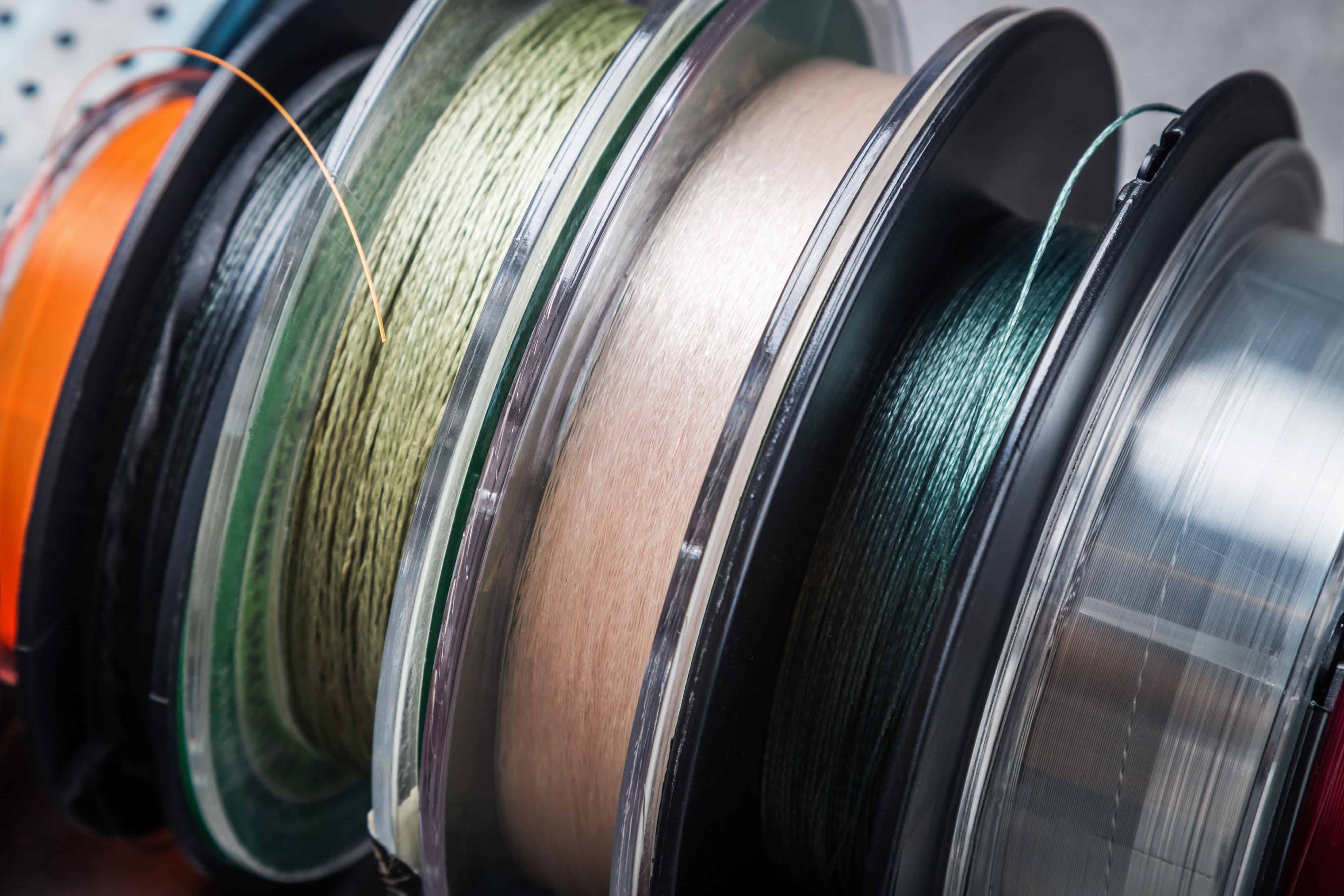
Monofilament holds the shape it was stored in, and cold makes it hold that shape harder.
You’ll see it immediately: the line comes off the spool in coils that stand up in the air and refuse to hang straight. On a tiny ice jig that matters more than it sounds. A coiled line won’t transmit a light bite or let a small jig fall naturally, and it puts a slow spiral into a presentation that depends on the bait looking like it isn’t attached to anything.
Some of that relaxes after a few drops with a weight on it. Most of it doesn’t, at least not until spring.
The fix is either line specifically built for cold — ice-specific monos exist and they’re genuinely limper at temperature, not a marketing story — or accepting that a fresh spool at the start of the season buys you a whole winter of better presentation for the price of a sandwich.
Fluorocarbon gets harder, in both senses
Fluorocarbon is stiffer than mono to begin with, and it doesn’t get friendlier when the temperature drops. It also has less stretch, which is usually sold as an advantage — better sensitivity, better hooksets.
In cold, on light line, with a fish that surges at the hole, low stretch is the reason your leader parts instead of giving. That’s the trade. The invisibility is real and worth having in clear water. The shock absorption is the thing you gave up for it, and on hard water you often want that back, because there’s no rod-and-reel system between you and a pike run when you’re hand-lining a tip-up.
Fluoro also abrades faster than people assume, and there’s plenty of abrasion available in a hole with an ice lip on it.
Braid picks up water, then becomes a wire
Braid is a woven material with space between the fibers. That space fills with water and the water freezes.
What you get is a line that stiffens, ices up in the guides, and starts building a crust on the rod tip within minutes. Every drop after that is fighting a frozen section. On a tip-up spool exposed to the wind, braid that’s soaked and frozen can turn into something that won’t feed at all, which means the flag goes up and the fish meets solid resistance immediately.
Dressings and treatments help a little, and keeping the rod inside a shelter helps more. What helps most is running mono or a cold-specific line on the ice rod and saving braid for open water, which is why a lot of people who fish braid exclusively in summer own one small spool of mono for exactly four months.
Where braid earns its place in winter is on tip-ups using dedicated dacron or coated tip-up line, which is a different material designed for hand-lining and doesn’t behave like your bass braid.
Knots are different at twenty degrees
Two things happen.
The material is stiffer, so wraps don’t seat as smoothly and a knot that looked fine can be sitting loose with a crossed turn inside it. And the lubrication trick everyone uses — wetting the knot before you pull it tight — becomes a problem when what you’re doing is putting water inside a knot in freezing air.
Practical version: pull knots down slowly and steadily, not in one hard snap. Look at the finished knot, and cut and retie anything that doesn’t sit clean. Retie more often than you would in summer, too, because the ice edge nicks the last few feet of line in ways you can’t see.
Run the tag end of your line between your fingers now and then. If it feels rough, the line is telling you something, and it isn’t going to say it twice. Tackle as a chain makes the general argument; cold water just speeds it up.
Pre-tying jigs onto leader sections at home, in a warm room, solves most of this and also solves the problem of not being able to use your hands by mid-afternoon.
Line diameter is doing more than you think
On small jigs, the diameter of the line affects the fall.
A light tungsten jig on four-pound line drops with a different rate and a different action than the same jig on eight, and in cold water where fish are looking things over rather than reacting, that difference gets noticed. Going lighter is frequently the change that turns refusals into bites — often more reliably than switching colors.
It’s also the change that costs you fish at the hole. Light line and a big fish in a small hole is an honest tension and there isn’t a trick that removes it. What you can do is set the drag soft, fight with your hands rather than the rod, and accept that the occasional loss is the price of the bites you wouldn’t otherwise have gotten.
Fresh line, before the first cold morning
Respool before the season, not during it.
Old line that’s been sitting on a reel in a garage through a summer of heat cycles is already partway through its useful life, and the cold is going to find whatever’s left. Fresh line is one of the cheapest upgrades in the sport and the only one where the improvement is guaranteed.
Do it somewhere warm with the spools sitting in the room long enough to reach room temperature. Then leave the reel alone until you’re on the ice.
The first fish of the winter isn’t the place to find out what your line thinks about February.
FIELD OBJECT
This one should leave the page.
The article is the long version. These are the pieces worth carrying into the next trip.
The 30-second version
The line that behaved all summer doesn't behave the same way in February. Mono holds its coils, and braid soaks up water and freezes stiff in the guides.
What to watch
- Memory, and why the first drop is the worst one
- Fluorocarbon gets harder, in both senses
- Braid picks up water, then becomes a wire
- Knots are different at twenty degrees
Field card
- Memory, and why the first drop is the worst one
- Fluorocarbon gets harder, in both senses
- Braid picks up water, then becomes a wire
- Knots are different at twenty degrees
- Line diameter is doing more than you think
RIGHT TOOL, NEXT
Tackle Link Analyst
Follow the load path and find the part of the setup that actually limits the rest.