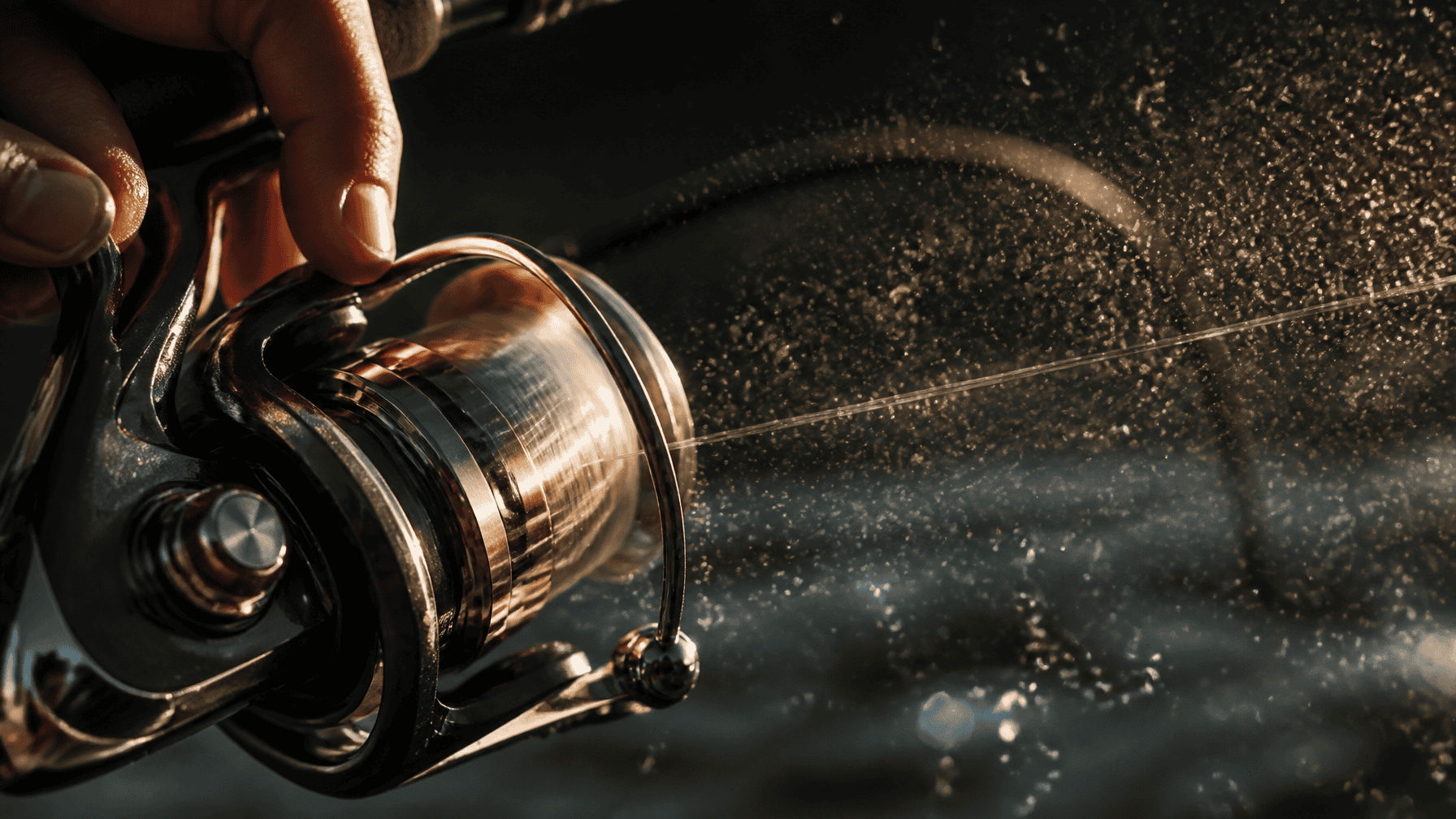
The spool’s singing, the fish is headed somewhere, and every instinct says crank. I’ve done it. It gains exactly nothing. The drag is already doing its job — giving up line before the knot, the hook or the rod turns into the thing that breaks — and the handle just argues with it while the spool keeps paying out anyway.
It took me a while to understand why it’s worse than useless. On a spinning reel the handle doesn’t turn the spool. It turns the rotor, and the rotor swings the bail around a spool that’s slipping backward at that moment. So every crank lays a wrap onto a spool going the other way, and each of those wraps puts a half-twist in the line that’s still there after the fight. That’s where a whole afternoon of wind knots comes from. Not the wind, and not the line — ninety seconds of panic-cranking during one good run. Mono and fluorocarbon show it worst because they hang onto the twist. Braid hides it until it starts jumping off the spool in loops.
So keep the rod loaded at a controlled angle and let the drag release line smoothly. Your hand’s going to want that handle anyway, especially the first few times something big really takes off, so give it the rod grip instead and it’ll quit making decisions on its own. Then watch for the run to end: the rod stops getting pulled down, the spool goes quiet, the line stops ripping out. That’s the cue. Not the fish stopping, which isn’t the same thing. The drag stopping.
Once it does, pump the line back. Lift the rod slowly from low to about forty-five degrees, then drop the tip and reel on the way down, gaining line on a spool that isn’t slipping. If the spool starts slipping again mid-lift, stop and go back to holding. The rule is simple enough to follow with adrenaline running: the handle only turns while the spool doesn’t.
There’s exactly one exception, and it matters. If the fish turns and swims at you, the line goes slack, the hook unloads, and it falls out. Now you reel as fast as you can — not to gain ground, but to get tight again. Slack line loses more fish than heavy drag ever will.
The rest of the fight has its own notes: what your job turns into when a fish runs, and why side pressure usually beats high-sticking. If the twist already got in, line twist starts before the first wind knot covers the other ways it gets there.
The other thing a nervous hand likes to do mid-run is reach up and tighten the drag so the fight ends sooner. I don’t. Cranking down a drag under load is guessing at a number while everything’s already at its limit, and the first thing to give is usually the knot.
FIELD OBJECT
This one should leave the page.
The article is the long version. These are the pieces worth carrying into the next trip.
The 30-second version
When the spool's giving line, cranking the handle gains you nothing but twist. Let the drag handle the run, then get your line back once it quits.
RIGHT TOOL, NEXT
Tackle Link Analyst
Follow the load path and find the part of the setup that actually limits the rest.