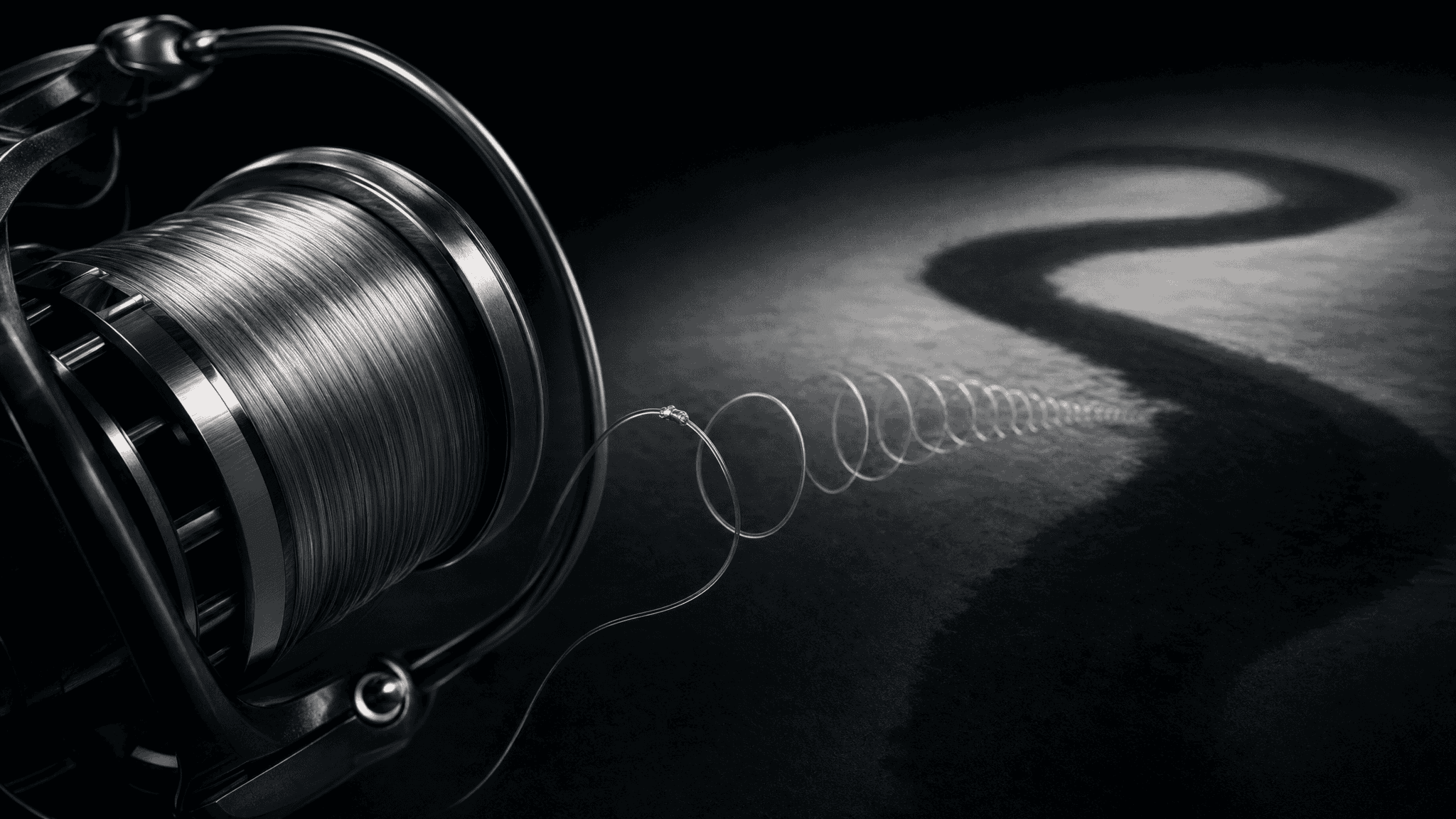
Drop the rod tip, pull four or five feet of slack off the reel, and watch what it does. Line with no twist just hangs there. Line with twist corkscrews, folds back on itself, or starts throwing little loops in the air all on its own.
That check takes ten seconds, and on a spinning reel it’s worth doing about once an hour, because twist builds quietly — a slight kink creeping up the line every few casts, easy to miss unless you’re looking for it. By the time an actual wind knot shows up, it’s been loading for a while. Caught early, it’s a nuisance. Caught late, it’s a nest.
Where it gets in
Some of it’s just the reel. A spinning reel lays line onto a spool that doesn’t turn, so every coil that peels off on the cast adds a twist and every coil wound back on takes one out. Left alone, that mostly cancels. Two things tip the balance.
The worst is cranking while the drag’s slipping. The rotor keeps swinging around a spool that’s giving up line, so every turn of the handle banks twist that never comes back out. It happens during the ninety seconds of a fight when nobody’s thinking about line, and it’s the fastest way I know to ruin a spool of mono. Reeling while the fish is taking drag gets its own note.
The other is a lure that spins on the way back: a spoon fished too fast, a soft plastic threaded crooked, a bent blade. It’s winding twist in for the whole retrieve, and a swivel can’t fix a lure that keeps spinning — the lure is the thing to straighten out.
What I do at setup, before any of that
Line goes on under real tension, with a rag pinched around it while it winds and the filler spool label facing up so it comes off the same way it’s going on. I don’t overfill. And a new lure swims right beside me a few times before I trust it on a long cast.
Getting twist back out
Cut the lure off first. Untwisting only works because the free end can spin. Then let fifty to a hundred feet of bare line trail behind a moving boat, drift it downstream in current, or just walk it out across a field. Give it a minute or two and reel it back under tension. If kinks are still sitting in it after that, the line’s cooked, and line doesn’t have to break before it’s done.
Braid plays by slightly different rules. It still twists, but it’s so limp it never corkscrews to warn you. It just stores the twist until a loop jumps the spool mid-cast and locks up. If you run braid on a spinning reel, do the slack check more often, not less.