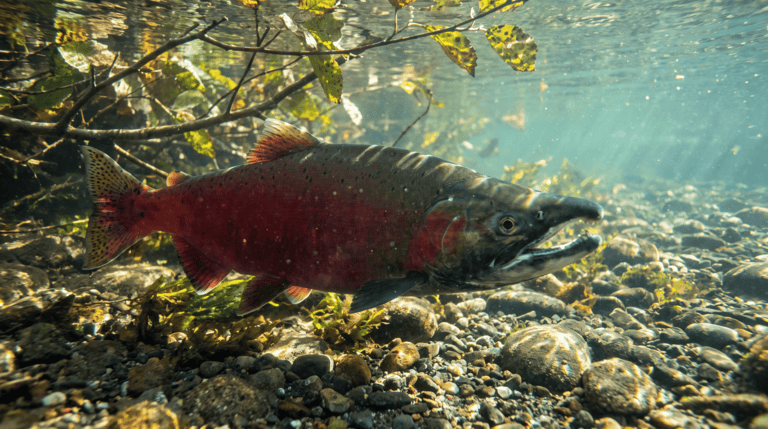
Fish ID apps are genuinely useful. Feed one a clear photo and it compares body shape, fin placement, markings and mouth position, a few of which you might not think to check on your own. The trouble starts when a confidence percentage gets to make a legal decision for you.
Where it gets shaky
An app is confident in the middle of its training data and shaky at the edges, and the edges are exactly where the legal questions live.
Young fish of a lot of species look more like each other than like the adults in the reference photos. Hybrids are common in stocked water, and by definition they don’t match either parent cleanly. A chewed fin, a healed scar, spawning color, or a fish that’s gone pale out of the water wipes out the markings the model learned on. And a photo with the wrong angle, flash glare or water on the lens can simply miss the one feature that separates the two candidates.
The big one, though, is look-alikes that share the same water. Largemouth and spotted bass. Black and white crappie. Channel and blue catfish. Pike, pickerel and muskellunge. Those are the pairs where an ID actually changes a limit, and they’re the pairs a photo is most likely to leave ambiguous. The app has no idea which of its guesses comes with a ticket.
Photograph the feature, not the fish
This is what made the app actually work for me. For most confusable pairs the answer lives in one spot — where the jaw ends relative to the eye, how many spines are in the dorsal, a forked tail versus a rounded one, the shape of the anal fin. Once you know which feature the question turns on, shoot that, square on and in focus, instead of another hero shot and a hopeful look at the screen. Knowing which photo actually preserves the evidence makes the app better before you ever open it, and the identification key walks the same features without needing a signal bar.
When the ID decides something
If an ID is going to decide whether a fish gets kept, gets reported, or might be protected, it goes in order. The app offers a candidate. The managing agency’s own key or publication confirms it — checking the actual regs comes after the app, not instead of it. And if you still can’t settle it, the fish goes back.
Letting an uncertain one go costs you a fish. Keeping a protected one costs a lot more than that, and the fish pays the biggest share.