Nobody books a long-range trip because they’re fired up about drinking water on a schedule. You book it for the fish. But motion sickness, sun, lost sleep and plain tiredness can take a multi-day trip apart before the fish get much of a say, and the decisions that head most of that off get made before the boat leaves the dock.
Seasickness doesn’t wait for you to feel it
Motion sickness medication generally works a lot better taken well before symptoms start. Waiting until you already feel queasy is the common mistake, and it’s an avoidable one.
People respond differently to different remedies, so try yours on a shorter trip before you trust it on a multi-day run. That’s the kind of thing I’d want figured out on a day trip, not discovered three days from the dock.
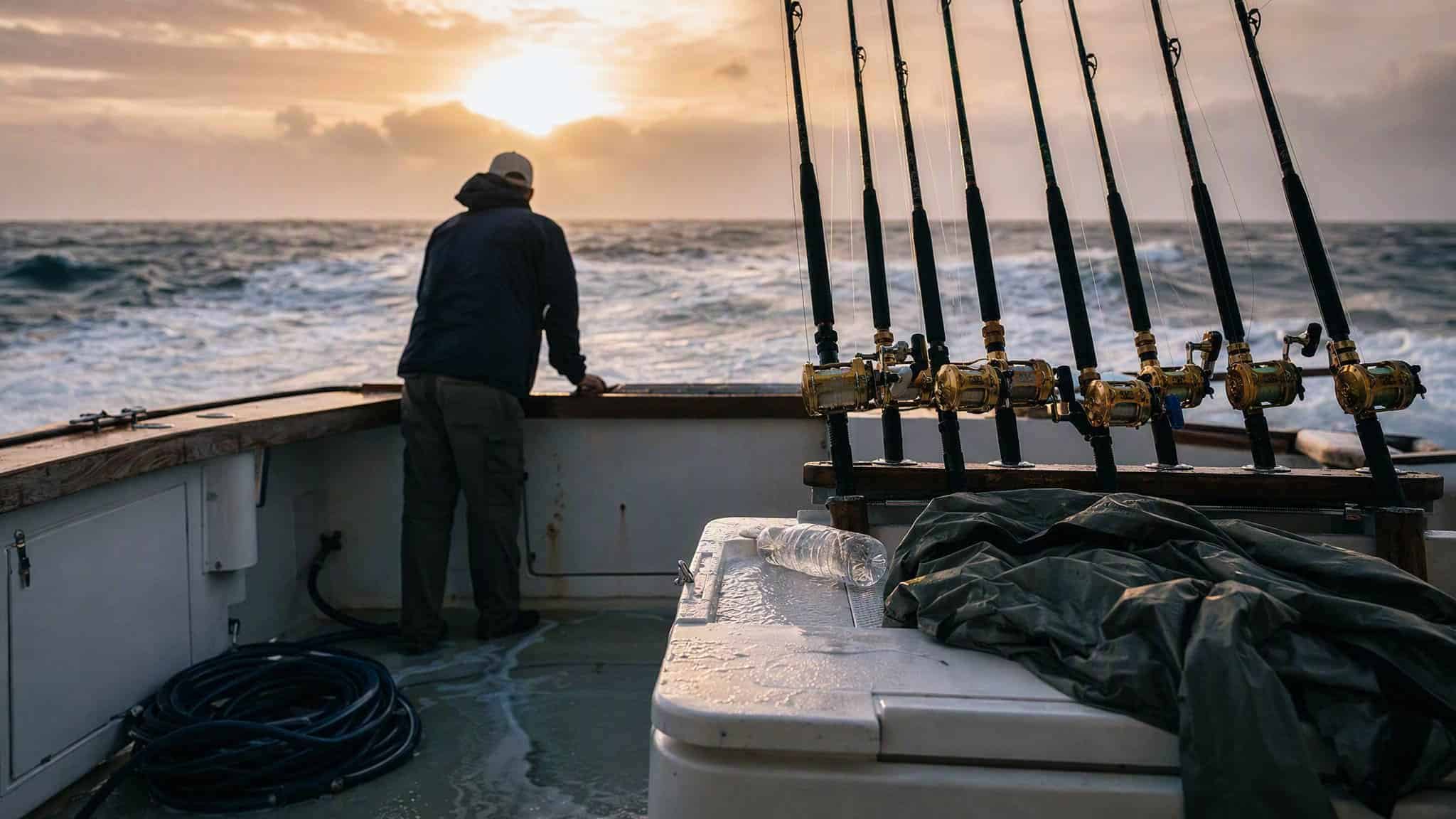
Staying on deck in the fresh air with your eyes on the horizon generally helps more than going below. Down there you’ve lost your visual reference, so the motion feels more disorienting — which is annoying, because the bunk is right there calling your name.
And if what you’re really dreading is being the one at the rail on the first morning, that’s a normal thing to worry about and a more fixable one than it feels like. A lot of what helps comes down to when you take the medication and where you stand.
Drinking enough
Dehydration sneaks up faster offshore than on shore. Sun, wind and the work of fighting a fish all pull water out of you, and it’s easy to under-drink on a boat where the bathroom is a lot less convenient than it is at home.
The advice I keep hearing is to drink on a schedule instead of waiting until you’re thirsty. That matters more offshore than in most other fishing, since by the time thirst shows up you’re already well behind.
The sun doesn’t reset overnight
Sun reflecting off open water is more intense than the same exposure on land, and over a multi-day trip it adds up instead of starting fresh each morning.
Reapply sunscreen more often than feels necessary, and cover skin with real clothing instead of asking sunscreen to do the whole job. Both matter more the longer the trip runs.
Most of the sleep you lose, you give away
A good bite will eat your sleep, and so will a bunk you’re not used to. Hour to hour it never feels like a big deal. By day two or three it’s added up to real fatigue.
The part that surprised me reading about these trips is that grabbing actual sleep during the slow stretches gets treated as a performance decision, not a comfort one. I’d have assumed more time on deck was always the right call. It stops being the right call once tired starts leaking into everything else you do.
The fight is the workout
An extended fight with a large pelagic fish uses muscles and stamina most of us never train for — legs, core and back as much as arms. That lines up with what I’ve felt on much shorter fights closer to home, just scaled past anything I’ve tested myself.
Fatigue from an early fight can affect your technique and your safety on a later one. That’s the case for pacing yourself across a multi-day trip instead of treating every fish like the last one you’ll ever hook. The fish on day four doesn’t care how hard you went on day one.
Know your own limits
I haven’t done a multi-day long-range trip myself, so this is where I’d rather point at good sources than pretend I’ve lived it. People’s responses to motion sickness, sun and fatigue vary a lot. Talk to a medical professional before a long trip if you have relevant health concerns, and test any new medication or remedy before you’re relying on it for a multi-day run.
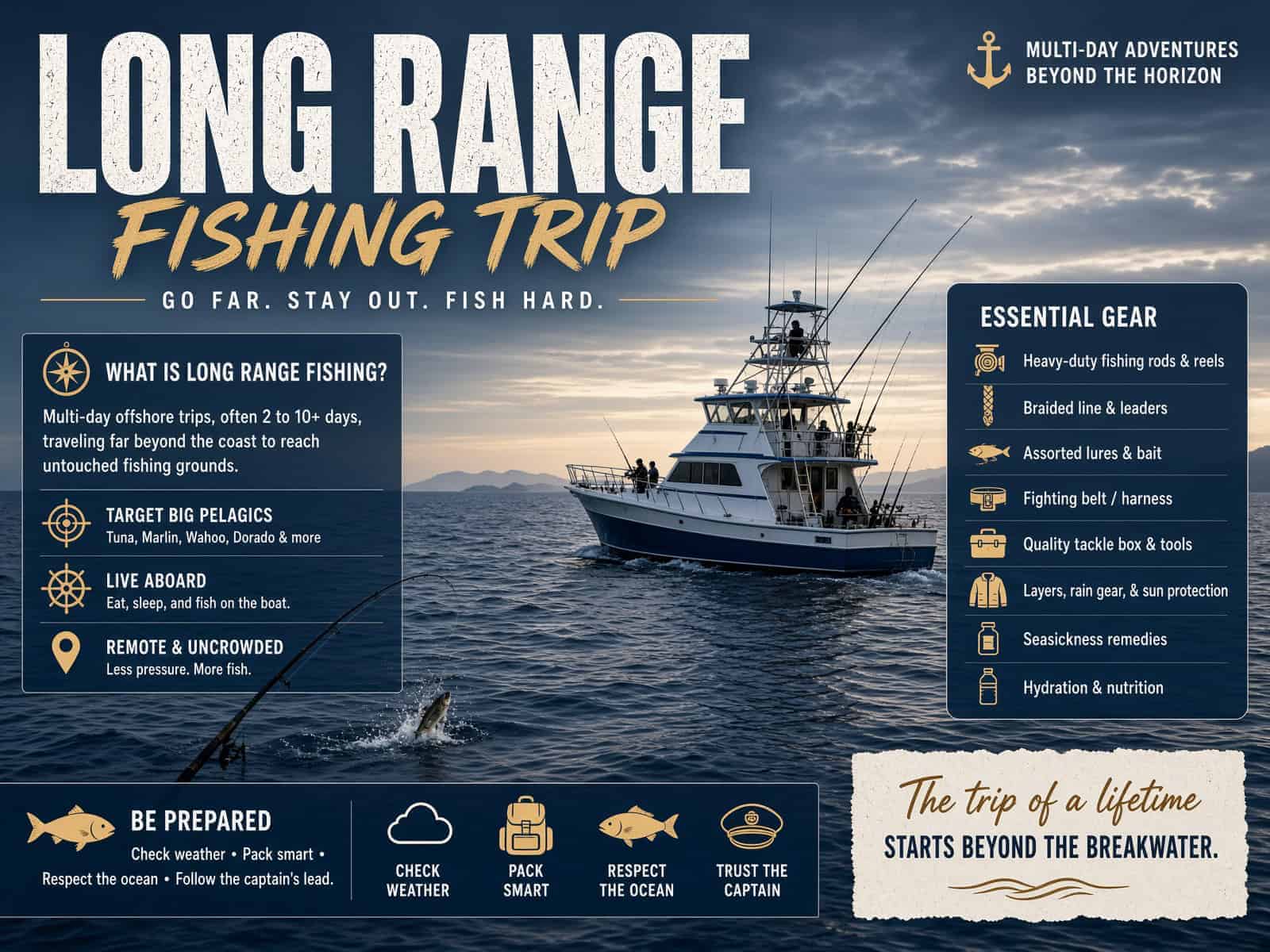
It’s still a fishing plan. It’s just one where sleep, weather, a moving deck and the ride home all get a bigger vote than they ever do at a pond. The offshore side of that decision lives under saltwater and coastal fishing, with the physical cost left attached where it belongs.