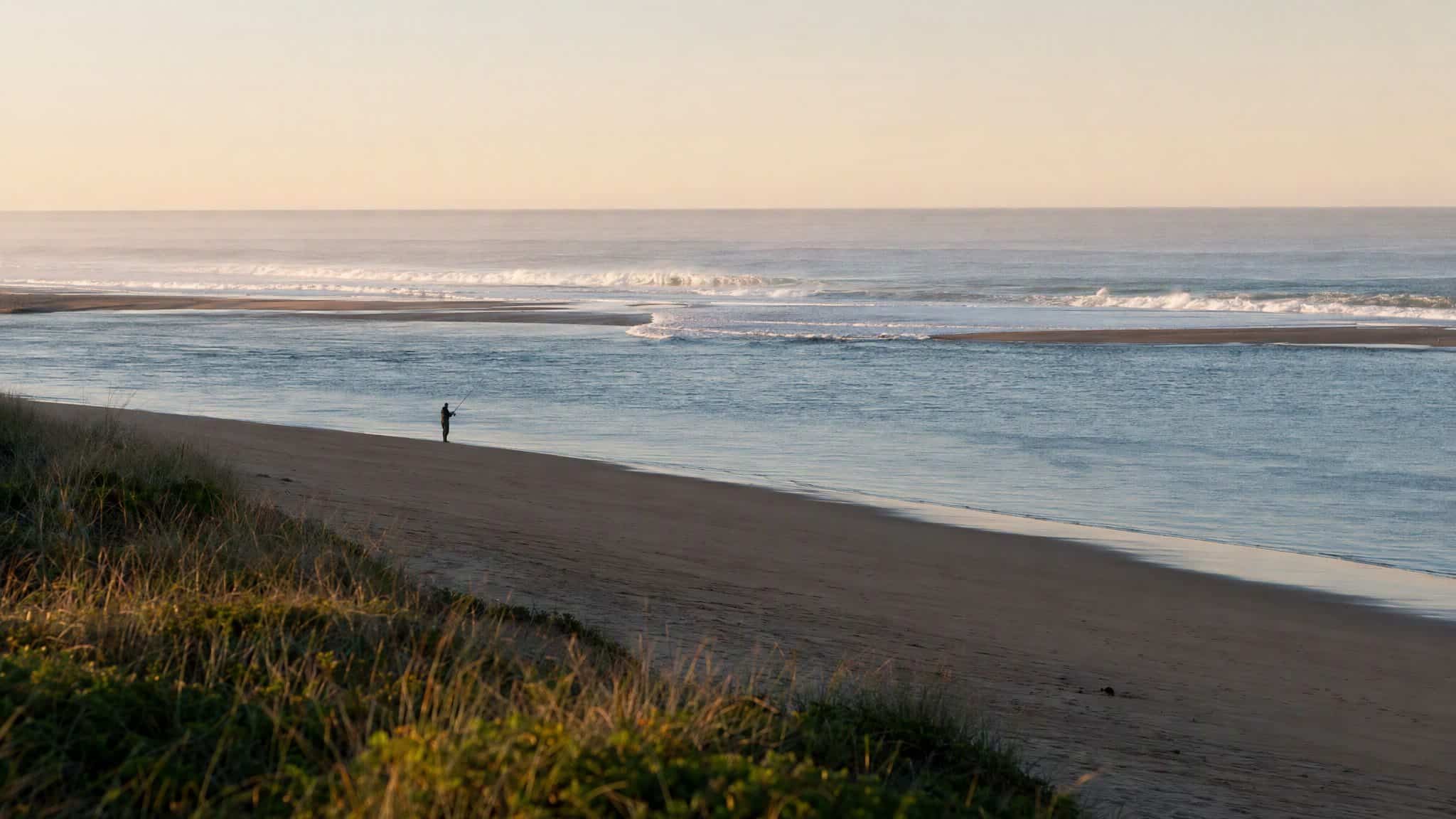
The natural move on a surf beach is to walk straight to the wet sand and throw as far as the rod allows. A lot of the time that cast flies right over the water worth fishing. A surf beach isn’t one even strip of sand under the waves — it’s sandbars, troughs and cuts that shift over time, and most of them don’t show up if you only glance at the beach on the way down.
FIELD PLATE · SURF
On a beach these same four lines show up as bar, trough and cut.
The trough is the first thing to find
Between the beach and the first sandbar, wave action usually carves out a trough, a channel of slightly deeper water running roughly parallel to shore. The same waves knock sand fleas, worms and other small prey loose, and the trough collects them. It can be productive water on a pretty ordinary beach, and it’s often a lot closer to your feet than people expect. Casting past the first bar on autopilot can skip it entirely.
If your cast doesn’t go very far yet, the surf is one place where that costs you less than it feels like. The trough is often well inside the distance you’ve already got.
Cuts are where the trough drains
A cut is a break in the sandbar. Water funnels out through it, from the trough back toward open ocean, especially on an outgoing tide. That squeezes the current together along with whatever food it’s carrying, and fish often stage in or near a cut to intercept what the outgoing water delivers. It’s the same ambush setup that makes a creek mouth, or a culvert dumping into a lake, worth checking.
From the beach, look for a break in the wave line, a spot where waves aren’t breaking as cleanly as they are over the bar on either side. That’s usually a cut showing itself on the surface.
Color changes reveal structure without you getting wet
A patch of water that looks slightly darker or greener than the surf around it often marks a deeper trough or cut. Lighter, sandier-looking water usually sits over a shallower bar. Polarized sunglasses cut the glare enough to read those differences from the beach, so you can pick out structure before the first cast instead of fishing blind and hoping. I do the same thing on a riverbank before my line ever touches the water.
This structure moves, sometimes overnight
Storms, a change in swell direction, even one significant tide cycle can meaningfully reshuffle bars and cuts. The trough that produced all last week may have filled in or moved by your next trip. I treat surf structure the way I treat a river after high water: current information to check every time out, not a map to memorize once and trust forever.
The waves snitch on the bottom
Waves breaking cleanly and consistently in a line usually mean a shallow, uniform bar. Where they break irregularly, or where a calm gap shows up in an otherwise steady break line, there’s often a cut or deeper channel running through. A few minutes of watching a stretch of beach before you cast will show you structure you couldn’t see otherwise. The hard part is standing still that long when the water’s right there.
Every beach is its own argument
Surf structure and how well it fishes vary by beach, region and season, so what worked on one stretch of coastline isn’t a rule for the next one. The specific beach on the specific day beats a general rule you carried in from somewhere else.
One thing not to be casual about: rip currents form in the same cuts that concentrate fish. Check the National Weather Service surf zone forecast before wading in (the marine forecast piece covers how to read one), and verify access and license rules with the state agency.
Surf structure is water-reading with sand under it. Saltwater & Coastal Fishing keeps that bar, cut, current, access and forecast problem connected to the rest of the shore zone.
FIELD OBJECT
This one should leave the page.
The article is the long version. These are the pieces worth carrying into the next trip.
The 30-second version
The best water on a surf beach is often the trough between your feet and the first sandbar, which is exactly the water a long cast flies over.
What to watch
- The trough is the first thing to find
- Cuts are where the trough drains
- Color changes reveal structure without you getting wet
- This structure moves, sometimes overnight
Field card
- The trough is the first thing to find
- Cuts are where the trough drains
- Color changes reveal structure without you getting wet
- This structure moves, sometimes overnight
- The waves snitch on the bottom
RIGHT TOOL, NEXT
Species & Presentation
Carry the species behavior and presentation question into a narrower water-to-fish-to-presentation handoff.