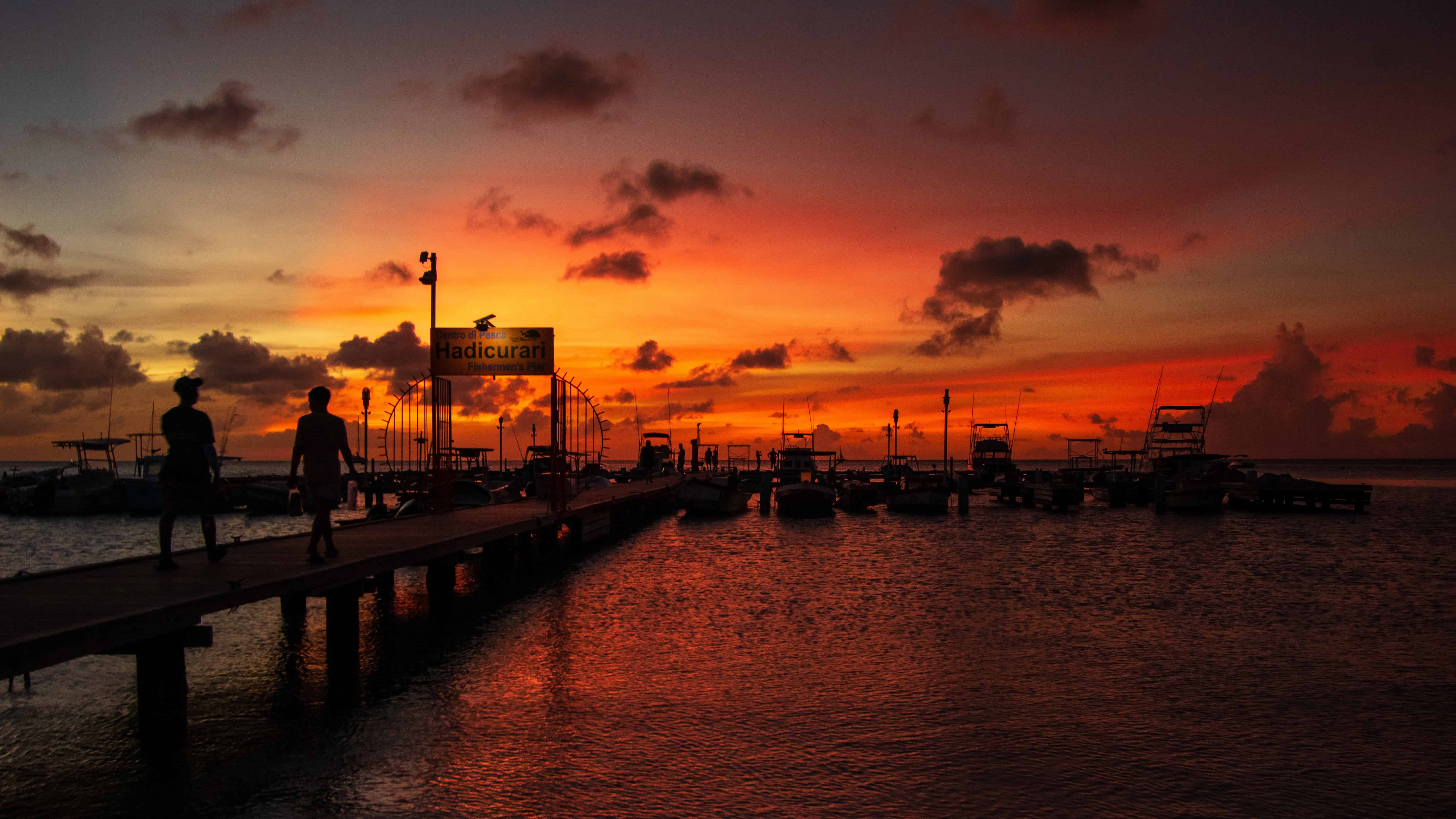
Walk onto a pier with bank-fishing habits and your arm wants to do what it always does: throw as far out as it can. That’s the mistake people describe most, and it sends the bait right past the part that matters. A pier puts you over deep water without a boat under you, so you’re fishing straight down through pilings and shadow lines instead of casting toward structure from the side. It’s a genuinely different game than working a jetty’s rock edges.
FIELD PLATE · PIER
A pier hands you the whole cross-section without making you cast for it.
The pilings under your feet
Barnacle and mussel growth on pier pilings draws baitfish and crustaceans in on its own. The pilings also create current breaks and shade lines, and fish hold tight against them — often much closer to the structure than a cast from the end of the pier would ever reach.
So the best structure on the whole pier might be the post you’re leaning on. Fishing straight down it beats casting outward into open water, and it’s easy to skip because it doesn’t feel ambitious enough.
Shadow lines matter more here than almost anywhere else
The edge between a pier’s shadow and open sunlit water is a real ambush line. Predatory fish hold in the shade, using the contrast to stay concealed while they watch for baitfish that stray into the lit water nearby.
Working a bait or lure right along that edge, not deep in the shade and not out in full light, is what actually targets that behavior. Missing it by a foot either way seems to matter more than it should.
The end of the pier is where the crowd is
Deeper water at the end draws people because it looks like the obvious choice. But current, structure and bait concentration run the whole length of the pier, not just the far end. Those stretches can hold just as many fish with a fraction of the pressure, which is a pattern I’ve noticed on plenty of other structure too.
Walk the length first. Watch where the current pushes, where the shade falls and where the pilings bunch up, and pick your spot from that instead of from where everybody’s rods are leaning on the rail.
Dropping straight down
A lot of pier fishing is working the water directly below and around pilings rather than open water at a distance. A bait or jig dropped and worked vertically along one specific piling presents far more precisely than a cast does, since a cast is hard to keep tight to structure from up on an elevated platform.
Height changes the landing problem
Fighting and landing a fish from a pier’s elevation is a different mechanical problem than doing it from a boat or the beach. You’re often ten feet or more above the water, and that distance changes everything about the end of the fight.
A proper pier net on a long rope or pulley system earns its keep here. Hand-lining a fish straight up that distance isn’t practical most of the time, and it’s rarely good for the fish either. It’s also how a lot of nice fish turn into a story about a nice fish.
The tide still moves even when you don’t
The same tide-stage logic that works everywhere else on the coast, from beaches to jetties, works on a pier. Outgoing water pulls bait past the pilings and incoming water pushes food toward them, so either stage can concentrate feeding around the structure. You’re standing in one spot, but the water around you is still running through the same tidal cycle as everything else.
Before your first pier
Pier access, rules and fishing regulations vary by specific pier and jurisdiction, so check current rules before fishing one that’s new to you, license and pier-fee requirements included.
Piers are on my list, not in my logbook. Everything above is shade and tide logic carried over from water I do know, plus how the structure is built, so use it as the first stuff to check rather than a promise. A pier is honestly one of the friendlier ways into saltwater anyway: no boat required, and the fish can be right under your shoes. When the whole ocean feels like too much, one piling and the shadow line beside it is a small enough problem to start on.
FIELD OBJECT
This one should leave the page.
The article is the long version. These are the pieces worth carrying into the next trip.
The 30-second version
Bank habits say cast far, but on a pier the fish are often tight to the pilings and shade lines under your feet, and the crowded end isn't automatically where they are.
What to watch
- The pilings under your feet
- Shadow lines matter more here than almost anywhere else
- The end of the pier is where the crowd is
- Dropping straight down
Field card
- The pilings under your feet
- Shadow lines matter more here than almost anywhere else
- The end of the pier is where the crowd is
- Dropping straight down
- Height changes the landing problem
RIGHT TOOL, NEXT
Species & Presentation
Carry the species behavior and presentation question into a narrower water-to-fish-to-presentation handoff.