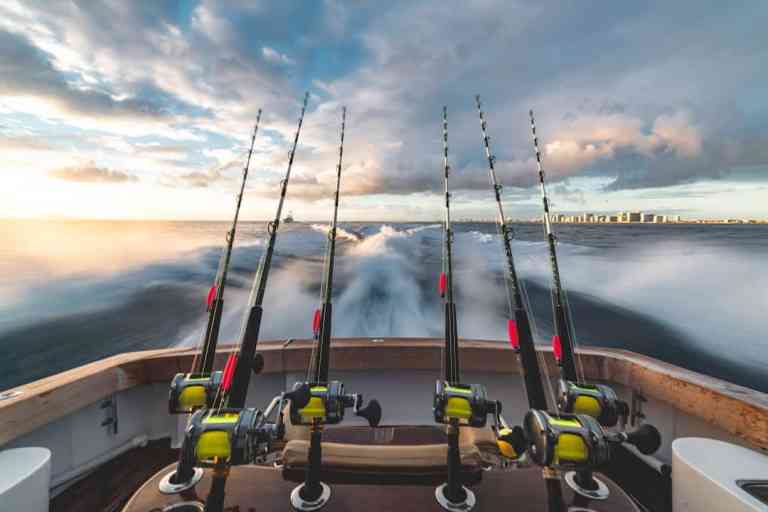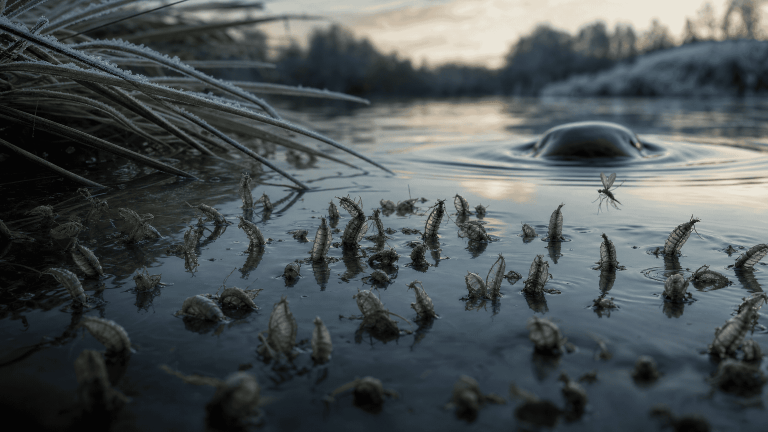
If I ever run a boat through a pass, the fishing is going to be the second thing on my mind. That trip hasn’t happened, so what’s here is built from current and safety guidance, not a story.
FIELD PLATE · THE FUNNEL
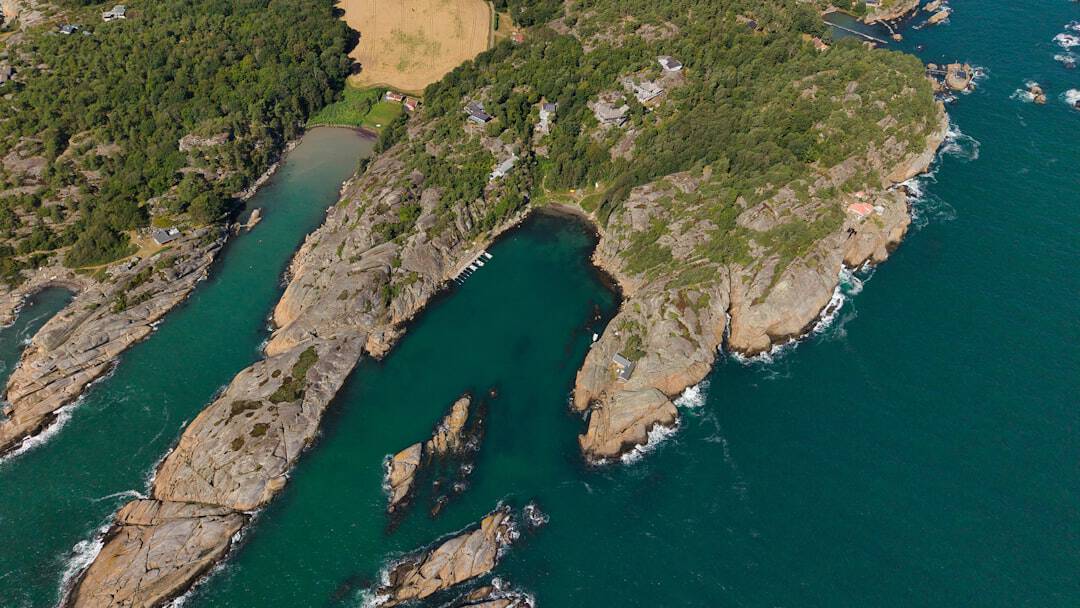
A pass is this picture crammed into a much smaller space.
An inlet or pass crams a lot into a small space: tidal flow, the bait riding it, structure, boat traffic, and waves running into current. That can make for really good fishing and seriously hazardous water at the same time. Neither half needs to get blown up into the best fishing on the coast or the scariest water on earth to be worth respecting.
Why passes fish
Every tide cycle, a big volume of water has to squeeze through a fairly narrow opening between the ocean and a bay, sound or estuary. That flow carries plankton, baitfish, shrimp and other prey that moves with the water, and it builds current seams where predators can sit and pick them off. So a pass can be really productive. It doesn’t automatically outfish a comparable stretch of open beach or bay on every tide, though.
The outgoing tide isn’t automatically the answer
On the outgoing, water drains out of the bay or estuary through the pass and can carry prey right toward the mouth, which sets up good seams and ambush spots. In other passes the incoming matters just as much, and that can shift with species, season and water conditions. I’d treat tide direction as something to test on that particular pass, not a ranking that holds up and down the coast.
Fish the edges before the middle
Current seams, eddies behind structure and the softer water along the edges of the main flow are good first checks, because a fish can hold right next to moving food there without fighting the strongest current all day. It’s the same deal as a trout parked beside the fast water instead of in it. Some species do feed right out in the fast middle of a pass, though, so don’t write the center off. Let the species, the tide and the local structure decide where you look.
Passes are genuinely dangerous water
This is the part I’d take most seriously, partly because I have no firsthand sense of how fast a pass can turn. When outgoing tidal current runs into incoming ocean swell, you can get standing waves, tide rips and dangerously confused water at the mouth, and a strong tide change on top of rough offshore conditions makes it worse. Small boat operators have reportedly been caught off guard by exactly that — a pass that looked manageable from a distance turned dangerous once they were actually in the current.
Check the tide timing and the marine forecast before you run a pass. That isn’t an extra step. It’s a safety requirement, and never having needed it yet isn’t a reason to treat it as optional.
Boat traffic adds a real complication
Passes are often the main route for boats moving between open water and protected bays, commercial and recreational both. Fishing right in a narrow channel with moving traffic takes a lot more attention than a quieter piece of water does, and that’s before the current gets a vote. If you’re newer to running a boat and a busy pass feels like too much at once, that’s a good read, not a nervous one. Fish the calmer structure off to the side until it doesn’t.
Jetties and rock piles
Jetties, rock piles and channel markers near a pass mouth stack hard structure on top of concentrated current, and that combination often produces some of the most consistent fishing in the whole area. The seam logic from the open part of the pass gets even stronger where the current runs into something solid. That’s the one piece of this I’d trust without hedging, because it’s the same idea behind the good holding water in every river I know well.
Local knowledge outranks mine
Pass conditions and hazard levels vary enormously by location, tide range and weather. Local knowledge and current marine forecasts matter more here than in almost any other saltwater fishing, and a lot more than my own read on it. Check the National Weather Service marine forecast and NOAA tide predictions for the specific pass before running it, and check any local no-wake, closure or fishing restrictions with the managing agency. Saltwater & Coastal Fishing keeps the funnel tied to tide, boat handling and access checks.
If the mouth looks ugly when you get there, the fish will still be in that pass on a calmer tide. That’s an easy trade to make.
Planning sources: NOAA Tides & Currents · National Weather Service Marine Forecasts. Pass behavior and hazards are local, so go by the controlling forecast, chart, tide and current prediction, and navigation rules for the specific inlet.
FIELD OBJECT
This one should leave the page.
The article is the long version. These are the pieces worth carrying into the next trip.
The 30-second version
Current squeezing through a pass builds the seams fish feed on — and when ocean swell runs into the outgoing tide, it builds the standing waves that catch small boats off guard.
What to watch
- Why passes fish
- The outgoing tide isn't automatically the answer
- Fish the edges before the middle
- Passes are genuinely dangerous water
Field card
- Why passes fish
- The outgoing tide isn't automatically the answer
- Fish the edges before the middle
- Passes are genuinely dangerous water
- Boat traffic adds a real complication
RIGHT TOOL, NEXT
Species & Presentation
Carry the species behavior and presentation question into a narrower water-to-fish-to-presentation handoff.