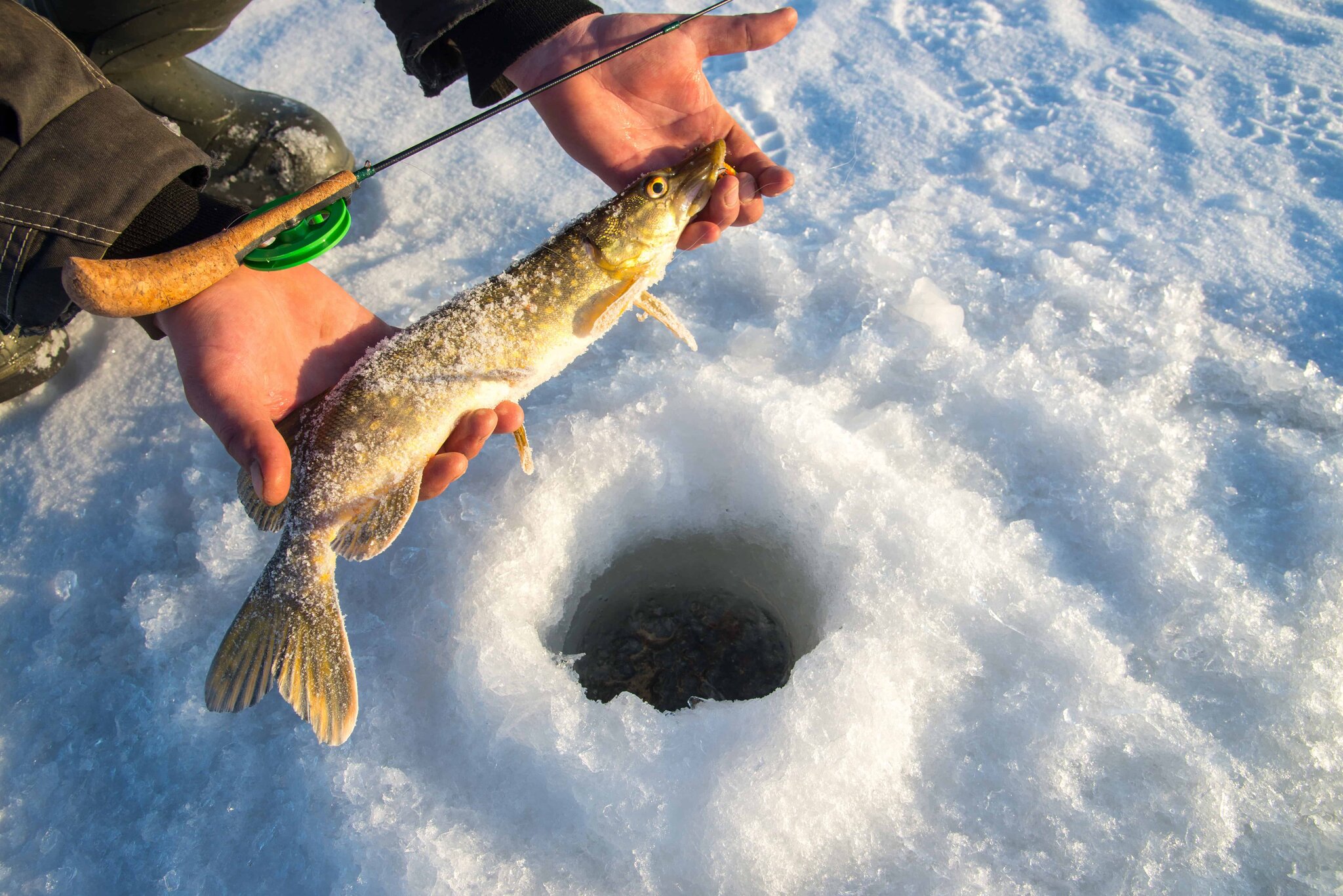
PILLAR · HARD WATER
Ice Fishing: Where to Start
Same fish, same lake, a genuinely different set of variables.
Open-water instinct is a decent instinct. It just answers the wrong first question out here. Before structure or presentation even come up, the thing that decides your day is whether the ice under you is actually thick enough for what you’re doing — checked today, at this exact spot. Everything below assumes you’ve already settled that.
WHAT CHANGES UNDER A LID
Four things that are actually different.
Metabolism drops with water temperature, so a jig that worked in July needs a longer pause and a shorter rise in January. The fish hasn’t gone anywhere. It just isn’t interested in chasing something that’s leaving anymore.
Late winter, oxygen depletion under a long-ice lake can matter as much as depth or cover. Fish stack where both line up, not just one.
No boat between you and the school. Noise, shadows, and vibration through the ice travel further than most first-timers expect.
Get it wrong in open water and it usually costs you a fish. Get the ice thickness wrong and it costs a lot more than that, which is why thickness gets its own page instead of a paragraph.
Where to start, based on what you already know
- Never ice fished: start with Your First Ice Fishing Trip, then check the ice calculator before you leave the driveway. If that first walk out feels like you’re doing something you shouldn’t, keep the feeling. Just give it a real number to work with.
- Fish open water, new to ice: the gear and the species haven’t changed. The tempo and the safety math have — read the thickness guide and slow your jigging cadence down.
- Already ice fish, want the reference: bookmark the thickness calculator for the season and use it at every new spot, not just the first one.
Nobody warns you how much of the first winter is standing still. You drill and sit, then walk forty yards and drill again. The day usually gets decided by whether you’re willing to move that fourth time, and plenty of people aren’t. I’d rather fish four holes properly than twelve badly, and on a lake I don’t know, the first hour goes to finding out which four.
← Hook the Horizon home · All Field Tools · Ice: the case for moving

