Everybody has a solunar story. Almost nobody has a solunar record, and that gap is most of what goes wrong with how the tables get used.
I like pulling one up and comparing it against how the day actually went. It’s a fun habit, right up until a predicted major period starts outranking what’s in front of me. A moon-phase screen can’t tell you the river came up overnight or that the wind made your bank unsafe, and it definitely doesn’t know your only legal access closes before the window even opens.
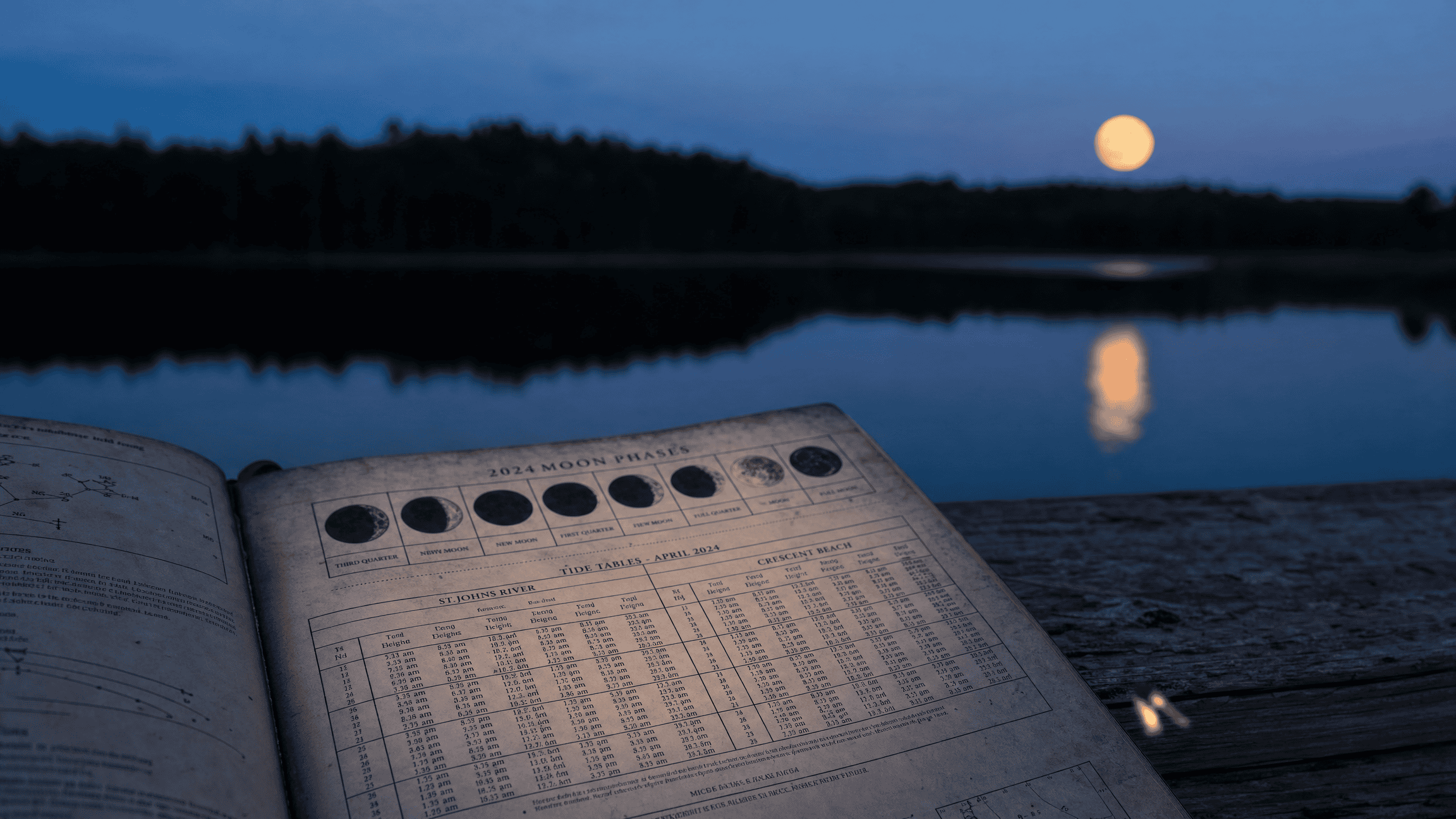
The idea isn’t silly. The problem is that the tables point at times that are often good for reasons that have nothing to do with the moon. Solunar periods are built around moonrise, moonset, and the moon passing overhead and underfoot. Around the new and full moon, moonrise and moonset land close to sunrise and sunset, and on salt water the same moon is driving the tides. So a table that says fish will feed at first light is going to look right a lot, whether or not the moon had anything to do with it. Whether solunar tables work at all gets taken apart properly, with the timing laid out.
Where it sits in an actual plan
As a tiebreaker between two trips that already work, and that’s it. If Saturday morning and Saturday evening both fit the weather, the access, the water level and your schedule, a predicted window is one more reason to pick one over the other. It shouldn’t rescue a plan that wasn’t going to work anyway. Safe, legal, fishable water is the filter that runs first, and a screen doesn’t get to overrule it.
How I’d actually find out
If you really want to know whether solunar timing does anything for your fishing, you have to record it in a way that could come out negative. Write the predicted window down before the trip, instead of deciding afterward that the good hour was close enough to a major to count. Log the trips where the major came and went with nothing, with the same care as the ones where something happened. Keep the water, species, presentation and weather next to it, too, or a good evening bite gets credited to the moon when a wind shift did the work. For keeping that honest, I use notes that change the next trip.
Any forecast that turns a messy lake into one clean score gets the same treatment. The number’s hiding whatever assumptions built it. It’s context, and it doesn’t get to give orders.
FIELD OBJECT
This one should leave the page.
The article is the long version. These are the pieces worth carrying into the next trip.
The 30-second version
Solunar periods often overlap hours that already fish well, so they look right a lot. That's plenty for picking between two good trips and nowhere near enough to build one.
What to watch
- Where it sits in an actual plan
- How I'd actually find out
Field card
- Where it sits in an actual plan
- How I'd actually find out
RIGHT TOOL, NEXT
Field Sense Navigator
Take the article’s water or access question into a place-specific conditions and route check.