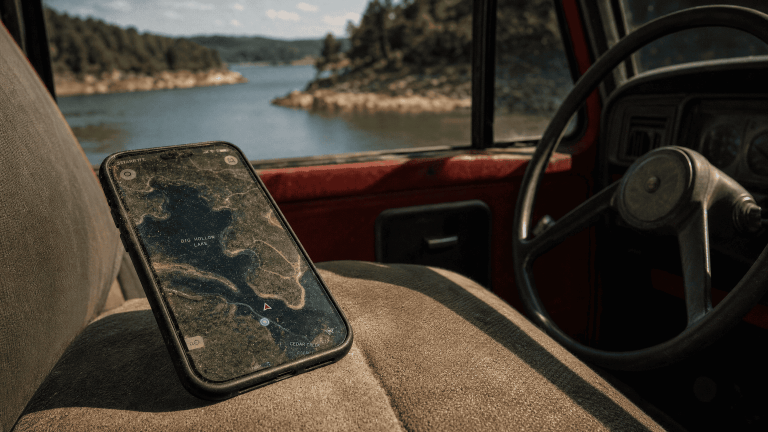
A pin on a fishing app proves somebody dropped a pin there, and that’s about it. The catch photo next to it could be years old, or from somewhere the metadata got wrong. The bite forecast is a model somebody built, not a reservation with the fish. And all of it shows up in the same clean font as the map, which is kind of the problem.
I still use apps for real jobs — weather, waypoints, a catch log, contours, a sense of whether anybody’s fished a spot before. Useful and authoritative just aren’t the same thing, and the screen doesn’t tell you which one you’re looking at. The trouble starts when an app quietly becomes the authority on whether you can park, cross a property line, launch, or keep a fish.
Stuff an app can’t know
Whether the gate’s locked today, for one. Access changes for maintenance, for seasons, for a landowner having a bad year, and no database catches that in time.
Regulations are the next blind spot. Slot limits, closures, bait restrictions and gear rules get revised, and app data lags by however long it takes somebody to update it. The agency’s current publication is the only version that counts.
The sneakiest one is legal access to the water at that pin. Public water doesn’t automatically come with a public bank around it. Most access problems are really land problems, and a satellite tile shows land without showing who owns it.
Keeping the jobs separate
Before I leave, I know which source answered which question. The app scouts and keeps records. The managing agency answers the regulation check, and the land manager or an official map answers shore access. That’s not bureaucracy. It’s the difference between separate sources agreeing and one source repeating itself.
The crowd-sourced pin, specifically
Shared pins are the feature I trust least, and being wrong a lot is only half of it. A pin on sensitive water — a small spawning area, a fragile stretch of stream, a spot fished on tolerated rather than granted access — can get that water shut down for everyone who fishes it, and the pin sticks around long after whatever made it worth sharing is gone. It’s the same reason nobody’s pins get dropped here, ours included.
When the screen and the actual shoreline disagree, figure out why before you make a cast. The app gets to ask the question. The agency and your own eyes get to answer it.
FIELD OBJECT
This one should leave the page.
The article is the long version. These are the pieces worth carrying into the next trip.
The 30-second version
Fishing apps earn their spot on the phone for maps, weather and catch logs. They don't get the final word on where you can park or what you can keep.
What to watch
- Stuff an app can't know
- Keeping the jobs separate
- The crowd-sourced pin, specifically
Field card
- Stuff an app can't know
- Keeping the jobs separate
- The crowd-sourced pin, specifically
RIGHT TOOL, NEXT
Field Ops Desk
Turn the field note into a pre-trip, on-water, or debrief decision instead of leaving it as reading.