A 3000-size spinning reel will happily swallow two hundred and fifty yards of twenty-pound braid. Now think about a normal day. A long cast from the bank with a half-ounce lure is maybe fifty yards, and even a hard-running fish on inshore water is rarely taking a hundred more. Call the working part of that spool a hundred and fifty yards for most of the fishing most people actually do. The bottom hundred is premium line sitting in the dark.
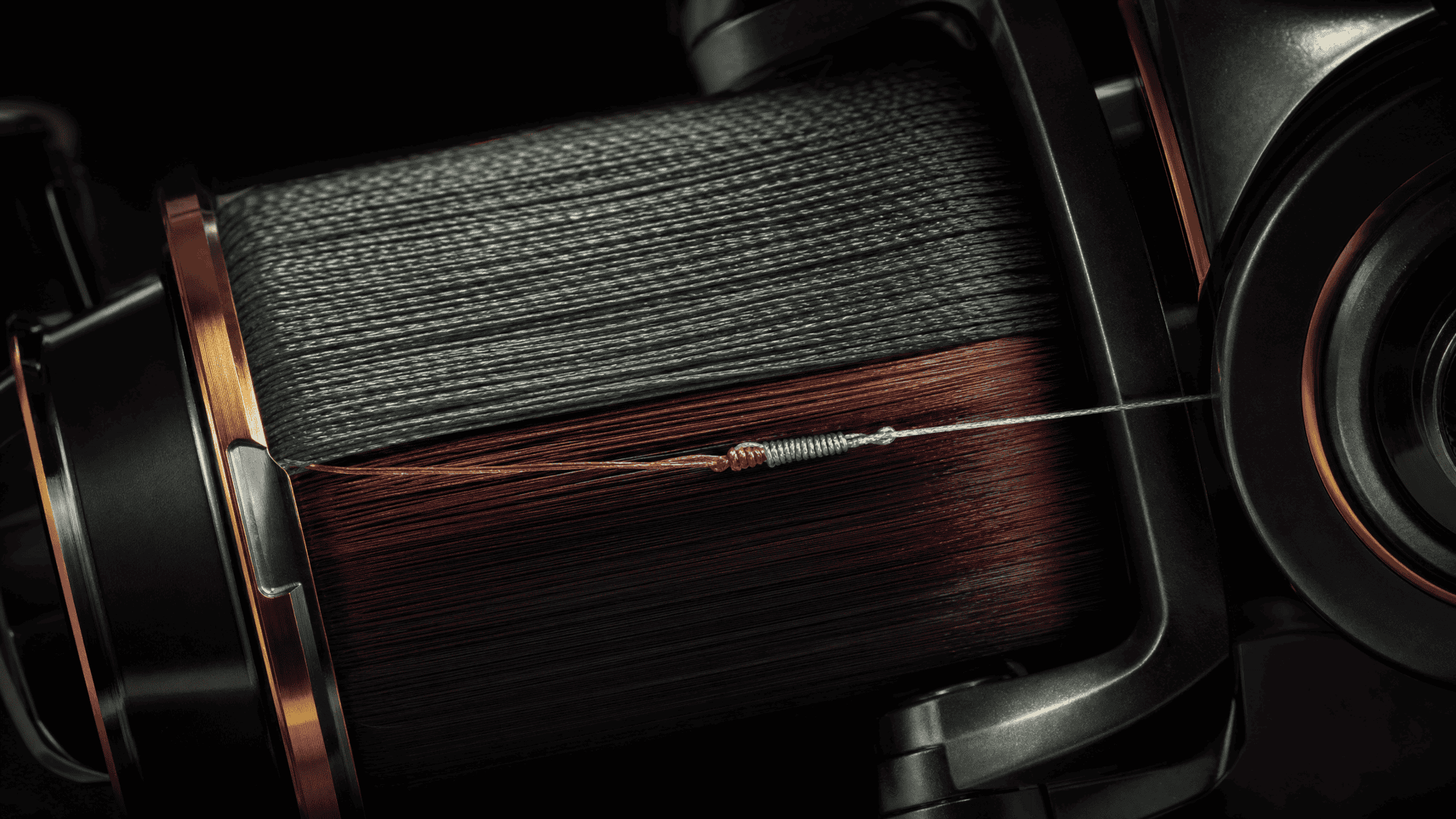
Backing fills that space with something cheap, so the braid you paid for ends up at the right level. Cheap mono in a diameter close to the braid works, because mono has enough surface and stretch to grip the spool arbor and stay put. Braid alone on a bare spool can slip — the whole mass of line rotating while the arbor stays still — and the first fish that takes drag is how you find out. If you’re running braid straight to the arbor anyway, a couple of wraps of electrical tape first gives it something to bite.
Getting the amount right is easier backwards. Wind the braid you want to fish onto the empty reel first. Tie the backing to it and keep winding until the spool is filled to where it should be. Then strip the whole thing onto a spare spool, which flips the order, and wind it back onto the reel from there. Backing ends up on the bottom, braid on top, and the level comes out right without any arithmetic.
Keep the junction slim, and keep it deep. A double uni or an Alberto joins mono to braid in something small, and with the level right it should never see a rod guide at all. The knot you don’t want is a bulky one two-thirds of the way up the spool, where a long run drags it out through the guides mid-fight — it’s the swivel-in-the-rod-tip problem coming from the other end.
If you’re still sorting out which line belongs on which reel, One Reel Can’t Make Every Lure Behave gets into that. And the braid on top still wears out on its own schedule, backing or not; line doesn’t have to break before it’s done.
There’s a real exception, though. If the fish you’re after can genuinely take two hundred yards — and some saltwater fish can — that capacity isn’t spare. It’s the whole reason you bought that reel, and filling it with cheap mono is saving money in exactly the wrong place.