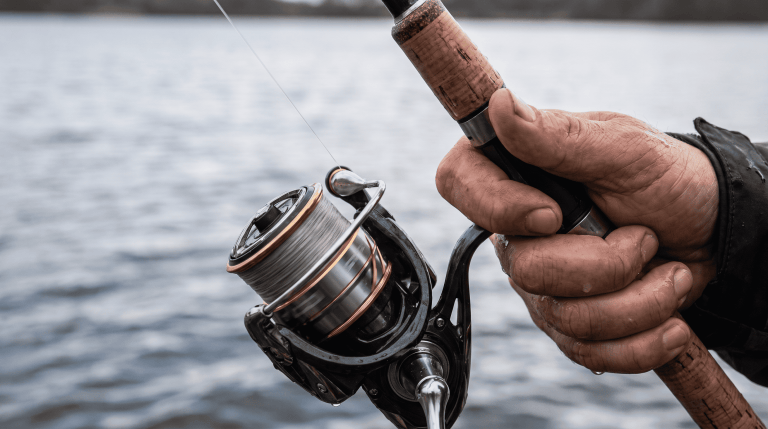
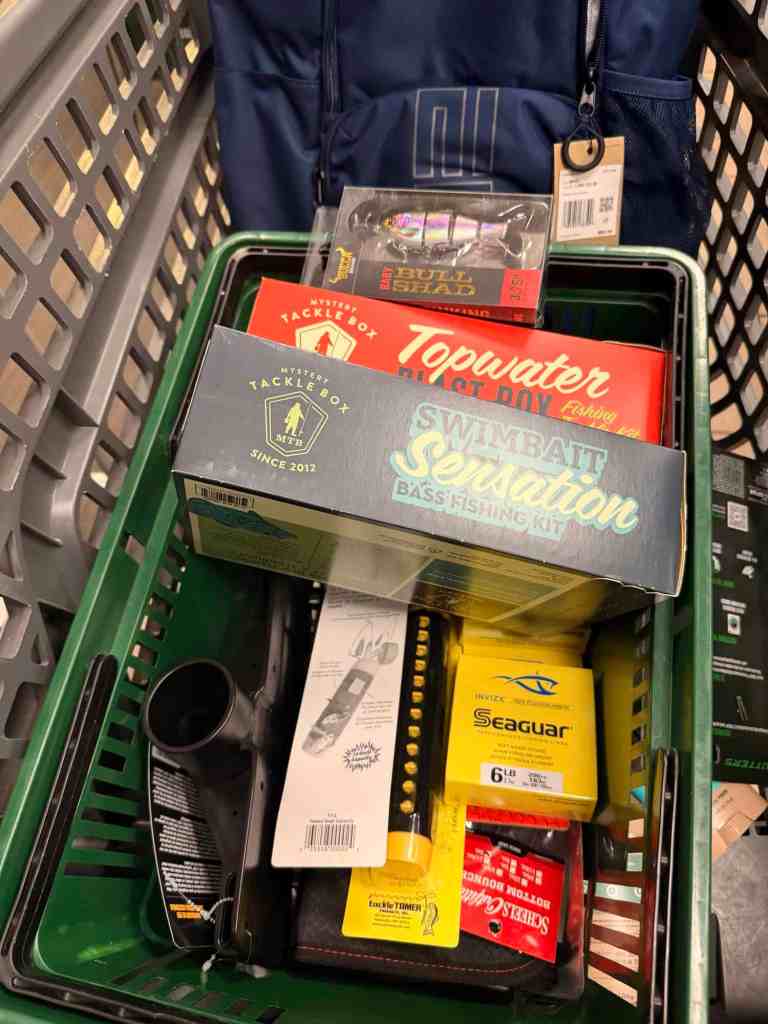
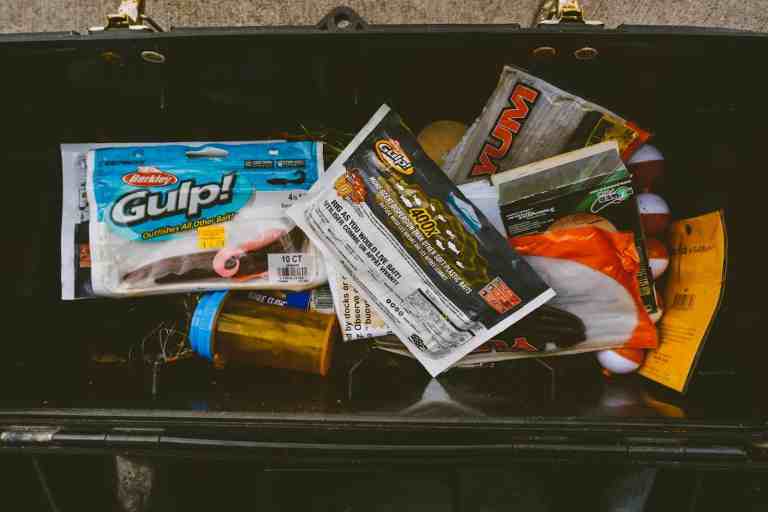
Nine lures out of ten fish fine on my setup. The tenth one tumbles in the air, lands in a heap, and comes back feeling like it’s tied to somebody else’s rod — on the same reel and line, in the same hands.
SYSTEM PLATE · COMPATIBILITY
One reel and one line cannot be right for every lure you tie to them.
Being able to tie a lure on isn’t the same as the lure being compatible with the setup. The whole rig still has to throw the total load and run the lure where you meant it to, and then it has to set a hook and land whatever eats it.
So compatibility isn’t a yes or no for me. It’s a chain, and the question I actually care about is whether every link can do the same job without one of them making the rest worse.
Every lure is asking for something different
I try to say what this one has to do before I decide what line it wants. A jig that has to fall on a semi-slack line and send back a light bite wants something very different from a bladed bait that pulls hard and has to come through grass.
Two lures with the same number on the package can ask for opposite things. One casts compact and comes back with almost no resistance. The other carries a bulky trailer, catches wind, pulls like a small anchor, collects salad, and wants a hookset I actually have to mean. The package weight is where the load starts, not where it ends.
Weigh the whole rig
Lure body, hook, trailer, sinker, float, leader, snap, swivel, split ring, bait — everything that goes along for the cast or drags through the water. Then add retrieve resistance and whatever vegetation or current it’s about to fight.
A reel can handle the static weight easily while the rod never loads clean. A line can throw the rig fine and hand the whole problem to the leader knot the moment resistance climbs. The Tackle Link Analyst lays those questions out link by link, from rod range and spool down to hook, hardware and cover, and it narrows the likely mismatches. It doesn’t certify anything for the field — manufacturer guidance, the actual condition of my gear, the legal requirements where I’m fishing, and a real test still decide whether I’m ready.
A lure that keeps landing in a heap makes it really easy to decide your casting is the problem. Weigh the rig before you believe that. A rod that can’t load will make a technically good cast look terrible, and it’s a miserable thing to take personally when the tackle was never going to let it work.
What diameter changes
Diameter touches almost everything: spool capacity, how much the water and wind get hold of the line, knot size, abrasion margin, and whether a light lure can pull the line straight behind it at all. I compare actual diameter, not the strength printed on the label.
Thicker line holds a presentation higher, catches more current, shortens a light cast, and eats capacity. Thinner improves distance and depth control but leaves less abrasion margin, and it can be harder to manage on gear that wasn’t built for it. Neither direction is a win by itself.
Stretch is a timing decision
Stretch decides how much of my rod tip movement reaches the lure, how much hook-setting force actually arrives, and what happens when a fish surges.
Low stretch makes subtle contact easier to feel and gives me control at distance. It also fires sudden force straight into a light hook, a short leader, a stiff rod, or a drag I forgot to check. More elastic line softens that and helps keep hooks pinned on some moving presentations, at the cost of immediate feedback and a hookset I have to make differently. Sensitivity and forgiveness are settings, not virtues.
Line that floats, sinks, or suspends also edits the lure’s path — mostly on slow presentations, long casts, current, and long pauses, where diameter and line bow can matter as much as what the line’s made of. So I watch what the lure actually does. If it rises, swings, or speeds up in ways I didn’t ask for, the rod angle, the retrieve, the line or the current may be rewriting the presentation before it ever reaches useful water.
The spool has an opinion
I check fill level, line lay, the spool edge, and the diameter range that reel actually handles well. Too little line hurts casting. Too much throws loops off the spool and turns into tangles. Very limp or wiry line will expose line-management weaknesses that a friendlier line was covering up.
Size labels aren’t universal, so I compare the exact model’s capacity, spool dimensions, and drag behavior, and how it balances on the rod I’m pairing it with. A reel that’s great with one line-and-lure family gets awkward fast when the system moves outside that range.
The rod decides whether any of it arrives
It has to load and recover inside a useful range for the complete rig. Too little load and a light lure is hard to cast and harder to control. Too much and accuracy goes, components take stress they weren’t rated for, and the cast itself gets unsafe. I treat the manufacturer’s range as the boundary, then think about the rig’s shape, its resistance, and the cover.
Power and action run the hookset and the fight. A stiff, powerful rod with low-stretch line and small hooks is a harsh system, and it’ll tell me so at the net. A soft rod with elastic line and a big single hook in heavy cover may never get enough force to the point to bury it. Every component has to carry part of the force instead of assuming the next one down the line will handle it.
Leader and hardware have to earn their spots
A leader can buy abrasion resistance, lower visibility, shock absorption, or tooth protection. It also hands me another knot, a diameter change, and one more place to fail. So I pick length and material by the job: a long leader that helps one presentation makes casting another one miserable, and a short stiff leader can protect against one hazard while quietly changing the action or the depth.
Snaps, swivels, split rings and clips need enough strength without adding mass, drag or stiffness the lure didn’t ask for. I look at how the hardware actually sits against the lure — whether it restricts movement, catches weed, fouls a hook, or shifts the balance. I don’t size hardware off a photo, and I don’t assume the biggest option is the safe one. Oversized hardware solves a problem I didn’t have and creates one I now do.
Cover sets how much margin I need
Open water, timber, rock, shell, docks and current all load the system differently. The same lure-and-line combination that’s clean in open water turns unreliable the moment abrasion, snag pressure, or the need to move a fish right now enters the picture.
I build margin where the water asks for it, and check the rest of the chain when I do. Heavier line just relocates the likely failure to the hook, the split ring, the leader knot, or the rod. I’m not building something unbreakable. I’m building something with known limits and a plan for getting free, or getting a fish in, when it reaches them.
Symptoms, and the short test that answers them
Mismatch usually announces itself long before anything breaks. The lure tumbles in flight or won’t pull the line straight. It rides at the wrong depth, or feels disconnected. Line twist keeps coming back, loops jump off the spool, knots slip, and the cast or the hookset has to be exaggerated to work at all.
I don’t answer any of that with more force. A harder cast won’t fix a rig the rod can’t load, and a tighter drag won’t repair a weak connection.
Instead I go somewhere safe and open, confirm the drag, knots, hooks and the weight of the complete rig, and make short casts first. I watch the flight, how the lure enters, the depth, and what the rod’s doing. Then I change one thing — shorter leader, different diameter, less hardware, or a baseline lure I know cold — and see what moves. I stop when the rig has answered the question. An all-afternoon test isn’t a more rigorous one.
When the setup has hit its honest range
A versatile outfit covers a genuinely wide range. It doesn’t cover every lure, depth, cover type, and hook demand equally, and pretending otherwise is how I end up with one rod doing four jobs badly. When the adjustments that make one lure family work keep wrecking another, I’ve found the boundary.
That might mean a second spool, different line, a different leader system, or a whole second rod and reel. I wait until the field problem is clear before I buy any of it. And if I do build the second setup, I give it a job before I give it a rod — otherwise I’ve got two versions of the same argument and twice as many lures that don’t quite fit either one.
FIELD OBJECT
This one should leave the page.
The article is the long version. These are the pieces worth carrying into the next trip.
The 30-second version
When the tenth lure tumbles and lands in a heap on the same outfit that throws the other nine fine, the reel usually isn't the problem. Something else in the chain is quietly rewriting the cast.
What to watch
- Every lure is asking for something different
- Weigh the whole rig
- What diameter changes
- Stretch is a timing decision
Field card
- Every lure is asking for something different
- Weigh the whole rig
- What diameter changes
- Stretch is a timing decision
- The spool has an opinion
RIGHT TOOL, NEXT
Tackle Link Analyst
Follow the load path and find the part of the setup that actually limits the rest.