The grass along a summer stream is packed with insects that are bad at staying out of the water. Land bugs fall, blow or get knocked in — terrestrials — and some of the best surface fishing of the year comes from fish along grassy or brushy banks keying on them hard, with no aquatic hatch involved at all.
FIELD PLATE · FORAGE
Silhouette and movement beat a confident guess.
Mid-to-late summer is when the grass takes over
Aquatic hatches often slow through the hottest part of summer, and that’s right around when ants, beetles, grasshoppers and other land insects are most abundant along stream banks and meadows. So terrestrials become an important food source exactly when aquatic hatches are least reliable. Sometimes they’re the main one.
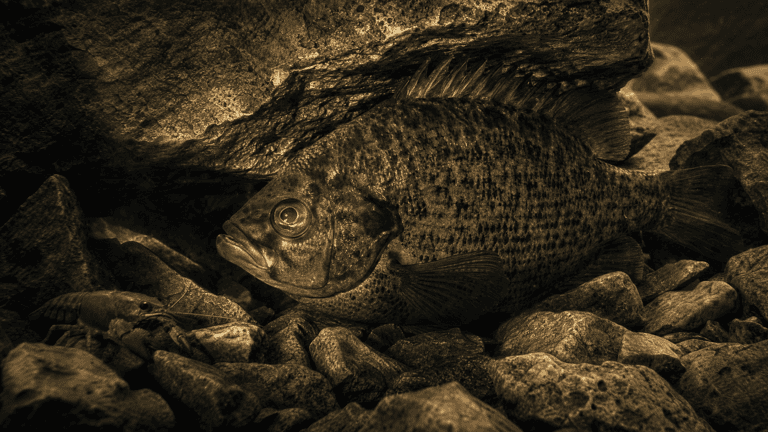
A fish holding tight to an undercut, grassy bank in July isn’t necessarily waiting on a mayfly. It might be sitting right there to intercept whatever falls out of the vegetation over its head.
Grasshoppers are the most obvious example
Hoppers are big, clumsy fliers, and they end up in the water all the time — windy days do it, and so does anything that stirs up streamside grass. A struggling hopper on the surface is a real meal, worth the effort, so a fish willing to eat one often commits hard and fast. That’s part of why hopper fishing can produce some of the most aggressive surface strikes of the whole season.
The first time a fish blows up on your hopper, there’s a decent chance you’ll yank the fly right out of its mouth. Flinching at a take that loud is about the most normal thing in fishing. Give it a beat to close on the bug before you set, and the next one usually goes better.
Ants and beetles work differently
Ants and beetles are small and easy to miss, both as naturals and as flies. They still hit the water in large numbers, especially during ant swarms or after wind.
Fish on ants often show a subtle, unhurried sipping rise — the same one I’d pin on midges, and nowhere near the take a hopper draws. That makes ants easy to misread as a smaller aquatic hatch unless I actually look at what’s in the water. Hatch Match: Terrestrials helps keep size, silhouette, movement and season attached to what you’re really seeing.
Wind is doing a lot of the delivery work
A breezy day puts a lot more terrestrials in the stream than a still one, and wind blowing across grass, brush or trees toward the water does the most. So if the wind comes up during a summer session and the surface bite improves along a grassy bank, terrestrials are a reasonable first suspicion before I’ve seen a specific insect at all.
Gravel bars don’t grow beetles
Undercut banks, overhanging grass, brushy edges and meadow stretches next to the water all concentrate terrestrial activity. Open gravel bars and rocky banks with no vegetation nearby don’t. I fish terrestrial patterns tight to that cover instead of out in open water, because that’s where the naturals come from.
Foam beetles make the bank more useful than the box
A useful foam beetle looks like nothing special in the box. Flat, dark, a little ugly. It works because real beetles knocked off overhanging grass don’t land pretty either — they plop down and ride low.
A hopper pattern can also look perfectly matched to a grassy bank and still get nothing, and that’s worth paying attention to. A bank can look exactly like hopper water and hold very few hoppers while ants or beetles are what’s actually reaching the surface. Before I start swapping flies, I’d rather check what’s floating in the slack water along that bank than decide what ought to be falling off it.